Table of Contents
ToggleRed Tail Boa: The Ultimate Care Guide, Setup, Temperament, and Ownership Tips in 2026
Introduction
There’s a moment every large snake keeper remembers clearly: the first time a mature red tail boa locks eyes with you from across the room. It’s not aggression—it’s calm, intelligent awareness. Few reptiles command respect and admiration quite like the red tail boa. With their rich mahogany saddles, deep crimson tails, and surprisingly gentle demeanor, these magnificent snakes have earned their place as one of the most coveted large constrictors in captivity.
I’ve kept and bred red tail boas for over a dozen years, and I still get a thrill every time I open an enclosure. There’s a reason so many intermediate and advanced keepers eventually gravitate toward this species. They’re impressive without being impossibly large, beautiful without being fragile, and predictable without being boring. But let me be clear: owning a snake boa python of this size is not a decision to take lightly. You’re committing to a potential 20- to 30-year relationship with an animal that can reach 8 to 10 feet and weigh as much as a small dog.
In this complete 2026 guide, I’ll walk you through everything you need to know about successfully keeping a red tail boa—from selecting a healthy baby to building the perfect enclosure, mastering feeding schedules, handling safely, recognizing health issues early, and even exploring related species like the stunning Amazon Basin Emerald Tree Boa For Sale, the Anery Black Spot Brazilian Rainbow Boa For Sale, and the Anery Brazilian Rainbow Boa For Sale. Whether you’re planning your first large snake or you’re a seasoned keeper looking to refine your approach, you’re in the right place.
Why the Red Tail Boa is One of the Most Popular Large Snakes
Walk into any reptile expo or browse online forums, and you’ll notice something quickly: the red tail boa has a loyal, almost passionate following. Why? Because they check nearly every box for someone ready to move beyond beginner snakes.
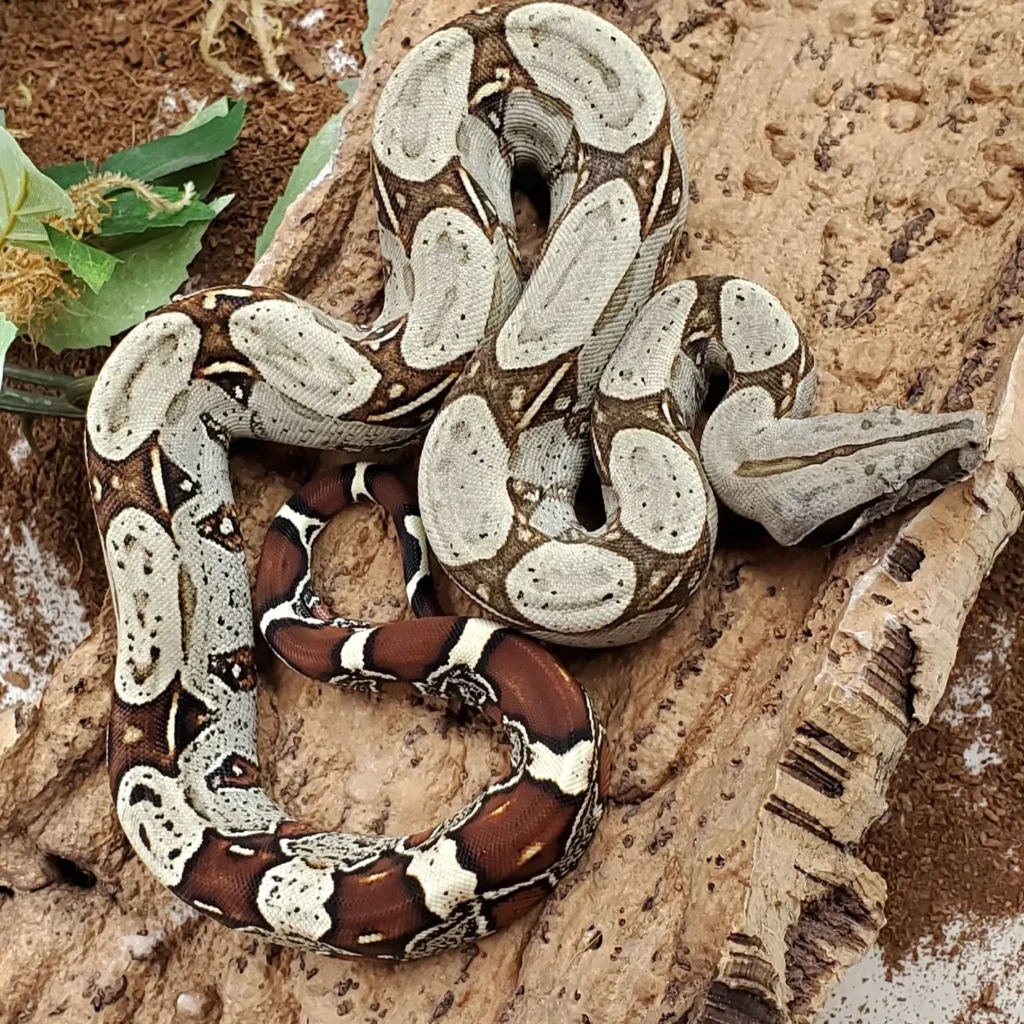
First, their appearance is undeniably stunning. A true red tail boa (Boa constrictor constrictor) displays rich, dark saddles over a warm bronze or tan background, with that signature brick-red or deep maroon coloration concentrated toward the tail. Even common Colombian boas (often labeled as red tails in pet stores) show beautiful patterns that rival much more expensive morphs.
Second, their temperament is generally excellent. While every snake has its own personality, red tail boas are known for being relatively calm and tolerant of handling when worked with regularly. They rarely strike defensively unless frightened or mishandled. This makes them a fantastic bridge species for keepers who have mastered ball pythons or corn snakes and want something larger but still manageable.
Third, their size hits a sweet spot. A full-grown red tail boa typically ranges from 6 to 10 feet, depending on locality and subspecies. That’s large enough to be impressive but not so large that you need a dedicated room or multiple people to handle them safely. Compare that to a green anaconda or reticulated python, and you’ll understand the appeal.
Finally, they’re hardy. Unlike some finicky reptiles that refuse food at the slightest temperature fluctuation, red tail boas are generally robust eaters that adapt well to captive conditions when their basic needs are met.
Red Tail Boa vs Other Snake Boa Python Species: Key Differences
If you’ve been researching large constrictors, you’ve probably noticed the terms “snake boa python” thrown around almost interchangeably. But there are real differences between a red tail boa and, say, a ball python or a true python species.
Let’s break down how the red tail boa compares to other common options.
| Feature | Red Tail Boa | Ball Python | Burmese Python |
|---|---|---|---|
| Adult length | 6-10 ft | 3-5 ft | 12-18 ft |
| Weight | 10-30 lbs | 3-5 lbs | 50-150+ lbs |
| Temperament | Calm, curious | Shy, docile | Generally calm but very powerful |
| Care difficulty | Intermediate | Beginner | Advanced |
| Lifespan | 20-30 years | 20-30 years | 20-25 years |
| Feeding frequency (adult) | Every 10-14 days | Every 7-10 days | Every 14-21 days |
| Enclosure size (adult) | 6’x2’x2’ minimum | 40-gallon breeder | 8’x3’x3’+ |
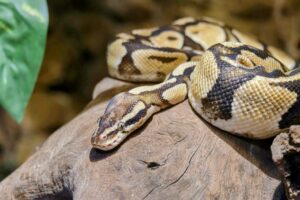
The snake boa python category includes constrictors from different families. Boas (Boidae) give live birth and typically have fewer, larger babies. Pythons (Pythonidae) lay eggs. Your red tail boa is a true boa, not a python, and understanding that distinction helps with breeding expectations and some subtle care differences.
Compared to a rainbow boa or emerald tree boa, the red tail is much more terrestrial and less demanding on humidity. That’s one reason it’s often recommended before those more specialized species.
Choosing and Buying a Healthy Red Tail Boa
Finding a healthy red tail boa is the single most important step in your journey. A poor start can mean years of veterinary problems or heartache. Here’s what I’ve learned after buying and raising dozens of boas.
Where to Buy
-
Reputable breeders should always be your first choice. Look for breeders on MorphMarket with high ratings and detailed histories.
-
Reptile expos allow you to see the snake in person and talk directly to the breeder.
-
Avoid large chain pet stores that cannot provide hatch dates, feeding records, or parent information.
Health Checklist
When you finally have a red tail boa in front of you, run through this mental checklist:
-
Clear, bright eyes – no cloudiness (unless in shed), no discharge.
-
Smooth, intact skin – no lesions, bumps, or stuck shed (especially on tail tip and eyecaps).
-
Clean vent – no pasty or bloody residue.
-
Regular breathing – no wheezing, clicking, or open-mouth breathing.
-
Good body condition – rounded but not obese, no visible spine ridge.
-
Firm, responsive muscle tone – when handled, the snake should feel solid, not limp.
-
Alert demeanor – tongue-flicking, responsive to movement.
Questions to Ask the Breeder
-
“What’s the hatch date?”
-
“What has it been eating, and how often?”
-
“Is it on frozen-thawed prey?”
-
“Have you had any health issues in this clutch?”
-
“Can I see the parents?”
A breeder who hesitates or gives vague answers is a red flag. Walk away.
Setting Up the Perfect Enclosure
Housing a red tail boa correctly from day one prevents most common health and behavioral issues. Let’s build the ideal setup step by step.
Enclosure Size by Age
| Age | Minimum Enclosure Size |
|---|---|
| Hatchling to 6 months | 10-20 gallon or 3’x1.5’x1’ PVC |
| Juvenile (6-18 months) | 4’x2’x1’ or 40-gallon breeder |
| Adult (18+ months) | 6’x2’x2’ PVC (larger is better) |
I strongly recommend PVC enclosures over glass tanks for adult boas. They hold heat and humidity far better, stack easily, and provide a more secure, dark environment that makes your red tail boa feel safe.
Substrate Options
| Substrate | Pros | Cons |
|---|---|---|
| Coconut husk (coco coir) | Holds humidity, natural, resists mold | Slightly dusty |
| Cypress mulch | Excellent humidity retention | Can be expensive |
| Paper towels | Safe, cheap, easy to monitor | Not natural, needs frequent changes |
| Orchid bark | Great for humidity, attractive | More expensive |
Avoid aspen shavings (too dry, molds easily), sand (impaction risk), and cedar/pine (toxic).
Hides and Security
Your red tail boa needs at least two hides: one on the warm side and one on the cool side. Hides should be snug—the snake should touch the sides when curled inside. Cork flats, reptile caves, or even upside-down plastic tubs with cut-out doors work well.
Climbing Branches
Despite being terrestrial, red tail boas love to climb, especially as juveniles. Add sturdy branches or commercial reptile perches. Make sure they’re secure enough to support the snake’s full weight as it grows.
Heating and Humidity
-
Basking surface: 88-90°F (use an under-tank heater or radiant heat panel on a thermostat)
-
Ambient warm side: 84-86°F
-
Cool side: 78-80°F
-
Nighttime drop: 75-78°F
Humidity: 60-70% is ideal. Use a digital hygrometer. Mist daily or use a humidifier in the room. Provide a humid hide (damp sphagnum moss in a container) during shedding cycles.
Temperature, Humidity, and Environmental Requirements
Let me give you a quick-reference chart for the most critical parameters.
| Parameter | Ideal Range | Danger Zone |
|---|---|---|
| Basking surface | 88-90°F (31-32°C) | Above 95°F (burns) |
| Warm side ambient | 84-86°F (29-30°C) | Below 80°F (poor digestion) |
| Cool side ambient | 78-80°F (26-27°C) | Below 75°F (respiratory risk) |
| Nighttime temp | 75-78°F (24-26°C) | Below 70°F (illness) |
| Humidity | 60-70% | Below 50% (stuck shed) / above 80% (scale rot) |
Use two digital probe thermometers (one on each side) and an infrared temperature gun to check basking surfaces. Never guess—your red tail boa depends on accurate temperatures to digest food and fight off infections.
Feeding Your Red Tail Boa: Schedule, Prey Size, and Best Practices
Feeding a large constrictor is both straightforward and absolutely critical to get right. I’ve seen too many keepers make avoidable mistakes that lead to obesity, regurgitation, or even death.
Prey Size Rule
The prey item should be about the same width as the snake’s body at its widest point. For a baby red tail, that’s a hopper or small adult mouse. For an adult, that’s a large rat (or two medium rats, though one appropriately sized meal is better).
Feeding Schedule by Age
| Age | Prey Type | Frequency |
|---|---|---|
| Hatchling (0-6 months) | Hopper mouse → small adult mouse | Every 5-7 days |
| Juvenile (6-18 months) | Small → medium rat | Every 7-10 days |
| Sub-adult (18-30 months) | Medium → large rat | Every 10-14 days |
| Adult (30+ months) | Large rat (or jumbo rat) | Every 14-21 days |
Frozen-Thawed vs. Live
Always feed frozen-thawed prey. Live rats can and will kill a snake, even a large red tail boa. I’ve seen the aftermath of a live rat attack, and it’s heartbreaking. Thaw prey in the refrigerator overnight, then warm to body temperature (95-100°F) in warm water. Use long tongs to offer it.
What to Avoid
-
Do not handle your boa for 48 hours after feeding (regurgitation risk).
-
Do not feed prey that leaves a huge bulge (can cause regurgitation or internal injury).
-
Do not feed multiple prey items if one appropriately sized rat works.
When Your Boa Refuses Food
A healthy red tail boa rarely refuses meals unless in shed, too cold, or stressed. If refusal happens, check temperatures first. If everything is correct, wait a week and try again. Winter fasting (2-4 months) is normal for adult boas, but babies and juveniles should eat consistently.
Handling, Temperament, and Enrichment for Large Boas
Here’s what most people really want to know: can you handle a red tail boa safely? Yes, absolutely—with respect and proper technique.
Building Trust
Start when they’re young. A baby red tail boa may be nippy at first, but those tiny bites don’t hurt. Handle for 5-10 minutes, 2-3 times per week. Never grab from above. Scoop from underneath, supporting the whole body.
Proper Handling Technique
-
Wash hands before and after.
-
Move slowly and confidently.
-
Support at least three points of the body.
-
Never let the snake wrap around your neck (even a juvenile can squeeze surprisingly hard).
-
Avoid handling during shed or within 48 hours after a meal.
Enrichment
Don’t just keep your boa in a bare box. Add:
-
New branches or perches every few months
-
Different textured surfaces (cork, PVC, natural wood)
-
A large water bowl for soaking (change water daily)
A stimulated red tail boa is a healthier, more active boa.
Growth Stages: From Juvenile to Adult Red Tail Boa
Watching a baby red tail boa grow into a magnificent adult is one of the great joys of keeping this species.
| Age | Length | Weight | Key Milestones |
|---|---|---|---|
| Newborn | 15-20 inches | 50-80 grams | First shed within 7-10 days |
| 6 months | 24-30 inches | 150-300 grams | Transition to small rats |
| 1 year | 30-40 inches | 400-800 grams | Adult coloration emerging |
| 2 years | 4-5 feet | 2-4 lbs | Sexual maturity (males) |
| 3 years | 5-6 feet | 5-8 lbs | Sexual maturity (females) |
| 5+ years | 6-8+ feet | 10-20+ lbs | Full adult size |
Females grow larger and heavier than males. Don’t power-feed to speed growth—it leads to obesity and shortened lifespan.
Common Health Issues and Preventative Care
Even a hardy red tail boa can face health challenges. Here’s what to watch for.
Respiratory Infections (RIs)
Symptoms: Wheezing, open-mouth breathing, mucus bubbles, holding head elevated.
Causes: Low temperatures, high humidity with poor ventilation, drafts.
Treatment: Increase temperature, veterinary antibiotics.
Scale Rot (Blister Disease)
Symptoms: Red, inflamed belly scales, blisters.
Causes: Constantly wet substrate, poor hygiene.
Treatment: Clean enclosure, dry substrate, veterinary topical treatment.
Mites
Symptoms: Tiny black or red specks moving on the snake, excessive soaking, specks in water bowl.
Treatment: Provent-a-Mite for enclosure, reptile-safe mite spray for snake.
Inclusion Body Disease (IBD)
The nightmare of boa keepers. Symptoms: Stargazing, inability to right itself, regurgitation, tremors. No cure. Quarantine new snakes for 90 days and buy only from reputable breeders.
Preventative Care Checklist
-
Daily: Spot-clean, check water, observe behavior.
-
Weekly: Full cleaning of water bowl, weight check, visual health inspection.
-
Monthly: Deep-clean enclosure, replace substrate.
-
Annually: Veterinary wellness exam with fecal float.
Breeding Red Tail Boas: Considerations for Serious Keepers
Breeding red tail boas is not a project for beginners, but for those with experience, it’s deeply rewarding.
Requirements
-
Females: Minimum 3 years old, 6+ feet, 10+ lbs
-
Males: Minimum 18 months, 4+ feet, 4+ lbs
-
Cooling period: 8-10 weeks at 75-78°F (down from 80-85°F)
-
Gestation: 4-6 months after ovulation
-
Litter size: 10-30 live babies (up to 50 in large females)
Breeding Process
-
Cool both snakes in winter.
-
Introduce male into female’s enclosure for 3 days, then remove for 3 days. Repeat until copulation observed.
-
Female will ovulate (visible mid-body swell) then shed 6-8 weeks later.
-
Babies are born fully independent. Separate immediately.
Ethical note: Only breed if you have homes lined up. The market for common boas is saturated.
Related Boa Species and Stunning Options
Many keepers who fall in love with the red tail boa eventually explore other stunning boas. Here are three exceptional options that offer different looks and challenges.
Amazon Basin Emerald Tree Boa For Sale
If you want a true showstopper, the Amazon Basin Emerald Tree Boa is hard to beat. These boas are bright emerald green with striking white dorsal markings. Unlike your terrestrial red tail boa, emerald tree boas are arboreal—they live in trees and need a tall enclosure (3’x2’x3’ minimum). They have a reputation for being defensive (they can be nippy), but experienced keepers find them incredibly rewarding. Humidity needs are higher (70-90%), and they prefer slightly cooler temps (80-84°F warm side). Price range: 400−400−1,000+ depending on locality.
Anery Black Spot Brazilian Rainbow Boa For Sale
Brazilian Rainbow Boas are famous for their iridescent sheen—in sunlight, they glow with rainbow colors. The Anery (anerythristic, or lacking red pigment) Black Spot morph removes the red tones, leaving a silvery-gray snake with bold black spots. They’re more demanding than a red tail boa: higher humidity (75-85%), slightly lower temperatures (80-84°F warm side), and more sensitive to stress. But for keepers who master their needs, they’re breathtaking. Price range: 300−300−600.
Anery Brazilian Rainbow Boa For Sale
The standard Anery Brazilian Rainbow Boa lacks the additional black spot gene, giving a cleaner, more uniform silvery-gray appearance. Care is identical to the black spot version. These snakes tend to be slightly calmer than their emerald cousins, making them a better choice for keepers transitioning from a red tail boa. They stay smaller (4-6 feet) than a full-grown red tail, which appeals to keepers with moderate space. Price range: 250−250−500.
Comparison Table: Red Tail vs These Specialized Boas
| Feature | Red Tail Boa | Emerald Tree Boa | Brazilian Rainbow Boa |
|---|---|---|---|
| Adult size | 6-10 ft | 5-7 ft | 4-6 ft |
| Habitat | Terrestrial | Arboreal | Semi-arboreal |
| Humidity | 60-70% | 70-90% | 75-85% |
| Temperament | Calm | Defensive | Shy but handleable |
| Difficulty | Intermediate | Advanced | Intermediate-Advanced |
If you’re considering an Amazon Basin Emerald Tree Boa For Sale, an Anery Black Spot Brazilian Rainbow Boa For Sale, or an Anery Brazilian Rainbow Boa For Sale, master your red tail boa care first. The skills transfer, but each species has unique quirks.
FAQ Section
How big does a red tail boa get?
A true red tail boa (Boa constrictor constrictor) typically reaches 6 to 9 feet, with occasional females reaching 10 feet. Colombian red tails (often mislabeled) may reach 5 to 8 feet.
What’s the difference between a red tail boa and other snake boa python species?
Red tail boas give live birth, have smoother scales, and generally stay smaller than large pythons like retics or burms. They’re also typically calmer than many other large constrictors.
Are red tail boas good for beginners?
No. They’re intermediate-level snakes. Beginners should start with ball pythons or corn snakes and gain experience before committing to a 7-foot constrictor.
How often should I feed my red tail boa?
Hatchlings every 5-7 days, juveniles every 7-10 days, adults every 10-14 days, and large adults every 14-21 days. Overfeeding is a common mistake.
What size tank does a red tail boa need?
Adults need a minimum of 6’x2’x2’ PVC enclosure. Larger is always better. Glass tanks are not recommended for adults due to poor heat and humidity retention.
Do red tail boas bite?
Any snake can bite if threatened, but red tail boas are generally calm. Bites usually happen due to mistaken hand-for-food or defensive fear. Use a hook for handling new or nervous individuals.
Can red tail boas live together?
No. Boas are solitary. Cohabitation leads to stress, competition, and risk of cannibalism (rare but possible). House them separately.
Are Brazilian Rainbow Boas good for beginners?
They’re not recommended for absolute beginners due to their high humidity needs and sensitivity. A red tail boa is a hardier first large snake.
How long do red tail boas live?
With proper care, 20-30 years. Some have lived past 35 years. This is a multi-decade commitment.
What do I do if my red tail boa stops eating?
Check temperatures first. If correct, your boa may be in shed or undergoing a natural winter fast. Adult boas can fast for 3-4 months healthily. Babies refusing for more than 2 weeks should see a vet.
Conclusion
Bringing a red tail boa into your home is not a small decision. These magnificent snakes will likely be with you for 20, 25, even 30 years. They’ll grow from a tiny hatchling that fits in your palm to a powerful, stunning adult that commands attention every time someone walks into the room.
But here’s the truth I’ve learned after years of keeping and breeding them: the work is worth it. There’s a unique bond that forms when you consistently, gently handle a boa over years. They learn your scent. They stop seeing you as a threat and start seeing you as a safe presence. That trust, earned over decades, is something you simply don’t get with a goldfish or a hamster.
If you’re ready for this commitment, do your homework first. Join forums. Talk to breeders. Visit a reptile expo and actually hold a few adults. Make sure you have the space, the budget (enclosures, vet care, feeders add up), and the support system.
And when you’re ready, find an ethical breeder. Ask the hard questions. Don’t settle for a snake from a questionable source just to save $50. Your red tail boa deserves a healthy start, and you deserve a pet that will thrive for decades to come.
If you’re curious about other stunning boas after mastering the red tail, explore options like the Amazon Basin Emerald Tree Boa For Sale, the Anery Black Spot Brazilian Rainbow Boa For Sale, or the Anery Brazilian Rainbow Boa For Sale. Each offers a unique window into the incredible diversity of the snake boa python world.
Ready to start your journey? Master red tail boa enclosure setup today, learn more about Amazon Basin Emerald Tree Boa For Sale for your next project, or compare red tail boa with other snake boa python species to find your perfect match. Your adventure with one of the most impressive snakes on the planet is just beginning. Handle with respect, feed with care, and enjoy every shed, every feeding strike, every quiet evening watching your boa explore its world. Happy keeping.