Albino Burmese Python: The Complete Guide to Care, Setup, Feeding & Ownership
By the Sublime Reptiles Team
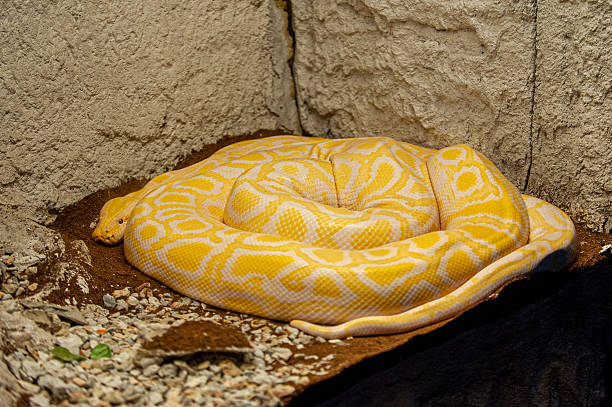
The first time I saw an adult albino Burmese python up close, I actually took a step backward. Not out of fear—out of pure respect. The snake was nearly twelve feet long, thick as my forearm, and draped over its keeper’s shoulders like a living golden scarf. Its pattern was classic Burmese: those bold, irregular blotches outlined in white and cream. But the colors? They were something else entirely. Brilliant yellow where a normal Burmese would be dark brown. Clean, creamy white where a normal would be tan or olive. And the eyes—pale, luminous pink, watching me with a quiet, ancient curiosity.
I’d seen photos. I’d watched videos. Nothing prepares you for the real thing.
I’ve been keeping and breeding reptiles for over 15 years now, and I’ll tell you straight: the albino burmese python is one of the most visually stunning snakes in the world. It’s also one of the most demanding. These are not animals for beginners, casual keepers, or anyone without the space and resources to house a snake that can reach 12 to 18 feet and weigh 50 to 100 pounds—or more.
But for the right person—someone with experience, space, and a genuine long-term commitment—an albino burmese python is an unforgettable companion. They’re intelligent, surprisingly docile when handled correctly, and they have a presence that even the most beautiful ball python or corn snake simply cannot match.
In this complete guide, I’ll share everything I’ve learned from years of keeping, breeding, and caring for these magnificent giants. No fluff, no filler—just the real, hands-on information you need before you bring one home.
Why the Albino Burmese Python Stands Out
Let’s be honest: a normal Burmese python is already a beautiful snake. The rich earth tones, the intricate pattern, the sheer size—they command attention. But an albino burmese python takes that visual impact to another level.
The complete lack of melanin (dark pigment) transforms the snake into a living masterpiece. The base color becomes a brilliant white or cream. The dorsal blotches turn bright yellow or gold, often outlined in pale orange. Some individuals even develop intense peachy-orange highlights along their sides. And those eyes—that soft, glowing pink—give the snake an almost mythical appearance.
But beyond the looks, what really sets this snake apart is its temperament. Despite their intimidating size, captive-bred Burmese pythons are famous for being calm, even‑tempered, and surprisingly tolerant of handling. A well‑socialized albino burmese python will often rest comfortably on your shoulders, explore gently, and show little to no defensive behavior.
They’re also smarter than many people expect. Burmese pythons learn feeding routines. They recognize their keepers (or at least your scent and presence). And they respond to handling with something that feels less like passive tolerance and more like active awareness. That’s what makes them so rewarding—if you’re ready for the responsibility.
Is an Albino Burmese Python Right for You?
This is where I get really blunt. I’ve seen far too many people buy a cute little 18‑inch hatchling, only to panic when that snake hits 6 feet in under a year. Do not be that person.
You should consider an albino burmese python if:
- You’ve already kept large snakes (6+ feet) and are comfortable with their strength and feeding requirements.
- You have the space for a minimum 8x4x2‑foot enclosure—not just now, but for the next 20+ years.
- You can afford large prey (jumbo rats, small rabbits) on a regular basis.
- You have a second person who can assist with handling, especially as the snake grows.
- You’re ready for a 20‑ to 30‑year commitment. This is not a short‑term pet.
You should NOT get an albino burmese python if:
- You’re new to snake keeping. Start with a corn snake, ball python, or kingsnake.
- You live in a small apartment with no room for a giant enclosure.
- You’re on a tight budget—large enclosures, heating, and large prey add up fast.
- You’re not physically able to handle a heavy, powerful snake.
- You’re unsure about the legalities in your area (some states and cities restrict large constrictors).
I’ve made my share of mistakes over the years, and one of my biggest was underestimating how fast a young Burmese grows. They can go from a tiny worm to a 6‑foot snake in what feels like the blink of an eye. By 18 months, you’ll need a dedicated corner of a room just for the enclosure.
Understanding the Albino Morph
The albino burmese python is a naturally occurring recessive mutation. Both parents must carry the gene for albinism to produce albino offspring. The mutation prevents the production of melanin, so the snake lacks all dark pigmentation. Instead, you get the stunning white, yellow, and orange hues.
The first albino Burmese pythons appeared in captivity in the 1980s. Today, thanks to dedicated breeders, they’re one of the most available and beloved morphs in the large constrictor world. There are also related morphs like caramel albino (warmer orange tones) and lavender albino (softer, purplish hues), but the classic albino remains the most iconic.
Albino is a simple recessive trait. If you breed an albino to an albino, all babies are albino. If you breed an albino to a normal that carries the gene (het albino), roughly half the babies will be albino. This predictability makes them popular with breeders and keeps prices reasonable ($300–$800 for a healthy hatchling).
How to Choose a Healthy Albino Burmese Python
A healthy start is everything. These snakes can live for decades, so you want a strong, well‑started animal.
My Personal Health Checklist
- Eyes: Clear and bright, with that characteristic pink/red tone. No cloudiness, swelling, or discharge.
- Mouth: Closed evenly. No drooling, gaping, or cheesy residue (possible sign of mouth rot).
- Skin: Smooth and shiny. No lesions, scrapes, or stuck shed. Colors should be vivid—not dull or dusty.
- Body condition: Rounded but not obese. You shouldn’t see a sharp spine ridge. A healthy hatchling feels firm and muscular, not squishy.
- Activity: Alert and tongue‑flicking. When you pick it up, it should move and explore, not lie limp.
- Vent: Clean and free of any pasty or bloody material.
Questions to Ask the Breeder
- “When exactly did this snake hatch?”
- “What has it been eating, and how often?”
- “Is it consistently on frozen‑thawed prey?”
- “Have you treated it for mites or internal parasites?”
- “Can I see the parents?” (at least photos)
Red Flags That Make Me Walk Away
- The seller can’t provide a hatch date or feeding records.
- The snake is housed in dirty or cramped conditions.
- You see mites (tiny black or red specks), stuck shed, or any sign of illness.
- The price is suspiciously low. Healthy albinos generally sell for $300‑$800; anything well below that is a gamble.
- The breeder refuses to answer basic questions.
I personally source my snakes from established breeders on MorphMarket or at reputable reptile expos. Never buy from a pet store that can’t tell you the snake’s origin. A good breeder will also offer ongoing support after the sale—that’s worth its weight in gold.
Setting Up the Perfect Enclosure for an Albino Burmese Python
This is where most new owners stumble. Burmese pythons grow fast, and their housing needs change quickly. Get this wrong, and you’ll end up with a stressed, unhealthy snake.
Enclosure Size Progression
| Age/Size | Minimum Enclosure | My Recommendation |
|---|---|---|
| Hatchling (0‑6 months) | 20‑gallon long tank or 3×1.5×1 ft tub | 40‑gallon breeder tank |
| Juvenile (6‑18 months) | 40‑gallon breeder or 4x2x1 ft | 4x2x2 ft PVC |
| Sub‑adult (18‑30 months) | 6x2x2 ft | 8x2x2 ft PVC |
| Adult (30+ months) | 8x3x2 ft (minimum) | 8x4x2 ft PVC or custom‑built |
I cannot stress this enough: an adult Burmese python needs a massive enclosure. An 8‑foot‑long by 4‑foot‑deep by 2‑foot‑tall PVC cage is what I consider the gold standard. Glass tanks are completely impractical for adults—they’re heavy, they don’t retain heat or humidity well, and they’re nearly impossible to secure properly. A strong Burmese can easily push open an unlocked screen top, and trust me, you don’t want to wake up to a missing giant snake.
Substrate Choices
I use cypress mulch for most of my large snakes. It holds humidity well, resists mold, and looks natural. Here’s a quick comparison:
- Cypress mulch: Excellent for humidity, looks great, doesn’t mold easily. My go‑to.
- Coco coir (coconut fiber): Safe if accidentally ingested, holds moisture. Can be a bit messy.
- Paper towels/newspaper: Best for quarantine or hatchlings. Sterile, easy to change, but not decorative.
- Reptile carpet: Easy to clean for juveniles, but needs regular washing.
Avoid: sand (impaction risk), cedar or pine shavings (toxic oils), and aspen (dries out too quickly for a species that needs higher humidity).
Heating and Lighting
Maintaining proper temperatures is critical for digestion and overall health. I run a gradient using radiant heat panels (RHPs) or ceramic heat emitters (CHEs) controlled by a quality thermostat. I personally use Herpstat thermostats—they’re expensive but reliable, and you don’t want to cheap out on the device that controls your snake’s life support.
Here are the temps I aim for:
- Basking surface (hot spot): 88–92°F (31–33°C)
- Warm side ambient: 85–88°F (29–31°C)
- Cool side ambient: 78–82°F (26–28°C)
- Nighttime: 75–80°F (24–27°C) — never below 70°F
I check these daily with an infrared temperature gun and digital probes. Don’t rely on stick‑on thermometers; they can be wildly inaccurate.
For lighting, I provide a simple LED strip on a 12‑hour timer to simulate a day/night cycle. UVB is not strictly necessary for Burmese pythons—they obtain vitamin D3 from their whole‑prey diet. However, I’ve noticed some of my snakes will bask under a low‑intensity UVB lamp if offered. If you choose to use one (5% T5 tube, for example), make absolutely sure the snake cannot touch the bulb, and provide plenty of shade.
Humidity Requirements
Burmese pythons need moderate to high humidity. I keep the enclosure at 50–60% normally, bumping it up to 70–80% during shed. A large water bowl (big enough for the snake to soak in) does most of the work, but I’ll also mist lightly if the hygrometer dips below 50%.
Pro tip: A “humid hide”—a plastic tub with a hole cut in the lid, filled with damp sphagnum moss—is a lifesaver for shedding issues. Place it on the warm side and your snake will use it as needed.
Feeding Your Albino Burmese Python
Feeding a Burmese is straightforward, but you must be consistent and careful with prey size.
Feeding Schedule (Frozen‑Thawed Only)
| Age | Prey Type | Frequency |
|---|---|---|
| Hatchling (0‑6 months) | Mouse pinkie → fuzzy | Every 5‑7 days |
| Juvenile (6‑18 months) | Adult mouse → weanling rat | Every 7‑10 days |
| Sub‑adult (18‑30 months) | Small → medium rat | Every 10‑14 days |
| Adult (30+ months) | Large rat → jumbo rat → small rabbit | Every 14‑21 days |
Always feed frozen‑thawed. A live rat or rabbit can seriously injure or even kill a snake, even a large one. I’ve seen the aftermath of a live feeding gone wrong, and it’s not worth the risk.
Feeding Tips from Years of Experience
- Use extra‑long tongs. I use 24‑inch tongs for my adults—this keeps your hands safely away from the strike zone.
- Feed in the enclosure. Moving a large snake to a separate feeding bin is stressful, unnecessary, and increases the chance of being bitten. They learn that food appears in their home, not your hand.
- Don’t handle for at least 48 hours after feeding. Regurgitation is messy, dangerous, and can lead to serious health problems.
- Watch their weight. Captive Burmese pythons tend to become obese. An adult should be rounded but not “fat” with a visible neck. If you see fat rolls or a sharp spine, adjust the feeding schedule.
What About Fasting?
Adult Burmese pythons sometimes stop eating for weeks or even months, especially during the winter breeding season. I had one female skip meals for six weeks straight. I panicked, checked everything, and then realized she was just following her natural cycle. As long as she wasn’t losing significant weight, I let her be. If a juvenile refuses more than one meal, though, that’s a red flag—check your temperatures and consult a vet if needed.
Handling, Temperament, and Safety
A well‑socialized albino burmese python is typically a gentle giant. But “gentle” doesn’t mean harmless—these are incredibly strong animals.
My Handling Rules
- Never handle an adult alone. Always have a second person nearby. If the snake gets spooked or wraps too tightly, you’ll be grateful for the extra pair of hands.
- Support the body. Let the snake move freely, but always support its weight. Never let it dangle.
- Keep sessions moderate. 15‑20 minutes is usually enough. Prolonged handling can stress them.
- No handling for 48‑72 hours post‑feeding.
- Be calm and confident. If you’re nervous, the snake will sense it. Move slowly and deliberately.
What If You Get Bit?
Yes, it can happen—usually a feeding response mistake. Their bite is non‑venomous but can cause deep lacerations due to their size. If a Burmese latches on and coils, don’t panic. Gently unwrap from the tail end, and if needed, use a bit of rubbing alcohol near the mouth to encourage release. Seek medical attention for any serious bite, as infection is possible.
Enrichment Ideas
Giant snakes benefit from enrichment just like any other reptile. I provide:
- Sturdy branches and shelves (rated to hold a 100+ lb snake).
- Different substrate textures for burrowing.
- Occasional scent trails (rub prey scent on a branch) for mental stimulation.
- Rotating hides and climbing structures.
Growth Stages and the Long‑Term Commitment
An albino burmese python goes from a tiny hatchling to a full‑sized giant faster than you think.
- Hatchling (0‑3 months): 12‑18 inches, 50‑100 grams. Cute but already growing.
- Juvenile (3‑12 months): 2‑4 feet, up to 1,000 grams. You’ll be moving to a larger enclosure soon.
- Sub‑adult (1‑2 years): 4‑8 feet, 2‑10 lbs. This is when they start feeling heavy.
- Adult (2‑4 years): 8‑12 feet, 20‑50 lbs. Growth slows but continues.
- Mature adult (4+ years): 10‑18 feet, 50‑100+ lbs. Females tend to be larger.
They can live 20 to 30 years or more. That’s longer than many dogs. Before you commit, think about where you’ll be in 10 or 20 years. Who will care for your snake if you move, change jobs, or simply can’t physically handle a giant anymore? I’ve had to rehome snakes before, and it’s a heartbreaking feeling. Don’t put yourself or the animal in that position.
Common Health Issues and How to Prevent Them
Burmese pythons are generally robust, but here are the problems I’ve seen most often:
- Respiratory Infection: Wheezing, bubbles from the nose, open‑mouth breathing. Almost always caused by low temperatures or high humidity with poor ventilation. Fix the environment, see a vet if it doesn’t improve.
- Mites: Tiny black or red specks crawling on the snake, especially around the eyes and vent. Quarantine every new arrival for at least 60 days to prevent outbreaks.
- Stuck Shed: Retained eye caps or tail tips. If your humidity is correct, this shouldn’t happen. A humid hide usually solves it.
- Obesity: Fat rolls, visible “hips” before the tail. Follow a conservative feeding schedule and monitor body condition.
- Mouth Rot (Stomatitis): Cheesy material in the mouth, swollen gums. Often caused by a cut or injury in a dirty environment. See a vet immediately.
I do a quick health inspection on every snake at least once a week. It takes two minutes and can save you from serious problems later.
Frequently Asked Questions About Albino Burmese Pythons
Q: How big do albino burmese pythons get?
A: Adults typically reach 10–14 feet, with females often exceeding 16 feet. They can weigh 50–100+ pounds.
Q: Are albino burmese pythons good for beginners?
A: Absolutely not. They are advanced‑level snakes. Beginners should start with a corn snake, ball python, or kingsnake.
Q: How much does an albino burmese python cost?
A: $300–$800 for a healthy hatchling. The enclosure, heating, and ongoing food will cost far more over time.
Q: What size enclosure does an adult need?
A: 8x4x2 feet is the standard. Larger is better. PVC is the best material.
Q: What do they eat?
A: Frozen‑thawed rodents and, for adults, appropriately sized rabbits. Never feed live prey.
Q: Do they need UVB?
A: Not required, but low‑level UVB can be beneficial. Always ensure the snake can’t touch the bulb.
Q: How long do they live?
A: 20–30 years with proper care, sometimes longer.
Q: Are they legal to own?
A: In most US states, yes, but some have restrictions. Check your local laws before purchasing.
Final Thoughts from Nightfall Reptiles
The albino burmese python is a breathtaking animal—a living work of art that demands respect, space, and a serious lifelong commitment. If you have the experience, the resources, and the passion, there is no other snake that quite compares. They are intelligent, calm, and full of personality.
But if you’re not 100% ready, there’s no shame in waiting. We’ve seen too many giants end up in rescues because someone bought a cute baby without a plan. Start with a smaller species, gain experience, and when you’re truly ready, we’ll be here to help you find the perfect snake.
If you have questions about albino burmese python care, enclosures, or availability, reach out to us at Nightfall Reptiles. We’re always happy to talk shop.
Respect the animal. Prepare the space. Commit for the long haul. You’ll be rewarded with one of the most incredible reptiles on Earth.
Looking for an albino burmese python or other exotic reptiles? Browse our collection at sublimereptilesforsale.com or contact us for personalized advice.