Pied Ball Python: The Complete Guide to Morphs, Care & Why They’re So Popular
By the Sublime Reptiles Team
The first time I saw a high‑white pied ball python, I thought someone had literally painted a snake. One half was a normal ball python—rich browns, tans, and blacks with a classic pattern—and the other half was pure, brilliant white, as if someone had dipped the snake in bleach. That stark, random contrast is what makes the pied morph one of the most sought‑after ball python mutations in the world. It’s not just a colour; it’s a statement.
At Sublime Reptiles, we’ve hatched hundreds of ball python clutches over the years, and there’s always something magical about cutting open the egg to find a perfectly pied baby staring back at you. In this guide, I’ll walk you through everything you need to know about the pied ball python—from its genetics and history to the care that keeps it healthy and thriving. Along the way, we’ll also explore some related morphs you’ve probably heard of, like the banana pied ball python, the leucistic ball python (including the famous blue eyed lucy ball python), and even the classic ball python albino. If you’re considering adding one of these stunning animals to your collection, you’ll find everything you need right here.
What Is a Pied Ball Python?
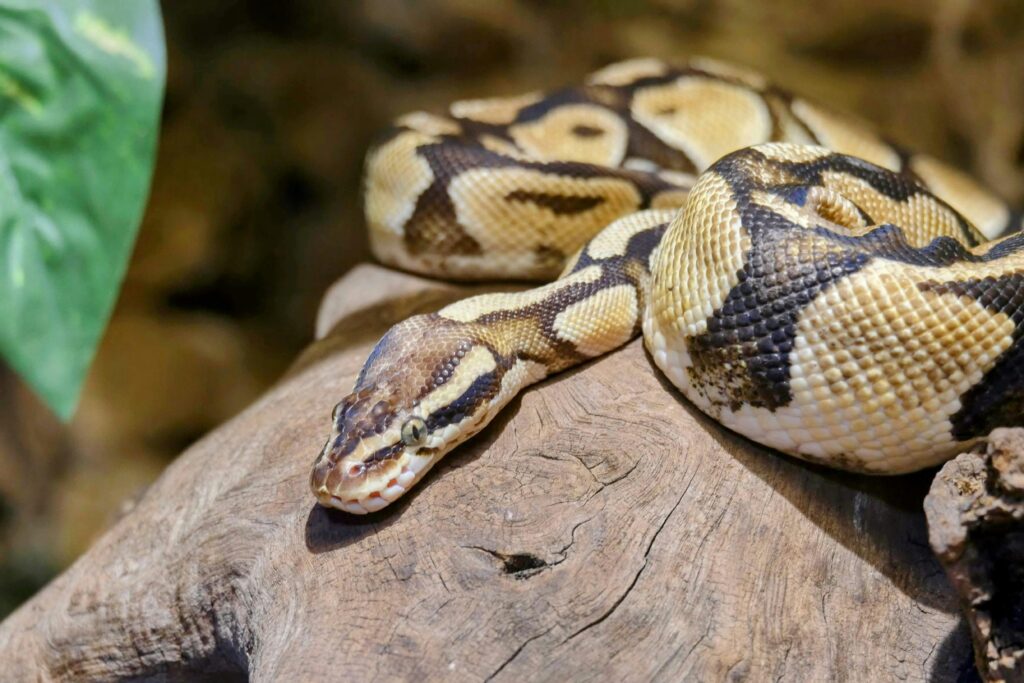
The term “pied” comes from “piebald,” which refers to an animal that has patches of unpigmented skin or scales. In ball pythons, the pied morph is caused by a recessive gene that disrupts the migration of pigment cells during embryonic development. The result is a snake that has areas of normal coloration mixed with completely white (amelanistic) sections. No two pieds are identical—some have minimal white (low‑white pied), others are nearly all white with just a few coloured patches (high‑white pied).
This randomness is what makes pieds so collectable. I remember one clutch where we got three pieds from a pair of heterozygous (het) carriers. One baby was low‑white with a perfect orange saddle on its back. Another was high‑white with just a tiny brown dot on its tail. The third was nearly 50/50. I listed them on our site, and they sold within hours. People love the surprise.
Genetics in a Nutshell
Pied is a simple recessive trait. You need two copies of the pied gene (homozygous) to produce a visual pied. If you breed a visual pied to a normal ball python, all the offspring will be heterozygous (het pied)—they look normal but carry the gene. Pair two het pieds together, and statistically, 25% of the babies will be visual pieds. This predictability makes pieds accessible to anyone with a basic understanding of ball python genetics.
Exploring Related Morphs: From Banana Pied to Blue Eyed Lucy
Once you fall into the ball python morph rabbit hole, it’s hard to climb out. The pied ball python is incredible on its own, but breeders have combined it with other genes to create jaw‑dropping combinations. Here are a few you might encounter—and they often appear in searches for “pied ball python for sale” alongside the classic pied.
Banana Pied Ball Python
Take the bright yellow and orange of a banana ball python and mix it with the random white patches of pied. That’s a banana pied ball python. The banana gene reduces the dark pigments, leaving a soft, pastel‑like background that contrasts beautifully with the stark white pied patches. These snakes often look like tropical candy. I personally adore them because the banana pattern tends to develop small “freckles” with age, which only adds character.
Leucistic Ball Python & Blue Eyed Lucy
Now, don’t confuse pied with leucistic. A leucistic ball python is solid white (or nearly white) with normal‑coloured eyes—usually dark or blue. The most famous leucistic is the blue eyed lucy ball python, which is produced by combining certain genes like Mojave and Lesser. The result is a pure white snake with striking ice‑blue eyes. Unlike a pied, which has patches of colour, a leucistic is uniform. Both are stunning, but they appeal to different aesthetics. I’ve had keepers tell me they want the “clean white snake” (leucistic), while others love the “half‑and‑half” look (pied).
Ball Python Albino
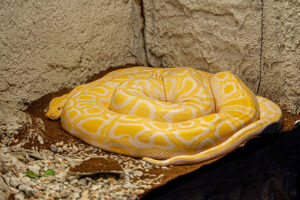
The ball python albino was one of the first recessive morphs, and it’s still popular today. Albinos lack black pigment, resulting in a bright yellow‑and‑white snake with pink eyes. When you combine albino with pied, you get the albino pied—a snake with white patches and yellow/orange patches, no dark pigment anywhere. It’s incredibly beautiful and often expensive.
All these morphs—pied, banana pied, leucistic, blue eyed lucy, and albino—share the same care requirements. So once you’ve mastered basic ball python husbandry, you can confidently keep any of them.
Ball Python Care: The Essentials for Pieds and Beyond
No matter which morph you choose, ball pythons are wonderfully low‑maintenance snakes. They’re docile, slow‑moving, and don’t require gigantic enclosures. But they do have specific needs, especially when it comes to humidity and security. Here’s exactly how we keep our entire collection at Sublime Reptiles—from normal pieds to the rarest blue eyed lucy ball python.
Enclosure Setup
- Hatchling/Juvenile: A 6‑quart tub or a 10‑gallon glass tank with a locking lid works perfectly. Too much open space stresses young balls, so clutter it up with hides and fake plants.
- Adult: A 40‑gallon breeder tank or a 4x2x1 foot PVC enclosure is the gold standard. Ball pythons are terrestrial and cryptic—they spend most of their time in burrows or tight hides, so floor space matters more than height.
We use a simple but effective setup: a layer of cypress mulch or coco coir substrate (holds humidity), two identical tight hides (one on the warm side, one on the cool side), a sturdy water dish, and a few branches or cork flats for texture. The more secure they feel, the better they eat.
Temperature & Heating
- Basking surface: 88‑92°F (31‑33°C). We use an overhead ceramic heat emitter or a deep heat projector connected to a thermostat.
- Warm side ambient: 80‑85°F (27‑29°C)
- Cool side ambient: 75‑80°F (24‑27°C)
- Nighttime: A gentle drop to 72‑75°F (22‑24°C) is fine. We use a heat mat on a thermostat for supplementary belly heat if the room is cold.
Thermostats are non‑negotiable. An unregulated heat source can burn your snake or overheat the enclosure. We use Herpstat and VE‑series thermostats for everything.
Humidity & Shedding
Ball pythons need 50‑60% humidity, with a boost to 65‑75% during shed. We achieve this with a deep substrate layer (4+ inches) that we dampen slightly, and by providing a humidity box—a plastic hide with a hole cut in the top, filled with damp sphagnum moss. If your snake has a stuck shed, resist the urge to pull it off. Soak the snake in a shallow container of lukewarm water for 15‑20 minutes and let the shed come off on its own.
Feeding Schedule
- Hatchlings: Pinky or hopper mice every 5‑7 days.
- Juveniles: Small mice or rat pups every 7‑10 days.
- Adults: Small to medium rats every 10‑14 days. A meal should leave a slight bulge but not stretch the skin excessively.
We feed exclusively frozen‑thawed. Live prey can injure your snake, and ball pythons are known to be reluctant eaters if they get a bad fright. We always feed at night, inside the enclosure, using long feeding tongs. A healthy ball python—whether it’s a pied ball python or a banana pied ball python—will have a strong feeding response, but they can go off feed during the winter months. If they’re losing weight, check your husbandry and consult a vet.
Handling and Temperament
Ball pythons are famously gentle. They curl into a ball (hence the name) when frightened, rarely biting. A well‑socialised pied will happily sit on your lap or wrap around your wrist while you watch a movie. We handle our snakes for about 15‑20 minutes a few times a week, always being careful not to disturb them for at least 48 hours after feeding.
One of our adult female high‑white pieds, named “Marshmallow,” is the calmest snake I’ve ever worked with. She’s the one we pull out for educational talks and photo shoots because she never minds. That said, every snake has its own personality. Some are more head‑shy; some are more curious. Respect their boundaries, and they’ll reward you with years of quiet companionship.
Where to Find a Pied Ball Python for Sale
If you’re ready to bring home a pied ball python, or you’re curious about a blue eyed lucy ball python or a ball python albino, your best bet is a trusted breeder. At Sublime Reptiles, we hatch pieds regularly and offer a live arrival guarantee, genetic history, and lifetime support. We’re proud to produce healthy, well‑started animals that make fantastic pets and breeding projects.
Pieds typically range from $300 to $700 depending on the white coverage and pattern. High‑white individuals and rare combinations (like banana pied) can fetch higher prices. Always ask for feeding records, hatch dates, and photos of the actual snake—not just a stock image.
Frequently Asked Questions
Q: How big do pied ball pythons get?
A: Females reach 4‑5 feet, males 2.5‑3.5 feet. They’re one of the smallest python species.
Q: What’s the difference between pied and leucistic?
A: Pied has random white patches with areas of normal colour. Leucistic is solid white with dark or blue eyes. A blue eyed lucy ball python is a type of leucistic with blue eyes.
Q: Do pied ball pythons need special care?
A: No. Their care is identical to any other ball python. Good husbandry is all they need.
Q: Can you breed a pied to a normal and get pieds?
A: Only if the normal is heterozygous (het) for pied. A visual pied bred to a normal gives 100% het pied offspring—they look normal but carry the gene.
Q: What’s the most expensive pied combination?
A: Combinations like banana pied, albino pied, and especially scaleless pied can cost thousands. Rarity and high‑white coverage drive the price.
Q: Are pied ball pythons good for beginners?
A: Absolutely. They are among the best beginner snakes due to their docile nature and manageable size.
Final Thoughts from Sublime Reptiles
The pied ball python remains one of the most iconic and beloved morphs in the reptile hobby. Whether you’re drawn to the crisp contrast of a high‑white pied, the candy colours of a banana pied ball python, or the ethereal beauty of a blue eyed lucy ball python, there’s a morph that fits your style. And the best part? They’re all as gentle and easy to care for as a classic ball python.
If you’re ready to add a pied to your family, or you just want to chat about ball python genetics, reach out to us at Sublime Reptiles. We’re always happy to help a fellow keeper.
Browse our available pied ball pythons and other morphs at sublimereptilesforsale.com
Quick Reference Care Sheet
| Parameter | Ideal Range |
|---|---|
| Adult Size | Females 4‑5 ft, Males 2.5‑3.5 ft |
| Lifespan | 20‑30 years |
| Enclosure (Adult) | 40‑gallon breeder or 4x2x1 PVC |
| Basking Temperature | 88‑92°F |
| Ambient Temperature | 75‑85°F gradient |
| Humidity | 50‑60% (65‑75% shed) |
| Diet | Frozen‑thawed rats/mice, size‑appropriate |
| Feeding Frequency | Every 5‑14 days depending on age |
| Handling | Very docile; gentle handling a few times weekly |