Hognose Snake 101: Complete Care Guide, Morphs, Setup, and Ownership Tips for 2026
Introduction
The first time I saw a hognose snake play dead, I actually panicked for a second. I was at a reptile expo, watching a breeder show off a juvenile western hognose. The snake flipped onto its back, mouth hanging open, tongue lolling out, completely limp. I thought it had died of stress right there in his hand. Then the breeder gently turned it over, and the little drama queen immediately flipped back onto its belly and gave him an indignant look that seemed to say, “Did I say you could stop watching?”
That’s the hognose snake in a nutshell: dramatic, hilarious, and absolutely endearing. With their unmistakable upturned snouts (perfect for digging), comically exaggerated defensive displays, and generally mild temperament once they realize you’re not a predator, hognose snakes have exploded in popularity over the last decade. And honestly? It’s easy to see why.
But here’s the thing about these charismatic little colubrids—they come with some quirks that surprise first-time owners. Their feeding response can be finicky. They have a mild venom (yes, really) that freaks some people out. And their habitat needs aren’t quite the same as a corn snake or ball python.
The good news? Once you understand them, a hognose snake is one of the most rewarding pet snakes you can own. In this complete 2026 guide, I’ll share everything I’ve learned from keeping and breeding these little actors: from finding a healthy western hognose snake to building the right enclosure, navigating their sometimes-frustrating feeding habits, handling safely, and even exploring the incredible world of hognose morphs. Whether you’re a beginner looking for your first snake or an experienced keeper drawn to those upturned noses, you’re in the right place.
Let’s dig in—pun absolutely intended.
Why the Hognose Snake Makes a Great Pet
Let me be direct: hognose snakes aren’t for everyone. But for the right keeper, they’re absolutely fantastic. Here’s why.
The Personality Factor
If you want a snake that just sits there looking pretty, get a ball python. If you want a snake with actual personality—the kind that makes you laugh, roll your eyes, and fall in love—get a hognose snake. They hiss dramatically (but rarely bite). They puff up their necks like tiny cobras. And when all else fails, they play dead with Oscar-worthy commitment. It’s all bluff, and it’s absolutely hilarious.
Manageable Size
Adult western hognose snakes typically reach 14 to 24 inches (males smaller, females larger). That’s significantly smaller than a ball python or boa. They don’t need massive enclosures, and they’re easy to handle even for people who are a little nervous around snakes.
Low Humidity Requirements
Unlike many tropical snakes that need constant misting and foggers, hognose snakes come from arid grasslands and sandy scrublands. They thrive at 30-50% humidity—normal household levels in most regions. No complicated misting systems required.
No Giant Prey Needed
Even adult hognose snakes eat primarily small to medium mice. You’ll never need to feed rats, which is a relief for keepers who find rats unpleasant or expensive.
The Mild Venom Question
Yes, hognose snakes are technically venomous. But before you panic, hear me out. They have rear-fanged venom designed to subdue toads (their primary prey in the wild). It’s mild, and they rarely chew on humans long enough to envenomate. A bite might cause localized swelling and itching—like a bee sting—but serious reactions are extremely rare. Most keepers go their whole lives without ever being bitten.
Who Should Get a Hognose Snake?
-
First-time snake owners (with research)
-
People who want a smaller snake that stays small
-
Anyone who appreciates snakes with personality and antics
-
Keepers in drier climates (no humidity struggles)
Who should NOT:
-
People with severe allergies to insect or reptile venom (rare but possible)
-
Anyone unwilling to deal with potential feeding fussiness
-
Those who want a snake they can handle every single day
If you’re still here, welcome to the hognose fan club.
Understanding the Western Hognose Snake and Other Species
When people say hognose snake, they’re usually talking about the western hognose snake (Heterodon nasicus). But there are actually three main species in the pet trade. Let me break them down.
| Species | Adult Size | Difficulty | Humidity | Key Traits |
|---|---|---|---|---|
| Western Hognose | 14-24 inches | Beginner | 30-50% | Most common, best for beginners |
| Eastern Hognose | 20-30 inches | Intermediate | 40-60% | More dramatic, pickier eaters, protected in some states |
| Southern Hognose | 14-20 inches | Advanced | 30-50% | Rare, not recommended for beginners |
Why Western is the Winner
The western hognose snake is the gold standard for a reason. They adapt well to captivity, breed readily (creating that huge morph market), and are generally less picky than their eastern cousins. Unless you’re an experienced keeper looking for a specific challenge, start with a western.
Natural History Quick Hit
In the wild, western hognose snakes range from southern Canada through the Great Plains and into northern Mexico. They’re specialized toad-eaters, which explains their quirky feeding habits (more on that later). Their upturned snout isn’t just for looks—it’s a digging tool used to unearth buried toads.
What to Look For When Buying a Hognose Snake
Finding a healthy hognose snake takes some know-how. Here’s my complete buyer’s checklist.
Health Checklist (Print This)
-
Eyes: Clear, bright, no cloudiness (unless in shed). No discharge.
-
Nose (the famous upturned snout): Clean, no bubbles or crust.
-
Mouth: Closed properly. No gaping, drooling, or cheesy material.
-
Skin: Smooth, intact, no stuck shed (especially on the nose and tail tip).
-
Body condition: Rounded but not obese. No visible spine ridge.
-
Movement: Active when stimulated. Should tongue-flick and move purposefully.
-
Vent (cloaca): Clean, no pasty or bloody residue.
Captive-Bred vs. Wild-Caught
Only buy captive-bred. Wild-caught hognose snakes are almost always stressed, refuse food, carry heavy parasite loads, and may be illegal depending on your state. A reputable breeder will proudly tell you their animals are captive-bred.
Questions to Ask the Breeder
-
“What’s the hatch date?”
-
“What has it been eating, and how often?”
-
“Is it on unscented frozen-thawed mice?” (This is critical—toad-scented feeders are a red flag for captive-bred animals)
-
“What supplements, if any, do you use?”
-
“Can I see the parents?” (Especially for morphs)
Red Flags to Walk Away From
-
The seller cannot provide a hatch date or feeding history.
-
The snake is housed on sand (impaction risk) or with other hognoses (they can be cannibalistic).
-
The animal looks skinny, has stuck shed, or shows any signs above.
-
The price is suspiciously low (healthy westerns: 150−500 for normals, 300−1,000+ for morphs).
Setting Up the Perfect Enclosure
Get this right before you bring your hognose snake home. Their enclosure needs are simpler than many reptiles, but details matter.
Enclosure Size Requirements (H3)
These are terrestrial snakes that like to burrow. Floor space matters more than height.
| Age | Minimum Enclosure Size |
|---|---|
| Baby (0-6 months) | 10-gallon or 20″x10″x12″ |
| Juvenile (6-18 months) | 20-gallon long or 30″x12″x12″ |
| Adult (18+ months) | 40-gallon breeder (36″x18″x18″) or larger |
Important: Bigger is fine, but babies in overly large enclosures can struggle to find food. Start smaller and upgrade, or clutter a larger tank heavily with hides and decor.
Substrate Options (H3)
Substrate is critical for hognose snakes because they LOVE to burrow.
| Substrate | Best For | Pros | Cons |
|---|---|---|---|
| Aspen shavings | All ages | Great for burrowing, affordable, absorbs moisture | Doesn’t hold humidity (fine for westerns) |
| Sani-chips | All ages | Clean, low dust, good burrowing | More expensive |
| Reptile carpet | Babies (temporary) | Easy to clean, safe | No burrowing, stressful for hognoses |
| Paper towels | Quarantine/sick snakes | Sterile, easy to monitor | No burrowing, not natural |
Avoid: Sand (impaction risk), cedar/pine (toxic), calcium sand (promotes eating substrate), and pure topsoil outdoors (can contain pesticides).
Hides and Enrichment (H3)
Provide at least two hides: one on the warm side, one on the cool side. Hides should be snug—the snake should touch the sides when curled inside.
Enrichment ideas:
-
Deep substrate (3-4 inches) for burrowing
-
Cork flats or bark pieces to hide under
-
Small branches for low climbing (they will climb occasionally)
-
Cardboard tubes (temporary, replace when soiled)
Lighting and Heating (H3)
Hognose snakes need a proper temperature gradient.
-
Basking surface: 90-92°F (use a low-wattage halogen or basking bulb on a thermostat)
-
Warm side ambient: 85-88°F
-
Cool side ambient: 75-80°F
-
Nighttime: 65-75°F (can drop safely)
UVB: Not required but beneficial. If using, use a low-strength linear UVB (5-6%). Hognose snakes are not heavy baskers.
All heat sources must be on a thermostat to prevent burns.
Humidity Levels (H3)
This is where westerns are easy. Aim for 30-50% humidity. During shedding, boost slightly to 50-60% with a humid hide (container with damp sphagnum moss).
Use a digital hygrometer to monitor. Too high (over 70% consistently) can cause respiratory issues and scale rot.
Temperature Humidity Lighting and Environmental Requirements
Quick reference chart.
| Parameter | Ideal Range | Danger Zone |
|---|---|---|
| Basking surface | 90-92°F (32-33°C) | Above 95°F (burns) |
| Warm side ambient | 85-88°F (29-31°C) | Below 80°F (poor digestion) |
| Cool side ambient | 75-80°F (24-27°C) | Below 70°F (respiratory risk) |
| Nighttime temp | 65-75°F (18-24°C) | Below 60°F (illness) |
| Humidity | 30-50% | Above 60% (respiratory issues) |
| UVB | Optional (5-6% if used) | Not needed |
| Brumation | Optional for breeding (55-65°F for 6-8 weeks) | Not needed for pets |
Feeding Your Hognose Snake: Diet, Supplements, and Feeding Schedule
Feeding is where hognose snakes earn their reputation as drama queens. Let me save you some frustration.
The Toad-Eater Problem
In the wild, western hognose snakes eat primarily toads. Toads smell and taste different from mice. So some captive-bred hognoses initially refuse mice. This is normal and fixable.
Proven Methods for Picky Eaters (In Order of Try)
-
Scenting: Rub the mouse on a toad (if you can source one safely) or use commercial scents (Toad Scent by Reptilinks).
-
Tuna water dip: Dip the mouse in juice from canned tuna (packed in water, not oil).
-
Salmon scent: A drop of salmon oil on the mouse.
-
Egg scent: Rub the mouse on a raw egg.
-
Brain scent: Poke the mouse’s skull to expose brain tissue (gross but effective).
-
Live vs frozen-thawed: As a last resort, try live pinkies or fuzzies (then transition back to frozen-thawed).
Patience is key. Healthy hognose snakes can go weeks without eating. Don’t panic. Don’t force-feed unless a vet advises it.
Prey Size Rule
The prey should be about the same width as the snake’s body at its widest point.
| Age | Prey Type | Frequency |
|---|---|---|
| Hatchling (0-6 months) | Pinkie mouse | Every 5-7 days |
| Juvenile (6-12 months) | Fuzzy mouse | Every 7 days |
| Sub-adult (12-18 months) | Hopper mouse | Every 7-10 days |
| Adult (18+ months) | Small adult mouse | Every 10-14 days |
Supplements
| Supplement | Frequency | Notes |
|---|---|---|
| Calcium (without D3) | Every feeding | Light dusting on mouse |
| Calcium with D3 | Every 3-4 feedings (if no UVB) | Light dusting |
| Multivitamin | Every 3-4 feedings | Light dusting |
Water
Provide a shallow, heavy water bowl that cannot tip. Change water daily. Hognose snakes will drink from standing water.
Feeding Refusal Tips
-
Check temperatures first. Too cold is the #1 reason for refusal.
-
Don’t handle for 24 hours before feeding.
-
Feed in the evening (they are crepuscular in the wild).
-
Leave prey in enclosure overnight (but remove if uneaten by morning).
-
Try a different prey type (mouse vs. rat pinkie—though mice are preferred).
-
Wait. If your snake is healthy, it will eventually eat.
Handling, Temperament, and Enrichment Ideas
Here’s where hognose snakes really shine—once you understand their bluffing behavior.
Understanding the Bluff
Your western hognose snake will probably do this when you first reach in:
-
Hiss loudly
-
Flatten its neck into a “cobra” hood
-
Fake-strike with a closed mouth (bump you with its nose)
-
Roll onto its back and play dead
It’s all theater. They are terrified of you and trying to look scary. The moment you pick them up gently, they almost always calm down immediately.
Proper Handling Technique
-
Approach from the side (not from above).
-
Use a hook or gently scoop from underneath if the snake is defensive.
-
Support the entire body once lifted.
-
Keep handling sessions short (5-10 minutes for babies, 10-15 for adults).
-
Handle 2-3 times weekly to maintain tameness.
After Handling
Within a few weeks of regular, gentle handling, most hognose snakes stop the dramatic displays entirely. They learn you’re not a predator. My adult female actually comes toward my hand now—not for food, but because she’s curious.
Enrichment Ideas
-
Deep substrate (4 inches) for burrowing tunnels
-
Different textures (cork, aspen, flat rocks)
-
Climbing opportunities (low branches or ledges)
-
Scent trails (drag a mouse across the enclosure before feeding)
-
Rearrange decor every few weeks
Common Health Issues and Preventative Care
Even hardy hognose snakes can face health issues. Here’s what to watch for.
| Condition | Signs | Causes | Prevention |
|---|---|---|---|
| Respiratory infection | Wheezing, bubbles from nose, open-mouth breathing | Low temps, high humidity | Proper temperature gradient |
| Mites | Tiny black/red specks on skin, soaking excessively | Contaminated substrate, new animals | Quarantine, paper towel substrate initially |
| Stuck shed | Retained skin on nose, eyes, tail tip | Low humidity (under 20%) | Proper humidity, humid hide |
| Parasites | Weight loss, runny stool, no appetite | Wild-caught prey, poor hygiene | Annual fecal exams, frozen-thawed prey |
| Obesity | Overly round body, fat rolls | Overfeeding, too frequent meals | Follow feeding schedule |
| Mouth rot | Cheesy material in mouth, swollen gums | Stress, injury | Clean enclosure, avoid rough prey |
Preventative Care Checklist
-
Daily: Spot-clean enclosure, check water, observe behavior.
-
Weekly: Deep-clean water bowl, check for stuck shed.
-
Monthly: Full substrate change (or spot-clean heavily), weigh your snake.
-
Annually: Veterinary wellness exam with fecal float (optional for healthy snakes, recommended).
Breeding Hognose Snakes: Basics for Hobbyists
Breeding western hognose snakes has become a serious niche for dedicated hobbyists. But it’s not a casual project.
Requirements
-
Age: Females at least 2 years old and 250+ grams. Males at least 18 months and 80+ grams.
-
Health: Both snakes must be parasite-free, well-fed, and in excellent condition.
-
Brumation: Many breeders cool their hognoses for 6-8 weeks at 55-65°F to stimulate breeding. This requires experience and careful monitoring.
-
Clutch size: 10-30 eggs per clutch (smaller for young females).
-
Incubation: 82-85°F, 60-70% humidity. Hatchlings emerge after 45-60 days.
Ethical Considerations
-
Only breed if you have homes lined up for hatchlings.
-
The morph market fluctuates; don’t breed expecting to get rich.
-
Be prepared to house babies separately (they can be cannibalistic).
-
Never breed sibling pairs repeatedly.
Popular Hognose Snake Morphs and Color Varieties
One of the most exciting things about hognose snakes is the incredible variety of morphs. When you search for a hognose snake, you’ll discover a rainbow of options.
Albino Hognose For Sale
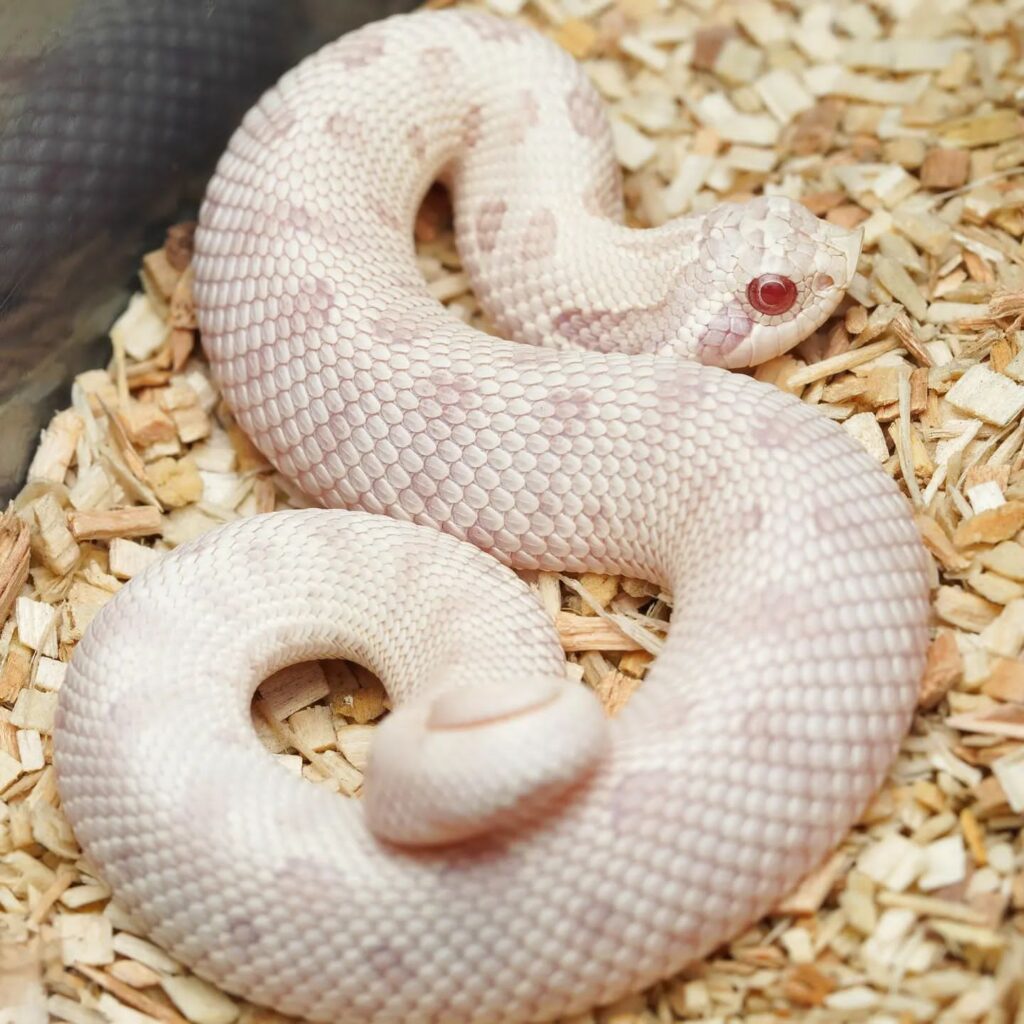
The Albino Hognose For Sale is one of the most popular and affordable morphs. These snakes lack dark pigment (melanin), resulting in bright yellow, orange, and white coloration with pinkish-red eyes. They maintain the classic hognose pattern but in warm, glowing tones.
Care note: Albino hognoses are slightly more sensitive to bright light due to their pink eyes. Provide extra hiding spots and avoid extremely intense lighting.
-
Rarity: Common
-
Price range: 250−500
-
Good for beginners? Yes (same care as normal)
Snow Anaconda Hognose For Sale
The Snow Anaconda Hognose For Sale is a showstopper. This is a combination morph: “Snow” (albino + axanthic, removing both dark and red pigments) plus “Anaconda” (reduced pattern, conda-like dorsal spots). The result is a nearly patternless pinkish-white or cream snake with a clean, elegant appearance.
Care note: Same care as any western hognose. No special requirements. Snows are highly sought after and often have waiting lists.
-
Rarity: Uncommon to rare
-
Price range: 800−2,000+
-
Good for beginners? Yes, but expensive for a first snake
Super Anaconda Hognose For Sale
The Super Anaconda Hognose For Sale takes the Anaconda gene to its extreme. While a single Anaconda gene reduces pattern, the “Super” form (two copies of the gene) eliminates virtually all pattern, leaving a solid-colored snake with maybe a few scattered spots. Super Anacondas can be combined with other morphs (Albino Super Anaconda, Snow Super Anaconda, etc.) for even more striking looks.
Care note: Same care as normal westerns. No special requirements.
-
Rarity: Uncommon
-
Price range: 600−1,500 (depending on additional morphs)
-
Good for beginners? Yes, but pricey
Morph Comparison Table
| Morph | Appearance | Rarity | Price Range | Beginner Friendly |
|---|---|---|---|---|
| Normal/Wild-type | Brown/tan with dark blotches | Common | 150−250 | Yes |
| Albino | Yellow, orange, white with red eyes | Common | 250−500 | Yes |
| Anaconda | Reduced pattern, conda spots | Moderate | 300−600 | Yes |
| Snow | Pinkish-white, patternless or near-patternless | Uncommon | 800−2,000+ | Yes (but expensive) |
| Super Anaconda | Nearly patternless, solid color | Uncommon | 600−1,500+ | Yes |
| Axanthic | Black, white, gray (no red/yellow) | Moderate | 400−800 | Yes |
FAQ Section
1. How big does a hognose snake get?
Adult western hognose snakes range from 14 to 24 inches. Males are significantly smaller (14-20 inches, 50-80 grams) than females (20-24 inches, 150-300+ grams).
2. Is a hognose snake good for beginners?
Yes, with caveats. Their care requirements (humidity, temperature, enclosure size) are beginner-friendly. However, their feeding fussiness can frustrate new keepers. If you’re patient and willing to learn scenting techniques, they’re excellent first snakes.
3. Do hognose snakes bite?
They can, but they rarely do. Their primary defense is bluffing (hissing, hooding, fake-striking). Bites usually happen only if the snake mistakes your hand for food. Their rear-fanged venom is mild—localized swelling and itching at worst for most people.
4. Are hognose snakes venomous?
Yes, but it’s mild rear-fanged venom designed to subdue toads. It’s not dangerous to humans under normal circumstances. The risk is extremely low, and serious reactions are rare. Always wash any bite thoroughly.
5. How much does a hognose snake cost?
Normals and common morphs (albino, anaconda) range from 150−600. High-end morphs like Snow Anaconda or Super Anaconda can cost 800−2,000+.
6. What size tank does a hognose snake need?
Adults need a minimum of a 40-gallon breeder (36″x18″x18″). Babies can start in 10-gallon tanks or 20-gallon longs. Larger is fine if cluttered.
7. What do hognose snakes eat?
Frozen-thawed mice, appropriately sized. Some picky eaters need scented prey initially (toad scent, tuna water, salmon oil). Never feed wild-caught prey.
8. Why isn’t my hognose snake eating?
Check temperatures first (basking 90-92°F). If temperatures are correct, the snake may be in shed, or it may be a picky eater. Try scenting techniques. Healthy hognoses can fast for weeks or months without harm—don’t panic.
9. How long do hognose snakes live?
With proper care, 12-18 years. Some have reached 20+ years.
10. Do hognose snakes need UVB?
No, they can thrive without UVB if given proper dietary vitamin D3. However, low-level UVB (5-6%) is beneficial and may improve activity and color.
11. Can you house two hognose snakes together?
No. Hognose snakes are solitary and can be cannibalistic, especially if one is larger than the other. House them separately.
12. Where should I buy a hognose snake?
From a reputable breeder (online platforms like MorphMarket, reptile expos) who can provide hatch dates, feeding records, and parent information. Avoid chain pet stores and wild-caught imports.
Conclusion
Bringing home a hognose snake is like adopting a tiny, scaly drama student. They’ll hiss at you. They’ll play dead for you. They’ll occasionally refuse food just to keep you on your toes. But beneath all that theatrical bluffing is one of the most charming, personable, and rewarding pet snakes you can own.
I’ve kept dozens of snake species over the years, and my western hognose snake remains a favorite. She doesn’t just tolerate handling—she seems to enjoy it. She watches me when I walk into the room. She comes out of her burrow when she hears my voice. That’s not anthropomorphism; that’s a reptile that has learned to trust.
If you’re ready for a snake that will make you laugh, test your patience (just a little), and reward you with years of quirky companionship, the hognose snake is your perfect match.
Your next steps:
-
Master hognose snake enclosure setup with our equipment checklist
-
Explore hognose snake morphs to find your perfect color
-
Find ethical hognose snake breeders near you or online
Whether you’re searching for an Albino Hognose For Sale, a stunning Snow Anaconda Hognose For Sale, or a rare Super Anaconda Hognose For Sale, do your homework first. Buy captive-bred from a reputable source. Set up the enclosure before the snake arrives. And most importantly, respect that little upturned nose for what it is: the face of one of the most delightful snakes in the reptile world.
Your hognose adventure starts now. Enjoy every hiss, every bluff, and every moment of that ridiculous, adorable play-dead routine. Happy keeping.