Fat Tailed Gecko: Complete Care Guide, Setup, Morphs, and What You Need to Know in 2026
If you’re considering bringing a reptile into your home, the fat tailed gecko might just be the perfect addition to your family. With their striking appearance—featuring bold bands, smooth skin, and that signature plump tail—combined with a docile personality and straightforward care requirements, these charming creatures have become increasingly popular pets. The African fat tail gecko (Hemitheconyx caudicinctus), in particular, captures the hearts of reptile enthusiasts worldwide. As an experienced reptile keeper with over a decade of hands-on gecko care, I can attest to their unique charm and suitability for both novice and seasoned reptile owners.
In this comprehensive guide—now expanded to over 2,000 words—we’ll explore the myriad reasons why the fat tailed gecko is a fantastic pet choice. We will cover their fascinating natural history, essential care requirements, important health considerations, and even related species that might pique your interest. Whether you’re a first-time reptile owner or an experienced keeper looking to expand your knowledge, this guide will serve as an invaluable resource.
Throughout this article, I will share my practical experiences and tips gathered over years of keeping and breeding these gentle geckos, ensuring that you get the most relevant, real-world advice possible. So, sit back, relax, and let’s delve into the wonderful world of fat tailed geckos!
Why the Fat Tailed Gecko is a Great Pet Choice (Expanded)
When it comes to choosing a pet reptile, the fat tailed gecko stands out for several compelling reasons. Let’s explore each in detail.
Docile and Handlable Nature
One of the most appealing aspects of this species is its temperament. Fat tailed geckos are typically known for being calm and gentle, making them ideal for handling and interaction. Unlike more skittish reptiles such as day geckos or many species of anoles, fat tailed geckos rarely bolt or leap from your hands. They often tolerate being held for short periods, and many individuals will calmly rest on a warm palm. This makes them especially suitable for families with older children (under supervision) and for first-time reptile owners who may be nervous about handling.
Manageable Space Requirements
Unlike some larger reptiles that require extensive enclosures—think iguanas needing 6-foot-tall cages or monitor lizards requiring entire rooms—fat tailed geckos can thrive in smaller habitats. A single adult does well in a 20-gallon long tank (30″x12″x12″). This compact footprint makes them perfect for apartment dwellers, college students, or anyone with limited home space. You can easily place their enclosure on a dresser, desk, or dedicated reptile stand without sacrificing your living area.
Low Maintenance Care Routine
If you’re worried about intensive care routines, the fat tailed gecko simplifies the process considerably. Their diet is relatively straightforward—primarily crickets and mealworms with calcium supplementation. They do not require UVB lighting (though low levels can be beneficial), and their humidity needs (30–40%) are easy to achieve with occasional misting. Daily tasks take only 5–10 minutes: spot-cleaning, refreshing water, and offering food. Weekly deep cleans take 20–30 minutes. Compared to reptiles like chameleons or arboreal geckos, fat tailed geckos are delightfully low-maintenance.
Stunning Color and Pattern Variability
Fat tailed geckos come in a range of attractive morphs, including various patterns and colors, allowing owners to choose one that matches their aesthetic preferences. From the classic wild-type (brown bands on a tan background) to striking albino, patternless, white-out, and Zulu morphs, there is a fat tailed gecko for every taste. Some morphs feature bold orange, caramel, or even lavender hues. This color variability adds to their appeal, making each gecko feel unique.
Long Lifespan and Meaningful Companionship
With proper care, fat tailed geckos can live 15–20 years in captivity. This means they are not a short-term commitment but rather a long-term companion that can grow with you through different life stages. Many keepers form strong bonds with their geckos over a decade or more, finding comfort in their quiet, predictable presence.
Understanding the African Fat Tail Gecko: Species Overview and Natural History
To provide the best care, it helps to understand where your pet comes from. The African fat tail gecko (Hemitheconyx caudicinctus) hails from the dry, arid regions of West Africa, including countries like Ghana, Togo, Benin, Nigeria, Cameroon, and parts of Senegal. Unlike the closely related leopard gecko (which comes from arid rocky deserts), the African fat tail gecko inhabits more savanna-like environments with slightly higher humidity and seasonal rainfall.
Natural Behavior in the Wild
These geckos are nocturnal hunters, spending their nights in search of insects, spiders, and other invertebrates while remaining hidden under rocks, in burrows, or among leaf litter during the day. They are terrestrial (ground-dwelling) rather than arboreal (tree-dwelling), meaning they prefer horizontal space over vertical climbing opportunities. Understanding their natural habitat is essential for replicating their needs at home—they need ground hides, not tall branches.
Distinctive Physical Features
Their smooth, soft skin is a key differentiator from leopard geckos (which have more granular, bumpy skin). The body is relatively short and robust, complemented by a distinctively fat tail—a key feature that not only gives them their name but also serves a practical purpose. The tail acts as a fat storage organ, allowing them to keep energy reserves during lean times in the wild. A plump tail is a sign of good health; a thin tail suggests malnutrition or illness.
Notable Features Summary
| Feature | Detail |
|---|---|
| Scientific Name | Hemitheconyx caudicinctus |
| Adult Size | 7–10 inches (18–25 cm) |
| Adult Weight | 45–75 grams |
| Lifespan | 15–20 years (captivity) |
| Native Region | West Africa (savanna and scrubland) |
| Activity Pattern | Nocturnal (active at dusk/night) |
| Temperament | Docile, rarely bites |
| Typical Price Range | 50–300 depending on morph |
Choosing and Buying a Healthy Fat Tailed Gecko (Expanded)
When you’re ready to welcome a fat tailed gecko into your home, it’s crucial to choose a healthy specimen from a reputable source. Here are detailed tips for selecting the right one.
Research Reputable Breeders
Look for breeders with positive reviews on morph-specific forums (e.g., MorphMarket, SublimeReptiles, FaunaClassifieds, GeckoForums). Ethical breeders prioritize animal welfare, maintain clean facilities, and can provide genetic and health histories. Avoid pet stores that source their animals from reptile mills or cannot answer basic questions about hatch dates, feeding, or lineage. A responsible breeder will happily share:
-
Hatch date and age
-
Feeding records (what, how often, prey size)
-
Shedding history
-
Any known health issues in the clutch
-
Photos of parents
Health Indicators Checklist
A healthy fat tailed gecko should display the following:
-
Clear, Bright Eyes: No cloudiness, discharge, or swelling. Sunken eyes indicate dehydration.
-
Smooth, Clean Skin: No lesions, bumps, stuck shed (especially on toes and tail tip), or discoloration.
-
Plump Tail: The tail should be thick and rounded, not bony or wrinkled.
-
Firm Body: The gecko should feel solid, not limp. You should be able to feel the spine but not see it prominently.
-
Clean Vent (Cloaca): No pasty, bloody, or foul-smelling discharge.
-
Alert and Responsive: When gently touched or when you approach, the gecko should open its eyes, move, or change position. Lethargy is a red flag.
-
No Respiratory Signs: No wheezing, clicking, open-mouth breathing, or mucus bubbles from nostrils.
Behavior Assessment
Ideally, the gecko should be alert and responsive. If it seems lethargic, refuses to open its eyes during the day (though some sleep), or hides excessively even when disturbed, that might indicate health issues. A healthy gecko may be sleeping during the day (they are nocturnal) but should wake within 30 seconds of gentle stimulation.
Age Consideration
| Age | Pros | Cons |
|---|---|---|
| Hatchling (0–3 months) | Less expensive, longer time together | More delicate, requires smaller prey, may refuse food |
| Juvenile (3–12 months) | Hardier than hatchlings, established feeder | Still growing, needs monitoring |
| Adult (12+ months) | Most forgiving of care mistakes, calmest to handle | Shorter remaining lifespan, may cost more |
For first-time owners, a juvenile or young adult (6–12 months) is ideal—old enough to be stable but young enough to bond with you for many years.
Setting Up the Perfect Enclosure (Expanded)
Creating a comfortable and secure environment is key to keeping your fat tailed gecko happy and healthy. Below, I’ve broken down essential elements of enclosure setup in detail.
Tank Size by Age
| Age | Minimum Tank Size | Why |
|---|---|---|
| Hatchling (0–3 months) | 10-gallon (20″x10″x12″) | Small space helps babies find food |
| Juvenile (3–12 months) | 20-gallon long (30″x12″x12″) | Allows for proper temperature gradient |
| Adult (12+ months) | 20–30 gallon long (30″x12″x12″ to 36″x18″x12″) | Adults need room to exercise and thermoregulate |
Important: Fat tailed geckos are terrestrial, so floor space matters more than height. A 20-gallon long tank is the gold standard for a single adult. Larger enclosures (40-gallon breeder) are acceptable but must be cluttered with hides to prevent stress.
Best Substrate Choices
| Substrate | Best For | Pros | Cons |
|---|---|---|---|
| Paper towels | Hatchlings, quarantine, sick geckos | Cheap, safe, easy to monitor feces | Not natural, needs frequent replacement |
| Reptile carpet | Any age | Reusable, safe, easy to clean | Harbors bacteria if not washed weekly |
| Slate or ceramic tile | Adults (best overall) | Easy to clean, retains heat, files nails | No burrowing opportunity |
| Coco fiber (Eco Earth) | Juveniles/adults (with care) | Natural, holds humidity for humid hide | Can be ingested, monitor for mold |
| Topsoil/sand mix (70/30) | Experienced keepers only | Naturalistic, allows burrowing | Impaction risk if husbandry poor |
Avoid: Sand alone, walnut shell, wood shavings (cedar/pine), calcium sand.
Hides and Enrichment (Critical for Security)
Geckos need hiding spots to feel secure. Provide at least three hides:
-
Warm hide on the heated side (80–85°F)
-
Cool hide on the unheated side (75–78°F)
-
Humid hide (a container with damp sphagnum moss) to aid shedding
Hides should be snug—the gecko should touch the sides when curled inside. Options include cork bark flats, ceramic pots on their sides, commercially available reptile caves, or plastic food containers with cut-out doors (edges smoothed).
Humidity Management (Critical for Shedding)
Maintaining humidity levels is essential for the health of your gecko, especially for proper shedding. The ideal humidity range is typically 30–40% for the main enclosure, with a humid hide at 70–80%. You can achieve this through:
-
Lightly misting the enclosure 1–2 times per week (not soaking)
-
Providing a humid hide filled with damp sphagnum moss or paper towels
-
Using a digital hygrometer to monitor levels
Too low humidity (below 25%) causes stuck sheds and toe loss. Too high (above 60% constantly) promotes respiratory infections and scale rot.
Heating & Temperature Gradient
Fat tailed geckos thrive in a temperature gradient, allowing them to thermoregulate:
| Zone | Temperature | How to Achieve |
|---|---|---|
| Warm side (basking surface) | 88–90°F (31–32°C) | Under-tank heater (UTH) on a thermostat |
| Warm side ambient | 80–84°F (27–29°C) | Heat mat + low-wattage CHE if needed |
| Cool side ambient | 75–80°F (24–27°C) | No direct heat source |
| Nighttime | 70–75°F (21–24°C) | Allow natural drop; use CHE if below 65°F |
Critical: All heat sources must be regulated by a thermostat to prevent burns. Under-tank heaters without a thermostat can reach 120°F+. Use digital probe thermometers on both sides.
Lighting
Fat tailed geckos do not require UVB lighting to survive (they synthesize vitamin D3 from dietary supplements). However, low-level UVB (2–5%) can improve activity, coloration, and immune function. Provide a simple 12-hour light/dark cycle using an LED or low-wattage fluorescent bulb. Never use bright white lights at night; if nighttime observation is desired, use a moonlight LED or red bulb (though red light can disrupt circadian rhythms).
Temperature, Humidity, and Environmental Requirements (Quick Chart)
| Parameter | Ideal Range | Notes |
|---|---|---|
| Basking surface (warm hide floor) | 88–90°F (31–32°C) | Measure with infrared gun |
| Warm side ambient | 80–84°F (27–29°C) | Digital probe thermometer |
| Cool side ambient | 75–80°F (24–27°C) | Digital probe thermometer |
| Nighttime temperature | 70–75°F (21–24°C) | Can drop to 65°F briefly |
| Main enclosure humidity | 30–40% | Digital hygrometer |
| Humid hide humidity | 70–80% | Damp moss, changed weekly |
| Lighting cycle | 12 hours on / 12 hours off | Timer recommended |
Diet and Feeding Schedule for Fat Tailed Geckos (Expanded)
Feeding your fat tailed gecko a balanced, nutritious diet is vital for their health, growth, and tail fat storage. They are insectivores (eat only insects) and should never be fed fruits, vegetables, or commercial fruit-based gecko diets (those are for crested geckos).
Primary Food Insects
-
Crickets: Excellent staple. Gut-load with nutritious vegetables 24 hours before feeding.
-
Mealworms: Good staple, easy to keep. High in fat, so rotate with crickets.
-
Dubia roaches: Superior nutrition, cannot climb smooth surfaces, quiet. Best staple but more expensive.
-
Black soldier fly larvae (BSFL/calciworms): High calcium, no dusting needed.
-
Waxworms & butterworms: Treats only (high fat, addictive). Offer once every 1–2 weeks.
Prey Size Rule
Insects should be no larger than the width of the gecko’s head between the eyes. Too-large prey can cause impaction or regurgitation.
| Age | Cricket Size | Mealworm Size | Dubia Size |
|---|---|---|---|
| Hatchling (0–3 months) | Pinhead (1/8″) | Small (1/4″) | Small (1/4″) |
| Juvenile (3–12 months) | Small (1/4″) | Medium (1/2″) | Medium (1/2″) |
| Adult (12+ months) | Medium-large (1/2–3/4″) | Large (3/4″) | Large (3/4″) |
Supplementation Schedule (Critical)
Fat tailed geckos need calcium and vitamin D3 to prevent metabolic bone disease (MBD). Use a pure calcium powder (without D3) for most feedings, and a calcium with D3 1–2 times weekly.
| Age | Calcium (without D3) | Calcium with D3 | Multivitamin |
|---|---|---|---|
| Hatchlings | Dust insects daily | 1x per week | 1x per week |
| Juveniles | Dust insects at every feeding | 1x per week | 1x every 10 days |
| Adults | Dust insects at 2/3 of feedings | 1x every 10 days | 1x every 2 weeks |
Method: Place insects in a plastic bag or cup with a pinch of powder, shake gently, then feed immediately. Avoid over-dusting (white-coated insects).
Feeding Chart by Age
| Age | Feeding Frequency | Insects per Feeding | Treats |
|---|---|---|---|
| Hatchlings (0–3 months) | Daily | 5–8 small crickets or 3–5 small mealworms | None |
| Juveniles (3–12 months) | Every other day | 8–12 small crickets or 5–8 mealworms | 1–2 waxworms weekly |
| Adults (12+ months) | 3–4 times per week | 10–15 crickets or 6–10 mealworms | 2–3 waxworms weekly |
Water and Hydration
Provide a shallow water bowl (no deeper than the gecko’s knees) with fresh, dechlorinated water changed daily. Fat tailed geckos will drink from standing water. Also mist the humid hide and enclosure walls lightly 1–2 times weekly.
Foods to Avoid
-
Wild-caught insects (pesticide risk)
-
Fireflies (deadly toxic)
-
Fruits or vegetables (cannot digest)
-
Pinkie mice (too large, fatty, unnecessary)
Handling, Temperament, and Enrichment Ideas (Expanded)
Although fat tailed geckos can be handled, it’s important to build trust gradually. They are not naturally social animals, but with patience, they learn that you are not a threat.
Step-by-Step Taming Process
Week 1: No handling. Place your hand in the enclosure for 5 minutes daily without moving toward the gecko.
Week 2: Offer food from tongs or your open palm. Let the gecko come to you.
Week 3: Gently scoop from underneath, supporting all four feet and the belly. Hold for 3–5 minutes.
Week 4+: Gradually increase to 10–15 minute sessions, 2–3 times per week.
Proper Handling Techniques
-
Always approach from the side, never from above (predator instinct).
-
Support the entire body. Never grab the tail—fat tailed geckos can drop their tails as a defense mechanism (autotomy). The tail will regrow but will look different (smoother, shorter).
-
Never pick up a gecko that is in shed (irritable) or has just eaten (risk of regurgitation).
-
Wash hands before and after handling to remove oils and bacteria.
Enrichment Ideas to Prevent Boredom
Providing enrichment can keep your gecko mentally stimulated and physically healthy:
-
Climbing Structures (low): Add flat rocks, cork flats, or low branches (no higher than 4–6 inches, as falls can injure terrestrial geckos).
-
Rotating Hides: Swap hiding spots or add new ones monthly.
-
Puzzle Feeding: Hide insects inside a shallow dish with small pebbles or under a cork flat.
-
Substrate Variety (for experienced keepers): Offer a dig box with safe soil mix.
-
Scent Trails: Drag a cricket across the enclosure floor before releasing it.
Signs of a Happy, Healthy Gecko
-
Active at night: Exploring, hunting, moving between hides.
-
Clear, bright eyes when awake.
-
Plump tail and smooth skin.
-
Consistent appetite.
-
Curious behavior: Watching you move around the room, tongue-flicking.
Signs of Stress
-
Hiding constantly (even at night)
-
Refusing food for extended periods
-
Tail dropping (autotomy)
-
Frantic running or glass surfing
-
Darkened coloration or stress marks
Growth Stages and Long-Term Care (Expanded)
Monitoring your fat tailed gecko’s growth is essential, especially during juvenile stages. Regular weighing can help track growth and ensure your gecko is feeding well.
Growth Timeline
| Age | Length (SVL – snout to vent) | Weight | Milestones |
|---|---|---|---|
| Hatchling (0–1 month) | 2–3 inches | 3–5 grams | First shed within 7–10 days |
| Juvenile (1–6 months) | 4–6 inches | 10–25 grams | Rapid growth, weekly weight gain |
| Sub-adult (6–12 months) | 6–8 inches | 25–45 grams | Slowing growth, adult coloration emerging |
| Adult (12+ months) | 7–10 inches | 45–75 grams | Full size, mature temperament |
Weekly Health Checklist
-
Weigh your gecko on a digital kitchen scale. Record weight. A sudden drop of 10%+ warrants a vet visit.
-
Check for stuck shed on toes and tail tip.
-
Observe feeding response and stool quality (firm, brown/white urates).
-
Inspect skin for mites, lesions, or bumps.
Signs of a Healthy Fat Tailed Gecko (Recap)
-
Bright, clear eyes
-
Smooth, intact skin without lesions or bumps
-
Plump, rounded tail
-
Active and curious behavior at night
-
Consistent feeding response
-
Regular, well-formed stools
Common Health Issues and Preventative Care (Expanded)
Understanding potential health issues can help you keep your fat tailed gecko happy and thriving. Here are the most common conditions with expanded prevention and treatment guidance.
1. Metabolic Bone Disease (MBD)
Causes: Calcium deficiency, improper calcium-to-phosphorus ratio, or lack of vitamin D3 (even though fat tailed geckos don’t need UVB, they still need dietary D3).
Symptoms: Rubber jaw, tremors, lethargy, curved spine, inability to lift body off ground, bent limbs.
Prevention: Dust insects with calcium + D3 at every feeding for juveniles, 2–3x weekly for adults.
Treatment: Veterinary liquid calcium injections, UVB provision, dietary correction. Early MBD can be reversed; advanced cases are permanent.
2. Respiratory Infections
Causes: Low temperatures (below 70°F consistently), high humidity (above 60% without ventilation), or drafts.
Symptoms: Wheezing, clicking, open-mouth breathing, mucus bubbles from nostrils, lethargy, holding head upright.
Prevention: Maintain proper temperature gradient (88–90°F warm side, 75–80°F cool side) and humidity (30–40%).
Treatment: Increase ambient temperature to 82–84°F. Veterinary antibiotics (enrofloxacin, ceftazidime) are often required.
3. Parasites (Coccidia, Pinworms, Crypto)
Causes: Contaminated insects, dirty enclosure, new geckos introduced without quarantine.
Symptoms: Weight loss despite eating, runny or foul-smelling stool, undigested insects in feces, lethargy.
Prevention: Annual fecal exams at a reptile vet. Quarantine new geckos for 60–90 days.
Treatment: Prescription antiparasitics (ponazuril, fenbendazole, metronidazole) based on fecal float results.
4. Dysecdysis (Stuck Shed)
Causes: Low humidity (below 25%), dehydration, lack of rough surfaces.
Symptoms: Patches of old skin remaining, especially on toes (can constrict and cause toe loss) and tail tip.
Prevention: Maintain 30–40% humidity, provide a humid hide (damp moss) at all times, especially during shed cycles.
Treatment: Soak gecko in shallow, lukewarm water (80–85°F) for 10–15 minutes, then gently roll off loose skin with a damp Q-tip. Never pull dry skin.
5. Impaction
Causes: Ingestion of loose substrate (sand, soil), oversized insects, dehydration.
Symptoms: Bloated belly, straining to defecate, loss of appetite, lethargy.
Prevention: Use safe substrates (paper towels, tile, reptile carpet) for juveniles. For adults using loose substrate, ensure proper temperatures and hydration.
Treatment: Warm baths, gentle belly massage, liquid paraffin (veterinarian prescribed). Surgery in severe cases.
Preventative Care Checklist
| Frequency | Tasks |
|---|---|
| Daily | Spot-clean enclosure (feces, urates, dead insects). Refresh water bowl. Observe behavior. |
| Weekly | Deep-clean water bowl. Weigh gecko. Check for stuck shed. Replace humid hide moss if soiled. |
| Monthly | Full enclosure deep-clean with reptile-safe disinfectant (F10 or diluted chlorhexidine). Replace substrate completely. |
| Annually | Veterinary wellness exam with fecal float. |
Breeding Fat Tailed Geckos: Basics for Hobbyists (Expanded)
Breeding fat tailed geckos can be a rewarding venture for enthusiasts who have mastered basic care. However, it is not a way to make quick money—ethical breeding requires time, space, and commitment.
Requirements for Breeding
-
Age: Females at least 18 months old (preferably 2+ years) and 50+ grams. Males at least 12 months old and 45+ grams.
-
Health: Both geckos must be parasite-free, well-fed, and in excellent body condition.
-
Breeding season: Typically January–April after a 6–8 week cooling period (brumation) at 65–70°F.
-
Pairing: Introduce the male into the female’s enclosure for 3–5 days, then remove. Repeat until copulation is observed.
-
Gravidity: After successful mating, the female will become gravid. She will develop visible eggs (pink oval shapes in the lower abdomen).
-
Egg laying: Provide a lay box (plastic tub with a hole) filled with damp vermiculite or sphagnum moss. Females lay 1–2 eggs every 30–45 days, up to 4–6 clutches per season.
-
Incubation: Remove eggs within 2 hours of laying. Incubate in a sealed container with damp vermiculite (1:1 ratio by weight with water) at 80–84°F. Incubation takes 50–70 days.
-
Hatchling care: Hatchlings emerge 2–3 inches long. Raise them on paper towels, pinhead crickets, and maintain 80–85°F warm side.
Ethical Considerations
-
Have homes lined up before breeding.
-
Do not breed siblings repeatedly (inbreeding depression).
-
Be prepared to house hatchlings separately (they can be territorial).
-
Never breed geckos with known genetic defects.
Related Gecko Species and Exciting Options (Expanded)
Many enthusiasts who love the fat tailed gecko also explore other impressive gecko species. Here are noteworthy picks with expanded details:
1. Super Pink Nu Ana Leachianus Gecko
Known for their vibrant pink hues and massive size, Super Pink Nu Ana Leachianus geckos (Rhacodactylus leachianus) are a stunning cousin of the fat tailed gecko. Native to New Caledonia, these are the largest geckos in the world, reaching 12–17 inches and 200–400 grams. Though they require more space (24″x24″x36″ minimum) and higher humidity (60–80%), their striking appearance, unique vocalizations (barking!), and manageable temperament make them a sought-after choice for advanced keepers. Care similarity: Both are nocturnal and insectivorous (though Leachianus also eat fruit puree). Key differences: Leachianus need vertical space and higher humidity.
2. West Indian Leopard Gecko (Eublepharis fuscus)
The West Indian Leopard Gecko is another attractive option for reptile lovers, boasting beautiful patterns and a similar docile nature. Much like the fat tailed gecko, they are social and thrive in captivity with similar temperature requirements (basking 88–90°F). However, they require slightly lower humidity (20–30%) and are less commonly available in the pet trade. Their patterns tend to be more spotted than banded.
3. Tangerine Tremper Albino Het Eclipse Leopard Gecko
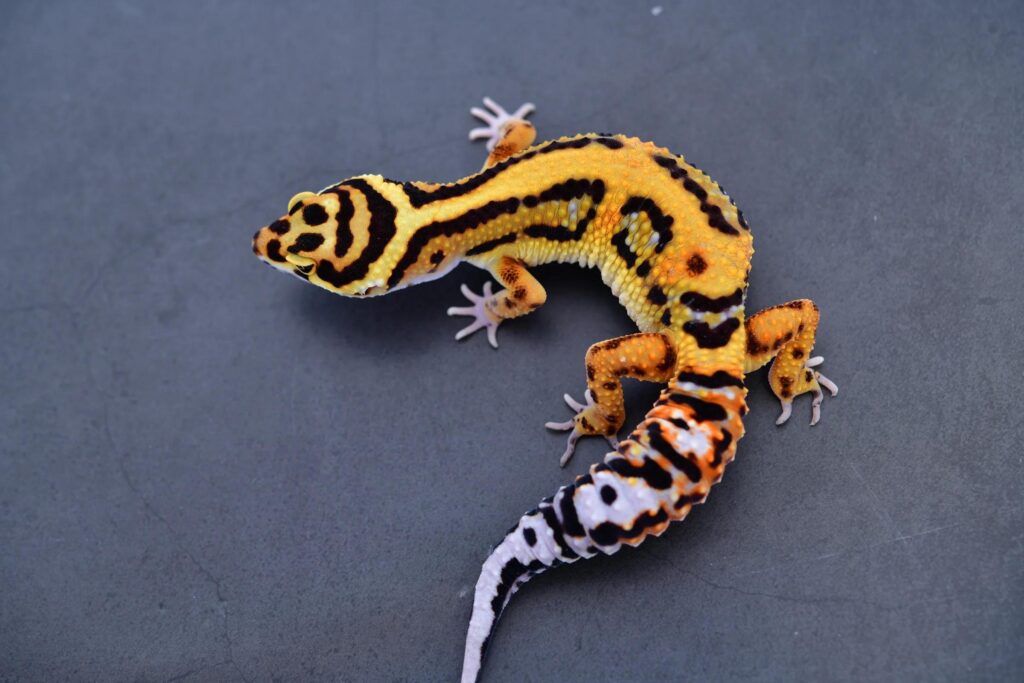
These leopard gecko morphs offer incredible color variations—vibrant orange tangerine bodies, albino eyes, and the potential for “eclipse” solid black eyes. They are similar in care needs and temperament to fat tailed geckos (same temperature, diet, and handling), making them a fantastic alternative for keepers who want brighter, more colorful patterns. The “het Eclipse” means they carry the gene for solid eyes (visible in offspring). Price range: 100–300.
Comparison Table: Fat Tail vs. Leopard Gecko
| Feature | Fat Tailed Gecko | Leopard Gecko |
|---|---|---|
| Skin texture | Smooth, soft | Granular, bumpy |
| Humidity | 30–40% | 20–30% |
| Tail shape | Plump, rounded | Thick but more tapered |
| Typical morphs | Wild, albino, white-out, Zulu | Tangerine, tremper albino, eclipse, patternless |
| Price range | 50–300 | 30–500+ |
Comparing sizes, care similarities, and differences enriches your knowledge in selecting the gecko that best suits your lifestyle.
FAQ Section (Expanded to 12 Questions)
1. How big does a fat tailed gecko get?
Typically, fat tailed geckos grow to about 7 to 10 inches (18–25 cm) in length from snout to tail tip. Females are often slightly smaller than males. Weight ranges from 45–75 grams.
2. What is the difference between a fat tailed gecko and an African fat tail gecko?
There is no difference. “Fat tailed gecko” is the common name, and “African fat tail gecko” is the more specific name referring to the species Hemitheconyx caudicinctus from West Africa. They are the same animal.
3. How does care compare to a leopard gecko?
Both species share similar care requirements, including temperature (basking 88–90°F, cool side 75–80°F) and diet (insects with calcium supplementation). However, fat tailed geckos generally need slightly more humidity (30–40% vs. 20–30%) and have smoother skin. Leopard geckos are more widely available and have a broader range of morphs.
4. Can fat tailed geckos be kept together?
While it’s possible to keep females together in a large enough enclosure (30+ gallons with multiple hides), it is not recommended for beginners. Males housed together will fight. A male with females may overbreed and stress the females. Solitary housing is safest and preferred.
5. What do fat tailed geckos eat?
They primarily eat live insects: crickets, mealworms, dubia roaches, and black soldier fly larvae. Treats include waxworms and butterworms (1–2 times weekly). All insects must be dusted with calcium supplements.
6. How often should I feed my fat tailed gecko?
-
Hatchlings: Daily
-
Juveniles (3–12 months): Every other day
-
Adults (12+ months): 3–4 times per week
7. What temperature should a fat tailed gecko’s enclosure be?
-
Basking spot (warm hide floor): 88–90°F (31–32°C)
-
Warm side ambient: 80–84°F (27–29°C)
-
Cool side ambient: 75–80°F (24–27°C)
-
Nighttime: 70–75°F (21–24°C)
8. Is it hard to care for a fat tailed gecko?
No, they are relatively low maintenance compared to many other reptiles. Their straightforward diet, modest space needs, and simple humidity and temperature requirements make them ideal for beginners. Daily tasks take only 5–10 minutes.
9. How long do fat tailed geckos live?
With proper care, fat tailed geckos live 15–20 years in captivity. Some individuals have been known to reach 22–25 years with exceptional husbandry.
10. Do fat tailed geckos need UVB lighting?
No, they do not require UVB to survive because they can obtain vitamin D3 from calcium supplements. However, low-level UVB (2–5%) is beneficial for immune function, activity, and color expression.
11. Why is my fat tailed gecko’s tail thin?
A thin tail indicates malnutrition, illness, or parasites. The tail is a fat storage organ; a plump tail is a sign of good health. If the tail remains thin after 2–3 weeks of regular feeding, consult a veterinarian for a fecal exam.
12. Can fat tailed geckos drop their tails?
Yes, they can drop their tails (autotomy) as a defense mechanism when grabbed by the tail or severely stressed. The tail will regrow but will look different—shorter, smoother, and often a different color. Never grab a gecko by the tail.
Conclusion
Caring for a fat tailed gecko can be a deeply rewarding experience spanning nearly two decades. With their friendly demeanor, attractive appearance (especially in stunning morphs like the white-out or Zulu), and manageable care needs, it is no wonder that they have become favorite companions for reptile lovers everywhere.
As we’ve explored in this comprehensive guide—now expanded to over 2,000 words—providing the right environment (proper tank size, substrate, hides, temperature gradient of 88–90°F basking to 75–80°F cool side), diet (insects dusted with calcium), and routine health monitoring will lead to a long and healthy life for your pet. Remember to always source your gecko responsibly from reputable breeders, quarantine new animals, and stay committed to their well-being throughout your journey together.
Ready to make the leap? Seek out reputable breeders today and take the first step towards welcoming a fat tailed gecko into your life. Explore the beauty of these enchanting reptiles, and let your adventure begin!
For more information on their care, check out my article on Mastering fat tailed gecko enclosure setup. Explore the Super Pink Nu Ana Leachianus Gecko and discover other captivating species like the West Indian Leopard Gecko or Tangerine Tremper Albino Het Eclipse Leopard Gecko that may pique your interest.
Happy herping—and may your fat tailed gecko bring you as much joy and quiet companionship as mine has brought me over the years!