Corn Snake for Sale: The Ultimate Guide to Buying, Caring For, and Owning These Amazing Snakes in 2026
If you’ve ever considered bringing a snake into your life, you might have stumbled upon the captivating beauty and friendly temperament of the corn snake. Known for their docile nature and stunning variety of colors and patterns, corn snakes have become a favorite choice for both novice reptile enthusiasts and seasoned keepers. As you embark on your journey to find a quality corn snake for sale, there’s much to learn—from selecting a healthy individual to setting up a lifelong habitat. In this comprehensive guide, now expanded to over 2,000 words, we’ll discuss everything you need to know about corn snakes, explore their enchanting morphs—including the alluring albino corn snake—and provide you with practical, real-world advice for successful ownership.
Corn snakes (Pantherophis guttatus) are native to the southeastern United States, where they earned their name from their tendency to hunt in corn cribs (attracted by rodents). Over decades of captive breeding, they have become one of the most popular pet snakes in the world. Their combination of beauty, manageable size, and forgiving care requirements makes them an ideal choice for first-time snake owners and experienced herpetoculturists alike.
Why Corn Snakes Make Excellent Pet Snakes
Corn snakes are often hailed as one of the best pet snakes for beginners, and for good reason. Let’s explore the key reasons in detail.
Gentle Temperament and Handling Ease
Firstly, their gentle demeanor means they rarely bite and are easy to handle. Unlike some snakes that may be defensive or nervous, corn snakes are typically curious and calm. Many owners will share tales of their corn snakes curling up comfortably in their hands or exploring their surroundings with deliberate, unhurried movements. This friendly nature makes them a delight to bond with, even for children under adult supervision.
Forgiving Care Requirements
Moreover, corn snakes are relatively easy to care for compared to other snake species. Their modest space requirements (a 40-gallon tank suffices for an adult), simple feeding habits (one appropriately sized rodent every 7–14 days), and manageable temperature and humidity needs (basking spot 80–85°F, humidity 40–60%) make them accessible for new pet owners who are still learning the fundamentals of reptile husbandry.
Stunning Variety of Morphs
Corn snakes also come in a breathtaking variety of stunning morphs. If you’re on a quest to find the perfect corn snake for sale, you’ll be excited to discover the endless array of colors and patterns, including the mesmerizing albino corn snake—which features striking white and yellow hues with bright red or pink eyes. From the classic Carolina corn snake (orange with black-bordered red blotches) to high-end designer morphs costing hundreds of dollars, there is a corn snake to suit every aesthetic preference and budget.
Longevity and Manageable Size
Corn snakes typically live 10–15 years in captivity, with some individuals reaching 20+ years with exceptional care. They reach an adult length of 3–5 feet (rarely 6 feet), making them large enough to be impressive but small enough to handle comfortably without assistance. Unlike large constrictors (e.g., boa constrictors or pythons), corn snakes do not require multiple people to handle or enormous enclosures.
Ideal for Apartment Dwellers
Because corn snakes are quiet, odor-free (when their enclosure is properly cleaned), and require no outdoor space or walks, they are excellent pets for apartment dwellers, college students, or anyone with limited space. They do not bark, shed fur, or require daily attention beyond spot-cleaning and feeding.
Beyond their charm, corn snakes are also incredibly versatile. They can thrive in various environments, making them suitable for different home setups. In this guide, we’ll provide insights on what you should look for when searching for your ideal corn snake, as well as tips on ensuring they live a healthy, happy life for nearly two decades.
Corn Snake Morphs and Genetics (Expanded)
Understanding Snake Morphs
Corn snakes are renowned for their wide range of morphs, which are color and pattern variations caused by genetic mutations. In fact, corn snakes have one of the most diverse morph libraries of any reptile species, with over 800 recognized genetic combinations. When searching for a corn snake for sale, you’ll encounter many options, from classic “wild-type” colors to stunningly unique patterns that look almost unnatural.
Morphs are typically inherited in one of three ways:
-
Recessive: Two copies of the gene needed to express the trait (e.g., albino, caramel, scaleless).
-
Dominant: One copy needed; the trait always appears (rare in corn snakes).
-
Incomplete dominant (codominant): One copy produces an intermediate appearance; two copies produce a “super” form (e.g., ultra, tessera).
The Alluring Albino Corn Snake (Amelanistic)
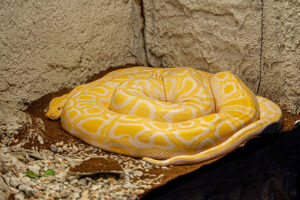
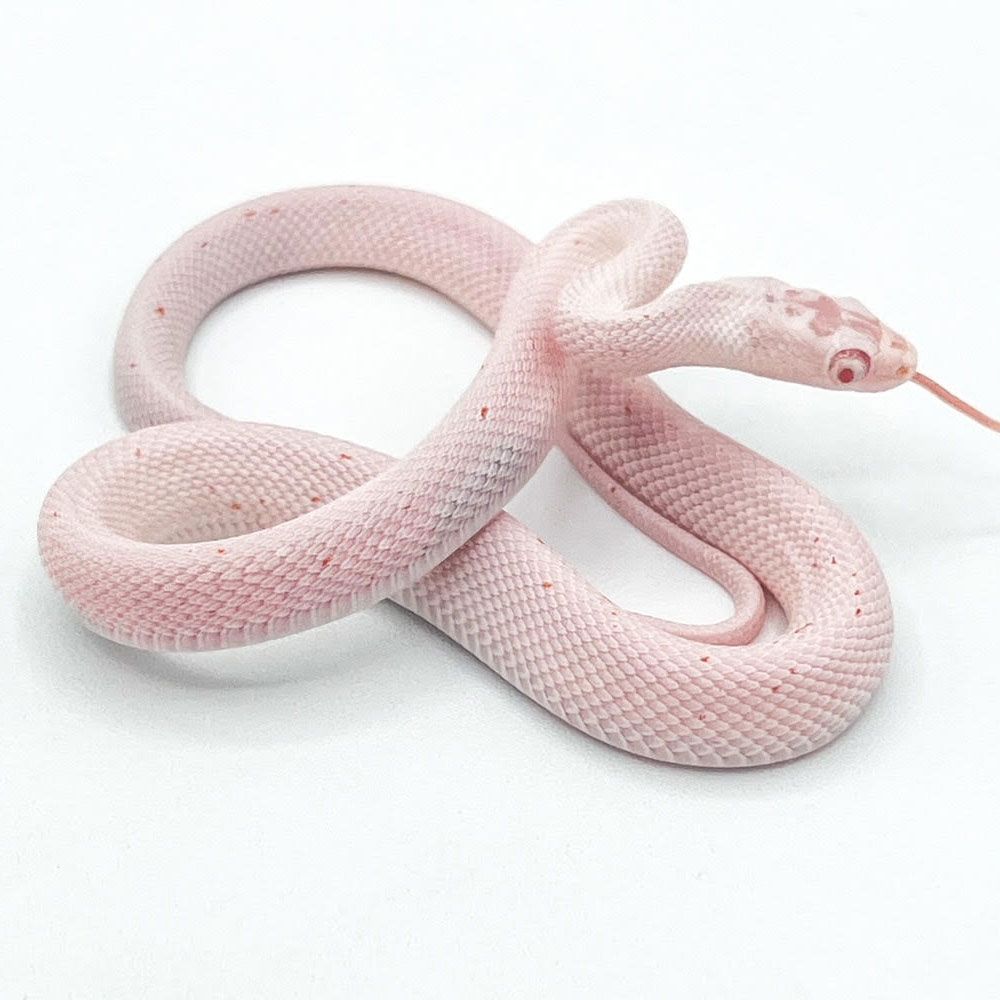
One of the most popular and historically significant morphs is the albino corn snake, more correctly called Amelanistic (lack of melanin). This striking snake is a result of a recessive genetic mutation that affects pigmentation, leading to their characteristic white and yellow/orange appearance, and those captivating red or orange eyes (since without melanin, the blood vessels in the eyes are visible). Albino corn snakes are not only beautiful but also symbolize the intriguing genetic diversity within the species. Their vibrant colors can brighten any room and are often a favorite among both collectors and hobbyists.
Care note: Albino corn snakes can be slightly more sensitive to bright light due to their lack of dark eye pigment. Provide extra hiding spots and avoid extremely intense lighting.
Other Popular Corn Snake Morphs (Quick Reference)
| Morph | Genetics | Appearance | Typical Price |
|---|---|---|---|
| Classic (Normal/Wild-type) | Wild | Orange with black-bordered red saddles | 20–50 |
| Amelanistic (Albino) | Recessive | White/yellow with red eyes | 40–80 |
| Anerythristic (Anery) | Recessive | Grays, blacks, and silvers (no red pigment) | 40–80 |
| Snow | Double recessive (Amel + Anery) | White with pink/peach blotches | 60–120 |
| Caramel | Recessive | Yellow, brown, and tan (reduced red) | 50–100 |
| Lavender | Recessive | Silvery-purple with pinkish tones | 100–200 |
| Tessera | Dominant | Stripe-like pattern down the back | 80–150 |
| Palmetto | Incomplete dominant | White with scattered colored spots | 300–600+ |
| Scaleless | Recessive | No scales (smooth skin) | 300–800+ |
| Motley | Recessive | Connected blotches, clean belly | 50–100 |
The Palmetto and Scaleless Complex
When searching for a corn snake for sale, many enthusiasts are drawn to unique morph combinations. Here are some impressive examples with expanded details:
Amel Palmetto Cornsnake for Sale
The Amel Palmetto combines the Palmetto pattern (white base with scattered colored spots) with the Amelanistic (albino) gene. The result is a stunning snake with a primarily white body adorned with bright orange, yellow, and pink speckles, plus red eyes. Palmettos are among the most visually striking corn snakes available. They require no special care beyond standard corn snake husbandry, though their high price tag means buyers should be especially vigilant about breeder reputation. Typical price range: 400–800.
Scaleless Caramel Het Motley Cornsnake for Sale
The Scaleless Caramel Het Motley is a complex genetic combination. “Scaleless” means the snake lacks almost all body scales (retaining only belly scales in some lines), giving it a smooth, soft feel like a worm. “Caramel” provides warm yellow, brown, and tan tones instead of red. “Het Motley” means the snake carries one copy of the recessive Motley gene (which produces connected blotches and a clean belly) but does not visually express it. These snakes are unique for their texture and appearance. Important care note: Scaleless corn snakes require slightly higher humidity (50–65%) and smoother enclosure furnishings (no rough rocks or sharp branches) to prevent skin abrasions. They also shed differently and may need assistance with stuck shed. Price range: 300–600.
Baby Scaleless Het Caramel Cornsnake for Sale
A Baby Scaleless Het Caramel is similar to the above but may not carry the Motley gene. As hatchlings, they appear even more delicate and require careful humidity management (60–70% for the first few months) and very small prey (pinkie mice). Their gentle nature makes them a delightful choice for committed new owners, though they are better suited to keepers who have some experience due to the scaleless-specific care needs. Price range: 250–500.
Comparing these special morphs to classics like the albino corn snake highlights their unique traits and appeal. While a standard albino is hardy and inexpensive, a scaleless caramel or palmetto offers a truly unique pet for those willing to invest more upfront and in care attention.
What to Look For When Searching for a Corn Snake for Sale (Expanded)
When embarking on the search for a corn snake, it’s essential to find one that is healthy and comes from a reputable source. Here are key factors to consider in detail:
Breeder Reputation (Green Flags)
Look for breeders who are known for ethical practices and animal welfare. Check reviews on MorphMarket, FaunaClassifieds, or dedicated reptile forums. Ask for references if possible. A responsible breeder will:
-
Provide a hatch date and feeding records (e.g., “Hatched 6/15/2025, eating f/t pinkies weekly”).
-
Allow you to see photos or video of the actual snake (not stock images).
-
House snakes in clean enclosures with fresh water and no strong odors.
-
Be able to discuss the genetics of the snake (e.g., “This is a scaleless caramel 66% het motley”).
-
Offer a health guarantee (minimum 48–72 hours, often 7–14 days).
Health Check (What to Inspect)
A healthy corn snake should have:
-
Bright, clear eyes: No cloudiness (except when in shed), no discharge, no swelling.
-
Clean skin: Free of lesions, discoloration, bumps, or stuck shed (especially on tail tip and eye caps).
-
Robust body: A rounded, muscular appearance with no visible spine (underweight) or fat rolls (obese). The belly should be clean and free from red spots (mite bites).
-
Clear vent (cloaca): No pasty, bloody, or foul-smelling discharge.
-
Activity level: When gently stimulated (e.g., touching the tail), the snake should move purposefully, not lie limp or twitch. During the day, corn snakes may be less active (they are crepuscular), but should still respond.
-
No respiratory sounds: No wheezing, clicking, or open-mouth breathing.
Red Flags to Avoid:
-
Snakes with wrinkled skin (dehydration).
-
Mouth rot (yellowish cheesy buildup in mouth).
-
Mites (tiny black or red specks moving on the snake, especially around eyes or in water bowl).
-
Lethargy or inability to right itself when turned over.
-
Breeders who cannot answer basic questions about feeding or genetics.
Age and Size Considerations
Decide on the age you prefer. Each has pros and cons:
| Age | Length | Pros | Cons |
|---|---|---|---|
| Hatchling (0–3 months) | 8–12 inches | Less expensive, more available, longer time together | More delicate, may refuse food initially, harder to handle |
| Juvenile (3–12 months) | 12–24 inches | Hardier, established feeder, still many years ahead | More expensive than hatchlings |
| Adult (12+ months) | 3–5 feet | Most forgiving of care mistakes, calmest to handle | Shorter remaining lifespan, may not acclimate as easily to new owner |
Personality Assessment
Individual snakes can vary in temperament. If possible, handle the snake before purchasing. A calm snake will explore slowly or curl quietly in your hands. A stressed snake may musk (release a foul-smelling liquid), rattle its tail, or strike defensively (though corn snake bites are harmless). Avoid overly defensive individuals unless you are experienced with taming.
Setting Up the Perfect Enclosure (Expanded)
Creating a comfortable, secure habitat for your corn snake is vital for its health and happiness. Corn snakes are escape artists, so a secure lid with clips is non-negotiable. Here’s a detailed breakdown of how to set up the perfect environment:
Tank Size by Age (Minimums)
| Age | Minimum Tank Size (Length) | Why |
|---|---|---|
| Hatchlings (0–6 months) | 10–20 gallon (20″x10″x12″) | Small space helps babies find food and feel secure |
| Juveniles (6–18 months) | 20–29 gallon (30″x12″x12″) | Allows for proper thermal gradient |
| Adults (18+ months) | 40-gallon breeder (36″x18″x18″) or larger (4’x2’x2′) | Adults need room to stretch, climb, and exercise |
Important: Corn snakes are semi-arboreal, meaning they enjoy climbing. Height is beneficial, but floor space is more important. A 40-gallon tank is the gold standard for a single adult. Larger enclosures (75–120 gallons) are even better if space allows.
Substrate Options (Detailed)
| Substrate | Best For | Pros | Cons |
|---|---|---|---|
| Aspen shavings | All ages (especially burrowers) | Great for burrowing, affordable, absorbs moisture well | Doesn’t hold humidity well (good for corn snakes), can mold if wet |
| Coconut fiber (coco coir) | Juveniles/adults | Natural look, holds humidity for scaleless morphs | Slightly dusty, not ideal for burrowing tunnels |
| Paper towels | Hatchlings, quarantine, sick snakes | Easy to clean, cheap, best for monitoring feces | Unnatural appearance, no burrowing |
| Cypress mulch | Adults (humidity boost) | Natural, resists mold, holds humidity | More expensive, not for low-humidity setups |
| Reptile carpet | Any | Reusable, safe | Harbors bacteria, must be cleaned weekly |
Avoid: Cedar or pine (toxic phenols), sand (impaction risk), crushed walnut shell (sharp, impaction), calcium sand (promotes eating substrate).
Hides (Essential for Security)
Corn snakes appreciate shelter. Adding a few hides—one on the warm side and another on the cool side—will help them feel secure. Hides should be snug (the snake should touch the sides when curled inside). Options include:
-
Commercial reptile caves
-
Cork flats
-
Plastic food containers with cut-out doors (smooth edges)
-
Half-log hides (though less secure due to two openings)
Climbing Branches and Enrichment
Provide branches, driftwood, or PVC perches for climbing and enrichment, as corn snakes enjoy exploring their surroundings in three dimensions. Grapewood, cholla wood, and bamboo poles work well. Secure them so they don’t fall. Also consider:
-
A hanging coconut hide
-
Artificial vines or foliage (plastic plants)
-
A cardboard tube (temporary enrichment)
Heating and Temperature Gradient
Ensure a temperature gradient in the enclosure:
-
Warm side (basking spot): 80–85°F (27–29°C). Use an under-tank heater (UTH) on a thermostat or a low-wattage ceramic heat emitter (CHE).
-
Cool side: 70–75°F (21–24°C). No direct heat source.
-
Nighttime drop: 65–70°F is acceptable and natural.
Critical: All heat sources must be regulated by a thermostat to prevent burns or overheating. Use digital probe thermometers (one on each side) and an infrared temperature gun for spot checks.
Humidity Requirements
Maintain humidity levels between 40–60% for standard corn snakes, and 50–65% for scaleless corn snakes. Use a digital hygrometer. Mist the enclosure occasionally if levels drop below 40%. Provide a humid hide (a plastic container with damp sphagnum moss) during shedding cycles.
Lighting
Corn snakes do not require UVB lighting to survive, as they obtain vitamin D3 from their rodent prey. However, low-level UVB (2–5%) can improve color and activity. Provide a simple 12-hour light/dark cycle using LED or fluorescent lighting on a timer. Avoid bright white lights at night; use a moonlight LED if you want to observe your snake.
Temperature, Humidity, and Environmental Requirements (Quick Reference Chart)
| Parameter | Ideal Range for Normal Corn Snakes | Ideal Range for Scaleless Corn Snakes |
|---|---|---|
| Basking Temperature | 80–85°F (27–29°C) | 80–85°F (27–29°C) |
| Cool Side Temp | 70–75°F (21–24°C) | 70–75°F (21–24°C) |
| Nighttime Temp | 65–70°F (18–21°C) | 65–70°F (18–21°C) |
| Humidity | 40–60% | 50–65% (slightly higher) |
| UVB (optional) | 2–5% fluorescent tube | 2–5% fluorescent tube (lower if no scales) |
Feeding Your Corn Snake: Schedule, Prey Size, and Best Practices (Expanded)
Feeding is one of the most critical and rewarding aspects of snake care. Here’s what you need to know in detail.
Feeding Schedule by Age
| Age | Frequency | Prey Type | Prey Size |
|---|---|---|---|
| Hatchling (0–6 months) | Every 5–7 days | Pinkie mouse (frozen-thawed) | 1–2 grams |
| Juvenile (6–18 months) | Every 7–10 days | Fuzzy mouse → small adult mouse | 3–10 grams |
| Adult (18+ months) | Every 10–14 days | Adult mouse or small rat (not rat for most) | 15–30 grams |
Prey Size Rule: The prey item should be approximately the same width as the snake’s body at its widest point. A slightly smaller meal is safer than a too-large meal (which can cause regurgitation).
Frozen-Thawed vs. Live
Always use frozen-thawed rodents. Live rodents can bite and injure or kill your snake. Even a small mouse can inflict serious wounds. To prepare:
-
Thaw frozen rodent in the refrigerator overnight.
-
Warm to body temperature (95–100°F) by placing in a sealed plastic bag and submerging in warm water for 10–15 minutes.
-
Pat dry.
-
Offer using long metal tongs (never by hand).
Best Practices for Successful Feeding
-
Feed inside the enclosure (moving to a separate feeding container is unnecessary and causes stress).
-
Feed in the evening (corn snakes are crepuscular/active at dusk).
-
Do not handle for 24–48 hours after feeding to prevent regurgitation.
-
If your snake refuses food, check temperatures first. A drop in temperature is the most common cause of food refusal.
-
During shedding, many corn snakes will refuse food. This is normal for up to 10 days.
What to Do If Your Corn Snake Isn’t Eating
-
Verify enclosure temperatures (basking 80–85°F, cool side 70–75°F).
-
Check if the snake is in “blue” (shedding cycle). If yes, wait until after shed.
-
Try warming the prey slightly more (up to 105°F).
-
Try a different prey type (mouse vs. rat) or color (white vs. brown).
-
Leave the prey in the enclosure overnight (but remove if uneaten by morning to avoid spoilage).
-
If refusal continues for 4–6 weeks with weight loss, consult a reptile veterinarian.
Handling, Temperament, and Enrichment (Expanded)
Corn snakes are generally calm and enjoyable to handle, making them perfect for interaction. Here are expanded tips on handling and enrichment.
Handling Techniques and Schedule
-
Gentle Approach: Always approach your snake calmly and gently from the side, not from above (predator instinct). Let the snake know you are there before picking it up.
-
Lifting: Scoop from underneath at mid-body, supporting the front and rear thirds of the snake. Never grab the tail.
-
First week: No handling except for feeding and spot-cleaning. Allow acclimation.
-
Week 2: Handle for 5 minutes every other day.
-
Week 3 onward: Gradually increase to 15–20 minutes, 2–3 times per week.
-
After feeding: Wait 48 hours before handling.
Signs of a Stressed vs. Relaxed Corn Snake
| Relaxed/Comfortable | Stressed |
|---|---|
| Slow, deliberate tongue-flicking | Rapid, frantic tongue-flicking |
| Smooth, gliding movement | Jerky, fast movement |
| Curious exploration | Attempting to flee constantly |
| Calm when held | Musking (foul smell), tail rattling |
| Feeds regularly | Refusing food for extended periods |
Enrichment Ideas
To enrich their environment and prevent boredom (which can lead to stereotypical behaviors like pacing), consider:
-
Rotating décor: Move branches or hides every 2–4 weeks.
-
New scents: Introduce a clean branch from a pet-safe tree.
-
Temporary “puzzle” feeding: Hide a frozen-thawed rodent inside a cardboard tube with the ends partially closed.
-
Supervised out-of-enclosure time: Allow your corn snake to explore a snake-proofed room (no gaps to escape into, no other pets) for 15–20 minutes.
-
Climbing opportunities: Add a second branch or a hanging hammock.
Common Health Issues and Preventative Care (Expanded)
Being aware of common health issues can help you maintain a healthy, happy corn snake. Here are the most frequent conditions with expanded explanations.
1. Respiratory Infections (RIs)
Causes: Low temperatures (below 70°F), high humidity (over 70% with poor ventilation), or drafts.
Symptoms: Wheezing, clicking, open-mouth breathing, mucus bubbles from nostrils or mouth, lethargy, holding head upright.
Prevention: Maintain proper temperature gradient and humidity. Ensure ventilation holes are not blocked.
Treatment: Increase temperature to 82–85°F ambient. Veterinary antibiotics (enrofloxacin, ceftazidime) are often required. Mild cases may resolve with husbandry correction.
2. Mites (Ophionyssus natricis)
Symptoms: Tiny black or red specks moving on the snake (especially around eyes, under chin, in heat pits). Snake soaking excessively. Specks in water bowl.
Prevention: Quarantine new snakes for 90 days. Use paper towel substrate for easy inspection.
Treatment: Veterinary-recommended mite spray (e.g., Provent-a-Mite). Remove all substrate, treat enclosure, and repeat treatment every 7–10 days to break the lifecycle. Soak snake in lukewarm water with a drop of mild dish soap to drown mites.
3. Stuck Shed (Dysecdysis)
Symptoms: Patches of old skin remaining, especially on eye caps (retained spectacle) or tail tip.
Causes: Low humidity (below 40%), dehydration, lack of rough surfaces.
Prevention: Maintain humidity 40–60% (50–65% for scaleless). Provide a humid hide with damp sphagnum moss during shed cycles.
Treatment: Soak snake in shallow, lukewarm water (80–85°F) for 15–30 minutes, then gently roll off loose skin with a damp towel. Never pull dry skin. For retained eye caps, consult a veterinarian.
4. Regurgitation
Causes: Handling too soon after feeding, prey too large, temperatures too low (below 70°F), or underlying illness (parasites, infection).
Prevention: Do not handle for 48 hours after feeding. Ensure proper prey size. Maintain correct temperatures.
What to do: If regurgitation occurs, wait 10–14 days before feeding again (to allow stomach acids to replenish). Offer a prey item half the usual size. If regurgitation happens twice in a row, seek veterinary care.
5. Parasites (Internal)
Causes: Contaminated feeder rodents, unsanitary enclosure, new snakes introduced without quarantine.
Symptoms: Weight loss despite normal appetite, runny or foul-smelling feces, undigested food in stool, lethargy.
Prevention: Annual fecal exams at a reptile vet. Freeze all frozen-thawed rodents (store at 0°F for 30+ days) to kill potential parasites.
Treatment: Prescription antiparasitic medication (fenbendazole, metronidazole, ponazuril) based on fecal float results.
Preventative Care Checklist
-
Daily: Spot-clean enclosure (remove feces, urates, shed skin). Check water bowl (clean and refill).
-
Weekly: Full visual health check. Weigh your snake monthly on a digital scale (sudden weight loss of 10%+ is a red flag).
-
Monthly: Deep-clean enclosure with reptile-safe disinfectant (F10 or diluted chlorhexidine). Replace substrate entirely.
-
Annually: Veterinary wellness exam with fecal float for parasites.
Breeding Corn Snakes: Basics for Hobbyists (Expanded)
If you’re interested in breeding corn snakes, understanding the basics is crucial. Breeding is rewarding but requires significant commitment.
Breeding Requirements
-
Age: Females should be at least 3 years old and weigh 300+ grams. Males should be at least 2 years old and 250+ grams.
-
Health: Both snakes must be parasite-free, well-fed, and fully grown.
-
Breeding season: Typically occurs in spring (March–May) after a winter cooling period (brumation) of 8–10 weeks at 55–65°F.
-
Pairing: Introduce the male into the female’s enclosure for 3 days, then remove for 3 days. Repeat until copulation (locking) is observed.
-
Gravidity: After successful mating, the female will become gravid. She will have a pre-lay shed approximately 14 days before laying.
-
Nest setup: Provide a lay box (plastic tub with a hole for entry) filled with damp sphagnum moss or vermiculite. The female will lay eggs 30–45 days after mating.
-
Clutch size: 10–30 eggs (average 15–20).
-
Incubation: Remove eggs within 2 hours of laying. Place in a sealed container with damp vermiculite (1:1 ratio by weight with water). Incubate at 78–82°F (80°F ideal). Incubation takes 55–65 days.
-
Hatchling care: Hatchlings emerge 5–8 inches long. They will shed within 7–10 days. Offer first meal (small pinkie) 5–7 days after first shed.
Ethical Considerations
Breeding should never be undertaken lightly. Have homes lined up for hatchlings before breeding. Do not breed sibling pairs repeatedly (inbreeding depression). Be prepared to cull (humanely euthanize) only under veterinary advice for severely deformed hatchlings.
Choosing a Healthy Snake: Breeder Tips and Red Flags to Avoid (Summarized)
While shopping for your snake, be conscious of potential red flags. Here are signs of healthy snakes and responsible breeders:
Red Flags (Breeder/Seller)
-
Won’t answer questions or provides vague answers (e.g., “I don’t know the hatch date”).
-
Housing conditions are dirty (feces in water bowls, strong ammonia smell).
-
Multiple snakes in the same enclosure (signs of mill breeding).
-
No health guarantee or return policy.
-
Prices are “too good to be true” (e.g., a scaleless for $50).
-
Pressure to buy immediately.
Healthy Indicators (Snake)
-
Vibrant, clear appearance
-
Active movement when stimulated
-
Clear eyes (unless in shed)
-
Clean, unbroken skin
-
Feeds readily (breeder can demonstrate or has records)
FAQ Section (Expanded)
How much does a corn snake for sale usually cost?
Prices can vary dramatically: 20–50 for a classic wild-type, 40–100 for common morphs (albino, anery), 100–300 for intermediate morphs (lavender, tessera), and 300–800+ for high-end morphs (scaleless, palmetto, combinations). The snake itself is the cheapest part of ownership—enclosure, heating, and vet costs are far greater.
What’s the difference between a regular and albino corn snake?
The regular (wild-type) corn snake has orange and brown coloration with black borders around red blotches. The albino corn snake (amelanistic) lacks all black/dark pigment, resulting in a white, yellow, and orange snake with bright red or pink eyes. Both have identical care requirements.
Are scaleless corn snakes harder to care for?
Yes, slightly. Scaleless corn snakes require higher humidity (50–65% vs. 40–60%), smoother enclosure furnishings (no rough rocks or sharp branches), and more careful monitoring during shedding (they may need assistance). They are not recommended for absolute beginners, but intermediate keepers can handle them successfully.
What should I feed my corn snake?
Regular feeding includes appropriately sized frozen-thawed rodents, typically mice (pinkie → fuzzy → hopper → adult). Adults can eat small rats, but mice are generally preferred due to better fat content for corn snakes.
How often should I handle my corn snake?
Aim for handling 2–3 times per week, keeping sessions around 15–20 minutes for adults and 10–15 minutes for babies. Always wait 48 hours after feeding. Handle gently and never when the snake is in shed.
Can corn snakes bond with their owners?
While they won’t bond in the same way a dog or cat does (they lack the brain structures for social attachment), corn snakes can recognize their handlers through scent and may become more calm and tolerant with regular, gentle handling. They learn that you are not a threat.
How long do corn snakes live?
In captivity with proper care, corn snakes typically live 10–15 years. Many reach 15–20 years, and the record is over 20 years. This is a long-term commitment.
What size tank do corn snakes need as adults?
Adults typically require at least a 40-gallon breeder tank (36″x18″x18″) for adequate space to move, thermoregulate, and express natural behaviors. Larger (4’x2’x2′) is even better.
Do corn snakes need UVB?
No, they can thrive without UVB if given proper nutrition (rodents contain vitamin D3). However, low-level UVB (2–5%) is beneficial for color, immune function, and activity and is increasingly recommended.
How do I know if my corn snake is a healthy weight?
A healthy corn snake should have a rounded, muscular body with a slightly visible spine but no prominent “ridge.” The sides should not appear sunken (underweight) or overly wide with fat rolls (overweight). The snake should taper smoothly to the tail.
Conclusion
Congratulations! You’ve reached the end of this comprehensive, over-2,000-word guide to owning a corn snake. Remember, the journey of snake ownership is filled with excitement, learning opportunities, and quiet moments of wonder as you watch your snake explore, shed, and feed. Whether you’re drawn to the stunning albino corn snake, a unique Amel Palmetto Cornsnake for Sale, or a fascinating Scaleless Caramel Het Motley Cornsnake for Sale, ensure that you source your snake from a responsible breeder and provide them with a loving, well-maintained environment.
Caring for a corn snake is a rewarding experience that requires a commitment to their well-being for up to 20 years. As you seek out the perfect corn snake for sale, keep ethics and animal welfare at the forefront of your decisions. You’re not just a snake owner; you’re a caretaker, an advocate, and a steward for one of nature’s most graceful and beautiful creatures.
If you’re ready to find your perfect snake companion, explore reputable breeders on platforms like Sublime Reptiles, attend local reptile expos, and always ask questions. A good breeder will be happy to answer them. With proper care, your corn snake will thrive, providing you with years of quiet companionship.
Happy snake keeping, and may your corn snake bring you as much joy and fascination as ours have brought us!