Table of Contents
ToggleChameleon for Sale: The Ultimate Guide to Buying, Caring For, and Owning These Colorful Reptiles in 2026
Introduction
The first time I watched a chameleon fire up its full spectrum of colors, I literally stopped mid-sentence. One moment it was a quiet, unassuming green perched on a branch. The next, it erupted into a breathtaking display of electric blues, fiery oranges, and emerald greens. That wasn’t just a reptile I was looking at—it felt like looking at a living, breathing piece of art.
That experience, over fifteen years ago, started my obsession. And if you’re reading this, chances are you’ve felt a similar pull. You’ve probably found yourself scrolling through photos, watching YouTube videos, or even searching for a chameleon for sale near you. That’s exactly where I was, and let me tell you: the journey from curious admirer to successful chameleon keeper is equal parts thrilling and humbling.
Here’s something I wish someone had told me on day one: chameleons are not beginner reptiles. They’re not even intermediate for most people. They are advanced pets that demand precision, patience, and a real commitment to getting things right. But for those who put in the work? The reward is absolutely unforgettable.
One of the most sought-after species you’ll encounter on your search is the panther chameleon for sale from various stunning locales. And yes, they are every bit as spectacular as the photos suggest. But before you click “buy,” you need to understand exactly what you’re signing up for.
In this complete 2026 guide, I’ll walk you through everything: how to find a healthy chameleon for sale, setting up a proper bioactive or hybrid enclosure, mastering lighting and humidity (this is where most beginners mess up), feeding schedules, handling expectations, and even exploring specific Panther Chameleon locales like the Ambanja, Ambilobe, and Angalovana. No fluff, no marketing hype—just real, practical advice from someone who’s made the mistakes so you don’t have to.
Let’s get started.
Why Chameleons Make Fascinating Pets and Important Considerations
I’ll be upfront: chameleons are not for everyone. But for the right person, they are absolutely magical. Let me break down both the magic and the reality check.
The Magic
Their color changing ability is obviously the headline feature. But here’s what most people don’t realize: they don’t change color primarily for camouflage. They change to communicate mood, temperature, health, and social status. A bright, vibrant chameleon is often a happy, warm, and dominant one. A dark, dull chameleon might be stressed, cold, or sick. Learning to read your chameleon’s colors is like learning a new language.
Their eyes move independently, which is both fascinating and slightly unsettling. Each eye can rotate and focus separately, giving them nearly 360-degree vision. When they spot prey, both eyes lock on together, and that tongue—which can be longer than their entire body—shoots out with incredible accuracy.
They are incredible hunters. Watching a chameleon nail a cricket from six inches away in a fraction of a second never gets old. Even after years of keeping them, I still find myself holding my breath.
The Reality Check
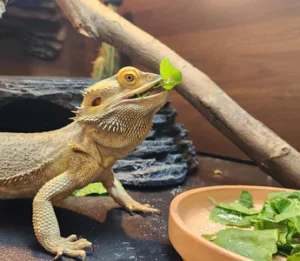
Now for the hard part. Chameleons are highly stressed by handling. Unlike a bearded dragon that might seem to enjoy sitting on your shoulder, most chameleons view handling as a threat. Overhandling leads to chronic stress, which leads to illness, refusal to eat, and premature death.
They have very specific environmental needs. You cannot stick a chameleon in a glass aquarium with a heat lamp and call it done. They need tall, screen-sided enclosures, precise UVB and heat gradients, and carefully managed humidity that mimics their native Madagascar or Yemen (depending on species).
They are not cheap to set up properly. A quality enclosure, lighting, misting system, live plants, and supplements can easily run 500 to 500 to 1,000 before you even buy the animal.
And they do not bond with you. If you want a cuddly pet that recognizes you and seeks attention, get a dog. If you want a stunning, fascinating creature to observe and care for on its own terms, a chameleon might be perfect.
Who Should Get a Chameleon?
-
Someone who has kept reptiles before (at least a year of experience)
-
Someone willing to spend significant time on daily misting, feeding, and monitoring
-
Someone with the budget for proper equipment
-
Someone who can appreciate a hands-off pet
Who should NOT get a chameleon:
-
Absolute beginners with no reptile experience
-
Families with young children who want to handle a pet
-
Anyone on a tight budget
-
Anyone unwilling to research specific species needs
If after reading that you’re still excited, then welcome. You might just be ready.
Popular Chameleon Species for Pet Owners
When searching for a chameleon for sale, you’ll encounter several species. Each has different needs, lifespans, and difficulty levels.
| Species | Adult Size | Lifespan | Difficulty | Best Feature |
|---|---|---|---|---|
| Panther Chameleon | 12-20 inches | 5-7 years | Intermediate-Advanced | Most vibrant colors, locale variety |
| Veiled Chameleon | 14-20 inches | 5-8 years | Beginner-Intermediate | Hardiest, most forgiving |
| Jackson’s Chameleon | 10-14 inches | 5-10 years | Intermediate | Three horns, cooler temps |
| Carpet Chameleon | 8-10 inches | 2-3 years | Advanced | Small size, beautiful patterns |
Veiled Chameleons are the best starting point for most keepers. They tolerate a wider range of temperatures and humidity, are more forgiving of minor mistakes, and are generally less stressed by human presence. If you’re new to chameleons, start here.
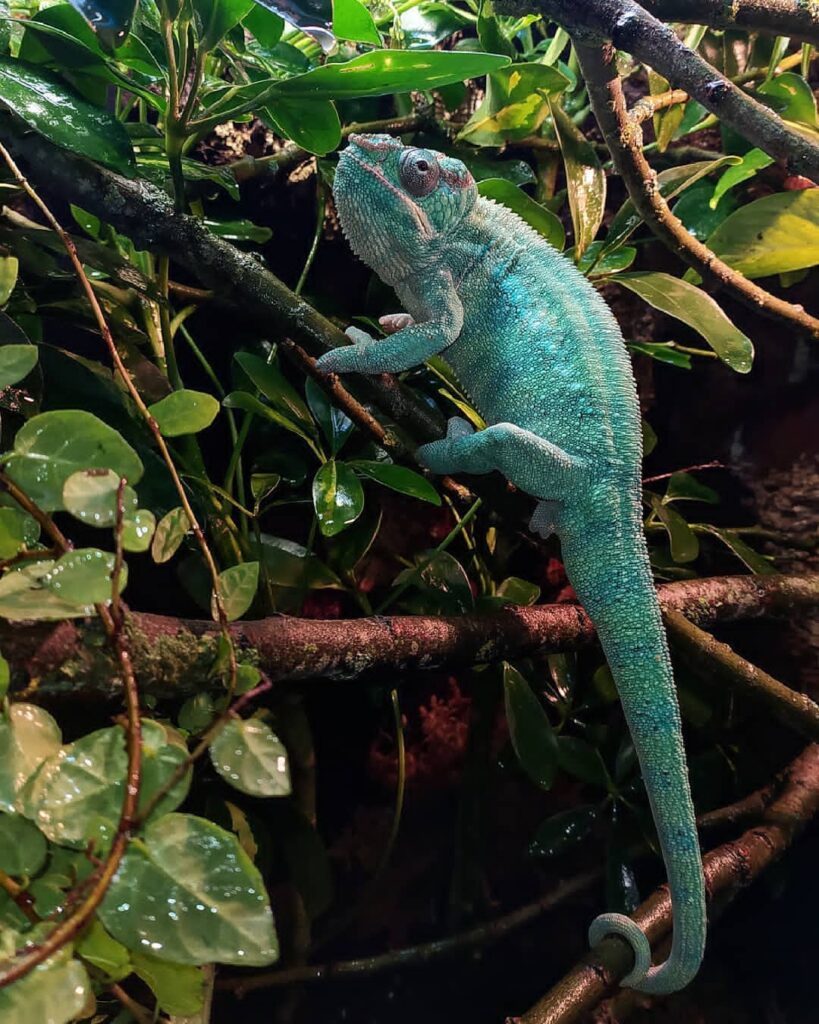
Panther Chameleons are the crown jewels. Native only to Madagascar, they display the most dramatic and varied coloration of any commonly kept species. When you search for a panther chameleon for sale, you’ll discover multiple “locales” (geographic color variants), each with its own signature look. We’ll dive deep into those later.
Jackson’s Chameleons are unique with their three prominent horns. They prefer cooler temperatures (70-80°F) and higher humidity than other species. They’re also one of the few chameleons that give live birth rather than laying eggs.
What to Look For When Searching for a Chameleon for Sale
Finding a healthy chameleon for sale is harder than it should be. Many pet stores sell wild-caught or poorly captive-bred animals that arrive already stressed, dehydrated, and loaded with parasites. Here’s exactly what to look for.
Health Checklist (Print This and Take It With You)
When you finally see a chameleon in person, run through this checklist:
-
Eyes: Should be round, full, and open. Sunken eyes = dehydration. Closed eyes during the day = serious illness.
-
Color: Bright and appropriate for the species. Dull, dark, or ashy colors can indicate stress, cold, or sickness.
-
Body condition: Should have a rounded body but not obese. You should not see prominent hip bones or spine ridges.
-
Feet and grip: Should grip your finger or a branch strongly. Weak grip = calcium deficiency or weakness.
-
Mouth: Should close completely. Open-mouth breathing (unless gaping to cool down) indicates respiratory infection.
-
Skin: No cuts, burns, bumps, or stuck shed (especially on toes and casque/crest).
-
Demeanor: Should be alert and aware of surroundings. Lethargy is dangerous.
Questions to Ask the Breeder or Seller
-
“What is the hatch date or estimated age?”
-
“Is this captive-bred or wild-caught?” (Only buy captive-bred)
-
“What has it been eating, and what supplements were used?”
-
“What are the current temperature and humidity in its enclosure?”
-
“Can I see the parents?” (For Panther Chameleons, this is essential)
Red Flags to Walk Away From
-
The seller cannot provide hatch information.
-
The chameleon is housed in a glass tank with poor ventilation.
-
Multiple chameleons in one enclosure (they are solitary).
-
The animal looks dull, skinny, or has closed eyes.
-
The price is suspiciously low (a healthy Panther Chameleon should cost 200−200−600 depending on locale and age).
Captive-Bred vs. Wild-Caught
Only buy captive-bred chameleons. Period. Wild-caught animals are almost always stressed, full of internal parasites, and much more likely to die within weeks of arrival. They also contribute to declining wild populations. A reputable breeder will proudly tell you their animals are captive-bred.
Setting Up the Perfect Chameleon Enclosure
Setting up the enclosure correctly before you bring your chameleon for sale home is absolutely critical. Do not buy the chameleon first and then figure out housing. Do it in reverse.
Best Cage Types (H3)
Chameleons need screen-sided enclosures, not glass aquariums. Stagnant air leads to respiratory infections. The only exception is for very young babies that need higher humidity retention.
-
Minimum size for adults: 18″x18″x36″ for smaller species, 24″x24″x48″ for Panthers and Veileds.
-
Material: Aluminum or PVC-coated screen. Zoo Med ReptiBreeze is a solid, affordable option.
-
Drainage: You need a way for water to escape (misting creates runoff). Many keepers use a drainage tray or build custom stands with drip pans.
Live Plants and Décor (H3)
Live plants are not optional—they’re essential for humidity, hiding spots, and drinking surfaces. Chameleons will lick water droplets off leaves.
Safe plants for chameleons:
-
Ficus benjamina (weeping fig)
-
Schefflera (umbrella plant)
-
Pothos (devil’s ivy) – very hardy
-
Hibiscus (adds color, edible flowers)
Avoid: Any plant with sticky sap, thorns, or known toxicity (oleander, ivy, philodendron in large quantities).
All plants should be washed thoroughly, repotted in organic, fertilizer-free soil, and covered with large rocks or screen mesh to prevent your chameleon from eating the substrate.
UVB Lighting (H3)
This is non-negotiable. Without UVB, chameleons cannot metabolize calcium and will develop metabolic bone disease (MBD), a painful, disfiguring, and often fatal condition.
-
UVB type: Linear fluorescent T5 HO (5-6% for Veileds, 6-12% for Panthers depending on distance)
-
Brands: Arcadia or ReptiSun
-
Placement: Across the top of the enclosure, covering the basking area
-
Distance: 6-12 inches from the basking branch (no glass or plastic between bulb and chameleon)
-
Replacement: Every 6-12 months (UVB output degrades even if light still works)
Do NOT use coil UVB bulbs. They produce inconsistent output and can damage chameleon eyes.
Heating and Temperature Gradient (H3)
Chameleons need a basking spot and a cooler zone to thermoregulate.
-
Basking surface: 85-90°F for Veileds, 80-85°F for Panthers (depends on locale)
-
Ambient warm zone: 75-80°F
-
Cool zone: 70-75°F
-
Nighttime drop: 65-70°F
Use a white incandescent basking bulb (not colored) on a dimming thermostat. Measure temperatures with a digital probe thermometer and an infrared temperature gun.
Humidity and Misting Systems (H3)
Humidity is where many new keepers struggle. Too low = dehydration and stuck sheds. Too high (with poor ventilation) = respiratory infections.
| Species | Daytime Humidity | Nighttime Humidity |
|---|---|---|
| Veiled Chameleon | 40-60% | Up to 100% (mist heavily at night) |
| Panther Chameleon | 50-70% | Up to 100% |
| Jackson’s Chameleon | 60-80% | Up to 100% |
Best practice: Use an automatic misting system (MistKing or Monsoon). Hand-misting 2-3 times daily works but is inconsistent. Mist heavily in the morning and right before lights out.
Run a dripper during the day to provide drinking water. Chameleons rarely drink from standing water; they need moving droplets on leaves.
Temperature Humidity UVB and Environmental Requirements (Quick Chart)
| Parameter | Veiled Chameleon | Panther Chameleon | Jackson’s Chameleon |
|---|---|---|---|
| Basking temp | 85-90°F (29-32°C) | 80-85°F (27-29°C) | 80-85°F (27-29°C) |
| Warm zone | 75-80°F | 75-80°F | 72-78°F |
| Cool zone | 70-75°F | 70-75°F | 65-72°F |
| Night temp | 65-70°F | 65-70°F | 60-65°F |
| Day humidity | 40-60% | 50-70% | 60-80% |
| UVB strength | 5-6% T5 | 6-12% T5 | 5-6% T5 |
| Enclosure size | 24x24x48″ | 24x24x48″ | 18x18x36″ |
Feeding Your Chameleon: Diet, Supplements, and Live Insects
Feeding a chameleon is not just tossing some crickets in a bowl. It requires variety, gut-loading, and precise supplementation.
Staple Insects
-
Crickets (best all-around staple)
-
Dubia roaches (more nutritious, less smelly, more expensive)
-
Black soldier fly larvae (high calcium, no dusting needed)
Occasional Treats (1-2 times weekly)
-
Hornworms (hydration boost)
-
Silkworms (high protein)
-
Superworms (high fat, feed sparingly)
-
Waxworms (very high fat, treats only)
Insect Sizing
The prey should be no longer than the width of your chameleon’s head. Baby chameleons need pinhead crickets; adults can handle large crickets or medium dubias.
Feeding Schedule
| Age | How Often | How Many |
|---|---|---|
| 0-3 months | Twice daily | 10-15 small insects per day |
| 3-6 months | Once daily | 10-12 insects per day |
| 6-12 months | Once every other day | 8-10 insects per feeding |
| 12+ months | Every other day to 3x weekly | 6-8 insects per feeding |
Gut-Loading (Critical)
The insects you feed are only as nutritious as the food THEY eat. Gut-load insects for 24-48 hours before feeding with fresh vegetables and commercial gut-load diets. Good options: collard greens, carrots, sweet potato, oranges, and commercial gut-load formulas.
Supplementation Schedule
This prevents metabolic bone disease and vitamin deficiencies.
| Supplement | Frequency | How to Apply |
|---|---|---|
| Calcium (without D3) | Every feeding | Light dusting on insects |
| Calcium with D3 | Every 2 weeks | Light dusting, don’t overdo |
| Multivitamin | Every 2 weeks | Light dusting on alternate weeks from D3 |
Important: If you use a high-quality UVB bulb, you need less D3 supplementation. Over-supplementing D3 is as dangerous as under-supplementing.
Hydration
Chameleons will not drink from a bowl. They need:
-
Misting (2-3 times daily, or automated)
-
Dripper (slow drip on leaves for 30-60 minutes daily)
-
Long mistings (at least 2 minutes to create droplets)
Signs of dehydration: sunken eyes, thick yellow urate (instead of white), wrinkled skin, lethargy.
Handling, Temperament, and Enrichment Strategies
Let me be direct: chameleons are not handling pets. They tolerate handling at best, and most actively dislike it. Every time you reach into their enclosure, you cause some level of stress.
When Handling Is Necessary
-
Moving to a clean enclosure
-
Veterinary examinations
-
Brief weight checks or health inspections
-
Emergency situations
How to Minimize Stress During Handling
-
Approach slowly from the front or side (never from above).
-
Offer a branch or your open palm. Let the chameleon walk onto you.
-
Never grab or squeeze.
-
Keep handling sessions under 5 minutes.
-
Watch for signs of stress: gaping mouth, dark colors, backing away, hissing, or trying to flee.
Enrichment (Do This Instead of Handling)
Chameleons need mental stimulation, but they want it on their own terms.
-
Change the layout of branches every 2-4 weeks.
-
Introduce new safe plants periodically.
-
Offer different insect varieties to stimulate hunting.
-
Create a “rain” effect with your misting system (some respond positively).
-
For veiled chameleons (which sometimes eat plant matter), offer safe edible flowers or leafy greens.
A well-enriched chameleon is more active, displays better color, and shows natural hunting behaviors.
Common Health Issues and Preventative Care
Even with perfect care, chameleons can get sick. Knowing the signs early saves lives.
Metabolic Bone Disease (MBD)
Causes: No UVB, calcium deficiency, or incorrect supplementation.
Signs: Soft or bent casque, lumps on spine or limbs, tremors, inability to grip, rubbery jaw.
Prevention: Proper UVB, calcium-dusted insects, gut-loaded prey.
Treatment: Veterinary intervention (calcium injections, UVB correction). Early stages can reverse.
Respiratory Infections
Causes: Low temperatures, high humidity without ventilation, drafts.
Signs: Open-mouth breathing, wheezing, mucus bubbles, lethargy, holding head upward.
Prevention: Proper temperature gradient, screen enclosure, good airflow.
Treatment: Veterinary antibiotics, increased temperatures.
Stomatitis (Mouth Rot)
Causes: Stress, injuries, poor husbandry.
Signs: Yellow cheesy material in mouth, swollen gums, reduced appetite.
Treatment: Veterinary cleaning and antibiotics.
Dehydration
Causes: Insufficient misting, no dripper, low humidity.
Signs: Sunken eyes, thick yellow urate, wrinkled skin, lethargy.
Treatment: Longer misting sessions, dripper adjusted, increased humidity.
Parasites
Causes: Wild-caught insects, contaminated feeder colonies, poor hygiene.
Signs: Weight loss, runny stool, undigested insects in feces, lethargy.
Prevention: Annual fecal floats at a reptile vet. Quarantine new animals.
Treatment: Prescription antiparasitics.
Preventative Care Checklist
-
Daily: Mist, feed, check temperatures, observe behavior and colors.
-
Weekly: Clean water dish (if used), wipe glass, check for stuck shed.
-
Monthly: Deep-clean enclosure, check UVB output, weigh your chameleon.
-
Annually: Veterinary wellness exam with fecal float.
Breeding Chameleons: Basics for Serious Keepers
Breeding chameleons is not for beginners. It requires experience, space, time, and the ability to care for dozens of babies simultaneously. But for advanced keepers, it’s fascinating.
Requirements
-
Age: Females at least 12 months (Veileds) or 18-24 months (Panthers). Males at least 8-12 months.
-
Health: Both animals must be parasite-free, well-fed, and in excellent condition.
-
Gravid females: After breeding, females will become gravid and need a laying bin (moist sand/soil mix in a large container).
-
Egg binding (dystocia) is a common killer. Provide proper laying conditions.
Special Considerations for Panthers
Unlike Veileds that can lay multiple infertile clutches, Panther Chameleons generally only lay after breeding. Overbreeding reduces female lifespan dramatically.
Ethical warning: Do not breed unless you have homes lined up for hatchlings. The chameleon market is saturated.
Top Panther Chameleon Locales and Varieties
When you search for a panther chameleon for sale, you’ll discover that “Panther” isn’t a single look. It’s a species with multiple geographic “locales,” each with signature colors.
Ambanja Panther Chameleon For Sale
Ambanja Panthers are known for their deep blues, purples, and greens. The most prized males show brilliant royal blue bars on a turquoise or emerald green base. They tend to have a robust, larger body type compared to other locales.
Care note: Ambanjas often prefer slightly cooler basking temperatures (80-82°F) than Ambilobes. They can be a bit more sensitive to overhandling.
Price range: 300−300−600 for males, 150−150−300 for females.
Ambilobe Panther Chameleon For Sale
Ambilobes are the most popular and widely available locale—for good reason. They display the widest color range of any Panther: reds, blues, greens, yellows, and oranges can all appear on a single animal. The famous “blue bar Ambilobe” shows striking blue vertical bars on a green or red background.
Care note: Ambilobes are hardy and adapt well to captivity. They tolerate slightly higher basking temps (84-86°F). Many first-time Panther keepers start here.
Price range: 250−250−500 for males, 150−150−300 for females.
Angalovana Panther Chameleon For Sale
Angalovana (sometimes called “Nosy Mitsio” depending on exact origin) is the rare gem of Panther locales. They typically show fewer color bars and more of a solid yellow, orange, or green-gold sheen. They are less common in captivity, so expect to pay a premium.
Care note: Angalovanas are reported by breeders to be slightly more shy and reclusive than other locales. They need dense foliage and multiple hiding spots.
Price range: 400−400−800+ for males, 250−250−500 for females.
Locale Comparison Table
| Locale | Signature Colors | Rarity | Price (Male) | Personality |
|---|---|---|---|---|
| Ambanja | Deep blue, purple, green | Moderate | 300−300−600 | Robust, calmer |
| Ambilobe | Red, blue, green, yellow | Common | 250−250−500 | Hardy, adaptable |
| Angalovana | Solid yellow, orange, gold | Rare | 400−400−800+ | Shy, reclusive |
Important: Always buy from a breeder who can show you parent photos. With Panther Chameleons, color genetics are strong—a stunning father usually produces stunning sons.
FAQ Section
1. How much does a chameleon for sale typically cost?
A healthy captive-bred chameleon ranges from 150foraveiledbabyto150foraveiledbabyto250-600formostPantherChameleons.RarelocaleslikeAngalovanacanexceed600formostPantherChameleons.RarelocaleslikeAngalovanacanexceed800. The setup will cost significantly more than the animal itself.
2. Is a panther chameleon for sale good for beginners?
No. Panther Chameleons are intermediate to advanced. Beginners should start with a veiled chameleon to master husbandry basics before investing in a more sensitive, expensive Panther.
3. What’s the difference between Ambanja and Ambilobe Panther Chameleons?
Ambanjas typically show deeper blues and purples on green backgrounds. Ambilobes display the widest color range (reds, blues, greens, oranges). Ambilobes are generally hardier and more available.
4. How long do chameleons live in captivity?
Veiled chameleons: 5-8 years. Panther chameleons: 5-7 years. Females of both species tend to live shorter lives (3-5 years) due to the stress of egg production.
5. Do chameleons like to be handled?
No. Most chameleons tolerate handling at best. Chronic handling causes stress, illness, and shortened lifespan. They are observational pets, not cuddly companions.
6. What size enclosure does a chameleon need?
Adult Veiled and Panther Chameleons need a minimum of 24″x24″x48″ (tall). Smaller species like carpet chameleons can use 18″x18″x36″. Height is more important than width.
7. Can chameleons live together?
Absolutely not. Chameleons are solitary and territorial. Males will fight to the death. Males and females only come together briefly for breeding. Each chameleon needs its own enclosure.
8. What do chameleons eat?
Live insects: crickets, dubia roaches, black soldier fly larvae, hornworms, and silkworms. All insects must be gut-loaded and dusted with calcium supplements.
9. Do chameleons need UVB light?
Yes, non-negotiable. Without UVB, they develop metabolic bone disease (MBD). Use a linear T5 HO fluorescent UVB bulb, replaced every 6-12 months.
10. Why is my chameleon changing color?
Color changes communicate mood, temperature regulation, health status, and social signaling. Bright colors = warm, healthy, dominant. Dark colors = cold, stressed, or submissive.
11. How often should I mist my chameleon?
At least twice daily for 2-5 minutes. An automatic misting system (MistKing) is ideal. Run it in the morning and right before lights out. Use a dripper during the day.
12. Where should I buy a chameleon?
From a reputable, specialized chameleon breeder (online or at reptile expos). Avoid chain pet stores and wild-caught animals. Ask for parent photos, hatch dates, and feeding records.
Conclusion
Bringing home a chameleon for sale is not a casual decision. It’s a commitment to providing a highly specialized environment, a precise diet, and a respectful, hands-off relationship that may last five to eight years or more. But if you’re the right kind of keeper—someone who finds joy in careful observation, who takes pride in dialing in temperature and humidity to the exact degree, who can appreciate beauty without needing to touch it—then a chameleon will reward you in ways few other animals can.
I’ll never forget the first time my Ambilobe Panther fired up his full red, blue, and green display just because the morning sun hit his enclosure at the perfect angle. He wasn’t performing for me. He was just being himself. And that, more than any trick or cuddle, is the magic of chameleon keeping.
If you’re ready to take the leap, start by researching your setup first. Join communities like the Chameleon Forums. Watch videos from reputable keepers. And when you finally find that healthy panther chameleon for sale from a breeder you trust, whether it’s a stunning Ambanja Panther Chameleon For Sale, a colorful Ambilobe Panther Chameleon For Sale, or a rare Angalovana Panther Chameleon For Sale, you’ll know you’ve done the work to give it a thriving home.
Your next steps:
-
Master chameleon enclosure setup with our equipment checklist
-
Compare Panther Chameleon locales to find your perfect color match
-
Find ethical chameleon breeders near you or online
Your journey into the colorful, challenging, absolutely unforgettable world of chameleons starts now. Just remember: respect their space, dial in their environment, and watch the magic happen—one slow, deliberate step at a time. Happy keeping.