Green Tree Python: Everything You Need to Know Before Buying
Introduction: The Emerald Gem of the Canopy
If you are considering adding a truly stunning, living jewel to your reptile collection, the green tree python (Morelia viridis) should undoubtedly be at the top of your list. This is not merely a snake; it is a masterwork of evolution, a creature whose vibrant, almost iridescent emerald hues and graceful, coiled posture evoke the dense, humid rainforests from which it hails. For decades, the green tree python has been a coveted species, capturing the hearts of passionate reptile enthusiasts, seasoned collectors, and even those simply captivated by the beauty of the natural world.
In this comprehensive guide, we will embark on a deep dive into the fascinating world of Morelia viridis. We will explore everything from its unique biology and wild origins to the intricate nuances of its care in captivity. Whether you are actively looking to buy a green tree python and need a reliable roadmap, or you are simply a curious admirer seeking to understand the allure of this species, you have come to the right place. Prepare to be captivated by one of the most beautiful and rewarding snakes on the planet.
Chapter 1: What is a Green Tree Python? A Portrait of an Arboreal Master
The green tree python (Morelia viridis) is a non-venomous constrictor species native to the lush, tropical rainforests of New Guinea, several surrounding islands in Indonesia (such as the Aru Islands, Biak, and Salawati), and the Cape York Peninsula in northern Australia. This snake is a true specialist, having evolved to live almost entirely within the three-dimensional world of the forest canopy. Its entire existence—from hunting to resting to reproduction—is adapted for an arboreal lifestyle.
A Study in Color and Form
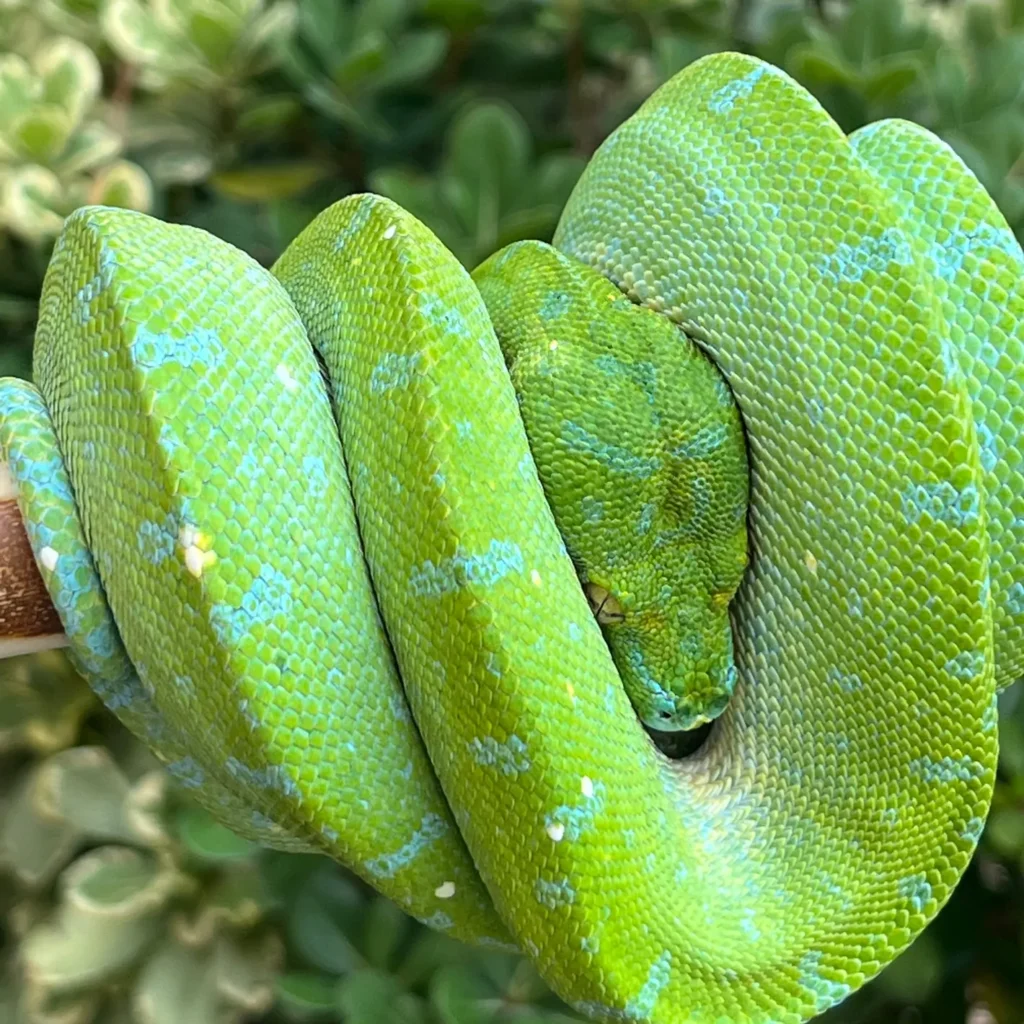
The most immediately striking feature of the green tree python is its coloration. As the name implies, adults typically display a brilliant, vibrant green that can range from a deep, forest emerald to a lighter, more minty tone. However, the secret of their beauty lies in the details. Scattered across their green scales, you will often find a sprinkling of small, whitish or yellow spots that form a subtle, broken vertebral stripe. These markings serve as brilliant camouflage, breaking up the snake’s outline against the dappled light filtering through the leaves. In contrast, their belly is a pale, creamy yellow, providing a lighter underside as they coil on branches.
Another remarkable feature is their prehensile tail, which acts like a fifth limb. Juveniles use it extensively for climbing and securing themselves, and even as adults, it provides incredible stability as they navigate the slender branches of their enclosure or a rainforest tree. Their head is large and distinct from the neck, with large, forward-facing eyes that provide excellent binocular vision, essential for accurately striking at prey in the complex three-dimensional environment of the canopy.
The Juvenile Transformation
One of the most fascinating aspects of green tree pythons is their dramatic color change from hatchling to adult. Young snakes, which are born a bright, defensive color of either yellow, brick red, or rarely, a bright orange, are a stark contrast to their parents. This coloration is not random; it is a brilliant adaptation. In the forest understory, these vibrant colors are excellent camouflage against the detritus and leaves on the jungle floor. By looking like a harmless, inedible piece of forest litter or even a venomous invertebrate, the juvenile snake is protected from predators. As they grow and move up into the canopy, their color shifts, or ontogenetic changes, to the green of adult life, a process that can take anywhere from several months to over a year.
Chapter 2: Types and Localities: The Geography of Beauty
The term “green tree python” is a general name for a species that has diversified across a wide geographic range. These different populations, known as localities, have developed distinct physical characteristics. Understanding these localities is crucial for any serious keeper, as it influences not only the snake’s appearance but often its size, temperament, and specific care nuances.
• The Stunning Biak: Hailing from the island of Biak in Indonesia, this is arguably the most visually spectacular locality. Biak green tree pythons are famous for their incredibly vibrant, almost neon yellow or electric blue coloration. They often have a high percentage of blue scales interspersed with their green, creating a stunning, holographic effect. However, this beauty comes with a reputation. Biaks are known to be the most high-strung and defensive of all the localities. They are less tolerant of handling and can be more prone to stress, making them a better choice for advanced keepers who appreciate them as display animals.
• The Robust Aru: From the Aru Islands, this locality is a classic and widely available form. Aru green tree pythons are known for their rich, deep emerald green color, often with a clean, unbroken white or yellow vertebral stripe. They tend to grow larger and more robust than other localities, with a heavier body. Their temperament is generally considered to be more placid and manageable than Biaks, making them a popular choice for keepers with some experience who want a “true” green tree python aesthetic.
• The Muted Jayapura: Found near the city of Jayapura in Papua, Indonesia, this locality is prized for its subtle and unique beauty. Jayapura green tree pythons often display a more muted, teal or sea-foam green base color, heavily speckled with a distinctive blue or turquoise hue. Their pattern can be more broken and less defined than other localities. They can also exhibit a yellow or white vertebral stripe, but the overall impression is softer and more complex. Their temperament falls somewhere in between the Aru and Biak, making them a fascinating option for the dedicated hobbyist.
Why Locality Matters
When you buy a green tree python, the specific locality is a key factor in the price and the long-term enjoyment of the animal. A Biak baby will be a different challenge than a captive-bred Aru. Responsible breeders maintain accurate locality records to preserve the unique genetics of these wild populations, ensuring that the rich diversity of the species is maintained in captivity.
Chapter 3: Why People Buy a Green Tree Python: The Allure and the Challenge
Owning a green tree python is a statement. It is a commitment to caring for one of the most visually arresting and ecologically specialized snakes in the world. The reasons for acquiring one are clear, but so are the responsibilities.
The Visceral Visual Appeal: This is the primary driver. A healthy, well-set-up green tree python is an unparalleled display animal. Its vibrant green, its elegant coil on a branch, the slight tilt of its head as it watches the world go by – it is a living sculpture. It transforms a collection from a collection of animals into a collection of living art.
The Display Reptile Advantage: Their arboreal nature allows for a completely different kind of enclosure setup. Instead of focusing on floor space, you get to create a vertical paradise. This allows for creative, bioactive vivariums that mimic a slice of a real rainforest, complete with live plants, mosses, and intricate branches. The snake becomes the highlight of the room, a centerpiece that sparks conversation and wonder.
The Reward of Experience: These are not beginner snakes. They are best suited for intermediate to advanced reptile keepers. The challenge is in providing the stable, specific conditions they require. Successfully maintaining a green tree python, watching it thrive, and even potentially breeding it, brings a deep sense of achievement and satisfaction that comes from mastering a specialized skill.
Pros and Cons: A Honest Look
The Enchanting Pros:
• Aesthetic Perfection: No other snake offers the same combination of vibrant color, elegant posture, and arboreal grace.
• Fascinating Ethology: Watching their hunting behavior, their unique sleeping positions, and their daily movements is endlessly engaging.
• Relatively Low Maintenance (Once Established): While the initial setup is intensive, once their environment is stable, their feeding and cleaning schedule is less demanding than some other species.
The Demanding Cons:• Handling Challenges: They are largely display animals. They are not a snake you will handle frequently. Their temperament can be defensive, and they have a powerful, painful bite. Over-handling causes them significant stress.
• Specific Environmental Needs: Maintaining a constant humidity of 60-80% and a precise temperature gradient is non-negotiable. This often requires specialized equipment like misting systems, hygrometers, and thermostats.
• Higher Price Point: Both the initial cost of the snake and the cost of a high-quality, vertically-oriented enclosure are significant investments.
Chapter 4: Green Tree Python Price Guide: Navigating the Market
The green tree python price is a reflection of its desirability, rarity, and the complexity involved in its captive reproduction. Prices can vary widely, so understanding the market is essential.
Typical Price Ranges:
• Baby Green Tree Pythons ($250 • $800): The price of a baby (often called a hatchling due to their birth colors) depends heavily on locality. A standard Aru baby will be on the lower end. A sexed male from a less common locality like Biak or a rare color morph (like the “Blue Line” or “High Blue”) will be at the higher end.
• Juveniles and Sub-Adults ($500 • $1500): As the snake grows and its adult coloration begins to come in, the price increases. A “pastel” or a snake that is already showing its beautiful green tones will command a higher price because the buyer can see the final result.• Adult Green Tree Pythons ($1,000 • $2,500+): Mature, proven breeders are the most expensive. A proven female from a highly desirable locality can easily fetch well over $2,000. Rare morphs like the “High Yellow” or “Calico” can be thousands of dollars more.
Key Factors Affecting Price:
• Morphs and Localities: The single biggest factor. A standard Aru is common; a Biak, a Sorong, or a “Manokwari” is much rarer and more expensive.
• Captive Bred vs. Wild Caught: This is non-negotiable. Always choose captive-bred (CB). CB animals are healthier, parasite-free, and much easier to acclimate. They will cost more, but the investment is worth it for the animal’s well-being and your peace of mind. Wild-caught animals are cheaper but often arrive stressed, dehydrated, and with a host of health problems.
• Age and Health: A clean, healthy, well-established individual is worth more. A snake that is a proven feeder on frozen-thawed rodents is highly valuable.
Chapter 5: The Definitive Green Tree Python Care Guide
Caring for a green tree python is a commitment to recreating a micro-rainforest. It requires diligence and precision.
Enclosure Setup: The Vertical Paradise
• Size is Vertical: Forget floor space. Your enclosure needs to be tall. A glass Exo Terra or a PVC enclosure like a Vision or Animal Plastics cage is ideal. An adult needs a minimum of 4 feet tall x 2 feet wide x 2 feet deep. Babies can start in a smaller, well-ventilated tub or a 18″x18″x24″ enclosure.
• Substrate: The key is moisture retention without becoming waterlogged. Use a 4-6 inch layer of a mix like coconut coir, cypress mulch, and sphagnum moss. This creates a humidity reservoir and allows for natural burrowing behavior if desired.
• Perches and Climbing Structure: Provide a confusing network of sturdy, horizontal branches of varying thicknesses. Driftwood, ghostwood, and cork bark are excellent choices. The snake needs a stable “hammock” or a secure spot to coil. The classic “sitting coil” posture is a sign of contentment.
Temperature and Humidity: The Goldilocks Zone
• Temperature: Create a clear gradient. The warm side should have a basking spot of 86-88°F (30-31°C), achieved with a ceramic heat emitter or a radiant heat panel connected to a thermostat. The cool side should be a steady 75-78°F (24-26°C). Nighttime temperatures can drop by 5°F. Never use heat rocks.
• Humidity: This is the most critical and challenging parameter. Aim for a stable 60-80%, with a spike to 90-100% after a heavy misting. Use a reliable digital hygrometer. Maintain this by heavily misting the enclosure and substrate daily, or by using an automatic misting system. A large water bowl in the enclosure also adds to humidity.
Lighting and UVB: A Beneficial Addition
While Green Tree Pythons can survive without UVB, research strongly suggests it is highly beneficial for their overall health, vitamin D synthesis, and color vibrancy. A low-level UVB bulb (like a 5.0 or 6%) placed 12-18 inches from the snake, on a 12-hour cycle, is a worthwhile investment. They also need a clear day/night cycle.
Feeding Habits: A Simple but Precise Diet
• Prey Size: Feed appropriately sized rodents. A baby green tree python starts on a small pinky mouse. Adults eat medium to large mice, or a small rat (a fuzzy rat for a smaller adult, a small adult rat for a large, robust female).
• Feeding Schedule: Babies should be fed every 5-7 days. Juveniles every 7-10 days. Adults every 10-14 days. Do not overfeed. An obese green tree python is an unhealthy one.
• Feeding Method: The preferred method is to offer a pre-killed, frozen-thawed rodent with a pair of long tweezers. Never hand-feed. For stubborn feeders, you can try “scenting” the prey (e.g., rubbing it against a frog or lizard scent) but it’s best to persist with mice/rats.
Handling: A Precarious Art
Green tree pythons are not confident handling snakes. They are nervous, defensive, and have a strong bite. Handling should be extremely limited, perhaps only once or twice a month for health checks or enclosure cleaning. When you do handle them, move slowly and confidently. Support their body fully. A bite is not toxic but is a painful, messy experience (like being stabbed with a hundred tiny needles). A stressed snake will refuse food and become ill.
Common Care Mistakes:
1. Low Humidity: This is the number one killer of captive green tree pythons. It leads to dehydration, poor sheds, respiratory infections, and kidney failure.
2. Incorrect Temperature: Too cold and they won’t digest food; too hot and they can suffer neurological damage.
3. Over-handling: The single greatest source of stress and resulting feeding refusal.
4. Poor Enclosure Security: They are masters of escape. A loose green tree python is a dead green tree python.
Chapter 6: Habitat Setup: A Step-by-Step Guide
Equipment List:
• A high-quality, front-opening, vertically-oriented enclosure (PVC or glass).
• A reliable thermostat and thermometer.
• A ceramic heat emitter or radiant heat panel.
• A digital hygrometer.
• An automatic misting system (highly recommended for adults) or a high-quality pressure sprayer.
• Substrate (coconut coir, cypress mulch, sphagnum moss).
• Sturdy branches of varying thickness (driftwood, ghostwood).
• Plenty of artificial or live foliage for security (e.g., pothos, sansevieria).
• A large, heavy water bowl.
Enclosure Design Steps:
1. Choose and Prepare: Select your enclosure. Clean it thoroughly.
2. Install Heating: Secure the heating element to one side of the enclosure (the upper or top back) and connect it to the thermostat. Place the thermostat probe in the center of the enclosure.
3. Create the Substrate Bed: Add a 3-4 inch layer of your substrate mix. Mist it thoroughly until it’s damp, not soaked.
4. Build the Structure: Artfully arrange your branches. Create multiple horizontal and diagonal pathways for the snake to climb. Ensure stability.
5. Add Foliage and Hides: Place dense foliage (real or fake) in several areas, particularly on the cool side and in the center. This gives the snake a choice of secure, hidden spots. A hide is not a box on the floor; it’s a dense clump of leaves high up.
6. Place the Water Bowl: Place it on the floor on the cool side. Make sure it is heavy and won’t tip over.
7. Introduce the Snake: Gently place your green tree python into its new home and leave it completely alone for at least two weeks to acclimate.
Chapter 7: Buying Guide: Your Path to a Healthy Python
When you are ready to buy a green tree python, your goal is to find a healthy, captive-bred animal from a reputable source.
How to Choose a Healthy Green Tree Python:
• Clear Eyes: No cloudiness, discharge, or stuck eye caps.
• Smooth Scales: No cuts, lesions, blisters, or mites (look for small moving dots).
• Alert and Aware: It should be watching you, not lying limp or lethargic.
• Healthy Body Condition: It should feel firm and muscular, not like a limp rope. A healthy juvenile will have a distinct “rock solid” feel in its coil. Avoid snakes that look emaciated (spine and ribs visible) or obese (a round, doughy appearance).
• Good Shed: Look for a recent, complete shed with no stuck skin, especially on the head and tail.
Questions to Ask the Seller:
• “Is this a captive-bred (CB) animal? Do you have the parent information?”
• “What is its exact locality?”
• “What is its feeding schedule? Is it a reliable eater on frozen-thawed rodents?”
• “When was its last shed and last meal?”
• “Has it had any health issues?”
The Importance of Captive Bred Reptiles:
Buying a captive-bred green tree python is not just a preference; it’s an ethical and practical necessity. Wild-caught animals are often stressed, teeming with parasites, and refuse to eat. They are a gamble with your money and the animal’s life. CB animals are born into captivity, used to humans, and have no fear of a rodent in a bowl.
Where to Find Green Tree Pythons for Sale Safely:
• Reputable Breeders: This is the gold standard. Look for breeders who specialize in pythons and have a great reputation online (morphmarket.com, reptile forums).
• Reptile Shows: Great for seeing a breeder’s animals and asking questions face-to-face.
• Specialized Pet Stores: Choose a store with a strong reputation, a clear focus on reptiles, and a knowledgeable staff. Avoid general pet stores that sell animals as an impulse buy.
Chapter 8: Health and Common Issues: A Vigilant Keeper
Even with the best care, green tree pythons can face health problems. Prevention is always the best medicine.
• Respiratory Infections (RI): A classic sign is a bubbly, open-mouthed breathing or a “wheeze.” Treat with a vet-prescribed antibiotic and a temporary increase in temperature.
• Dehydration: Signs include sunken eyes, sticky saliva, and a dull, wrinkled skin. Treatment involves increasing humidity and giving the snake a shallow, warm soak.
• Inclusion Body Disease (IBD): A fatal viral disease prevalent in boids. Signs include regurgitation, head tremors, and stargazing. There is no cure; it is lethal. Quarantine new arrivals for at least 90 days.
• Mites: A common external parasite. They look like small moving black dots. Treat with a reptile-safe mite spray or cleaner.
Prevention Tips:
• Quarantine: Always quarantine any new snake for 60-90 days.
• Hygiene: Wash your hands between handling any reptiles. Clean the enclosure regularly.
• Veterinary Care: Find a reptile-experienced veterinarian before you have a problem.
Chapter 9: Comparison: Green Tree Python vs. Other Snakes
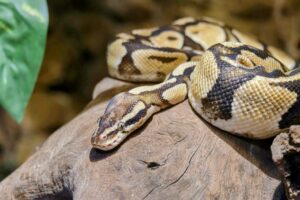
• Green Tree Python vs. Emerald Tree Boa (Corallus caninus): This is the classic debate. Both are green, arboreal snakes. The ETB has larger, more prominent heat pits, a more blunt head, and a generally more “lazy” demeanor. The GTP is more slender, has a more pointed head, and is often more active. The ETB is a livebearer; the GTP lays eggs. Care is very similar. The main difference is temperament: the ETB is often considered more docile, while the GTP is more nervous and prone to striking.• Green Tree Python vs. Ball Python: The ball python is the ultimate beginner’s snake: docile, easy to feed, and forgiving of minor care mistakes. The GTP is the opposite: demanding, specialized, and prone to stress-related health issues. It’s like comparing a reliable family sedan to a Formula One race car. One is for transportation; the other is for pure performance and spectacle.
Difficulty Level Comparison:
On a scale of 1-10 (10 being hardest), a Ball Python is a 2. A Corn Snake is a 1. A Green Tree Python is an 8 or 9. They are for experienced keepers who are obsessed with their care and are willing to invest the time, money, and space required.
Chapter 10: Are Green Tree Pythons Good Pets? The Final Verdict
The answer is a nuanced “yes” for the right person. They are not good pets for a casual, low-involvement keeper. They are not good pets for a child. They are not good pets for someone who wants a snake to hold.
They are excellent pets for the dedicated, experienced reptile enthusiast who:• Has an obsession with beauty and design.• Is fascinated by complex ethology and natural history.
– Is prepared to spend hundreds of dollars on a proper enclosure.
– Can accept that this is a display animal, not a handling animal.
– Has the patience and technical ability to maintain a stable, high-humidity environment.
If you are that person, then a green tree python is not just a good pet; it is a magnificent, rewarding companion that will captivate you for its entire, long life (15+ years).
FAQ Section (Expanded)
1. Are green tree pythons aggressive? They are not “aggressive” in the way a viper is, but they are defensive. They would rather flee or hide, but when cornered or threatened, they will strike. Their first line of defense is a nervous, fast strike. They are not a cuddly species.
2. How much does a green tree python cost? Prices range from $250 for a common locality baby to $2,500+ for a rare adult morph.
3. Where can I buy a green tree python? From reputable, specialized breeders online (MorphMarket) or at reptile expos. Avoid general pet stores.
4. Are they beginner-friendly? Absolutely not. They are recommended for intermediate to advanced keepers. A beginner will almost certainly make a fatal mistake with humidity or temperature.
5. How often do they eat? Babies: every 5-7 days. Adults: every 10-14 days.
6. Do they need special enclosures? Yes, a vertical enclosure (minimum 4ft tall for an adult) is essential.
7. How long do they live? With perfect care, 15-20 years is common. Some have lived into their 20s.
8. Can they be handled? Very, very rarely. Handling should be minimal and for health checks only. They are a “look but don’t touch” species for most owners.
Conclusion: The Emerald Legacy
The green tree python is more than a reptile; it is an experience, a study in patience, and a testament to the beauty of the natural world. It demands a keeper who is prepared to be a student of the species. In return, it offers a daily spectacle of vibrant life, a dynamic partner in creating a living rainforest, and a profound sense of connection to a wild, distant jungle. This guide has equipped you with the knowledge. Now, the journey is yours to begin.