Table of Contents
ToggleBlue Tongue Skink: The Ultimate Care Guide, Setup, Morphs, and Ownership Tips in 2026
Introduction
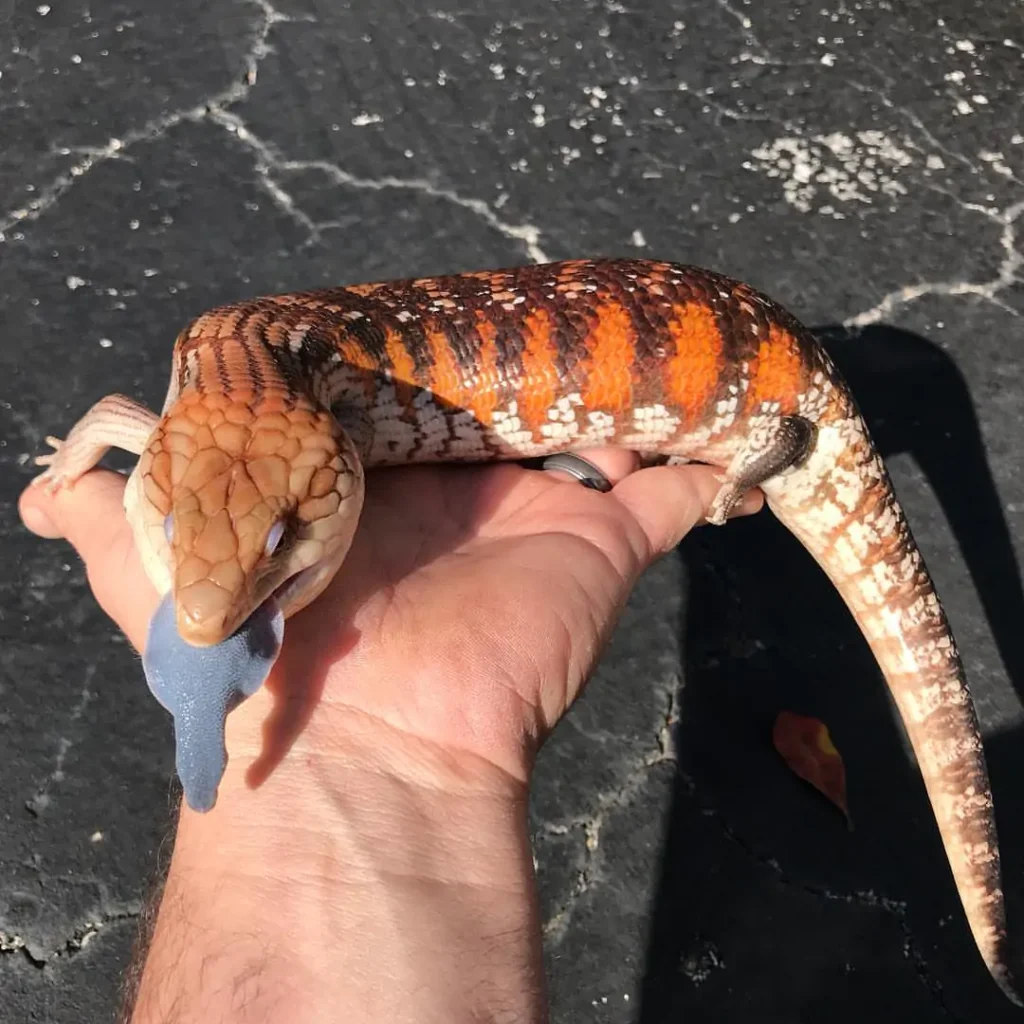
The first time a blue tongue skink flicked its tongue at me, I nearly jumped back. Not from fear—from pure surprise. That tongue wasn’t just blue. It was electric. Brilliant. Shockingly vibrant against the lizard’s smooth, earthy scales. I’d seen photos, sure. But photos don’t prepare you for the real thing.
That moment happened at a reptile expo about twelve years ago. I was walking past a table when a juvenile skink turned its head, opened its mouth, and gave me a full, unapologetic flash of that famous blue tongue. I was hooked instantly. I bought that skink on the spot, and he became one of the most rewarding reptiles I’ve ever kept.
If you’re reading this, you’ve probably felt a similar pull. The blue tongue skink is one of those reptiles that seems to capture everyone’s attention. They’re not flashy like a chameleon or massive like a monitor. They’re something else entirely: solid, grounded, undeniably charismatic, and surprisingly dog-like in their interactions with humans.
Unlike many reptiles that tolerate handling at best, blue tongue skinks genuinely seem to enjoy human interaction. They’ll climb onto your hand. They’ll explore your arm. They’ll sit on your lap while you watch TV. And that blue tongue? It never gets old.
In this complete 2026 guide, I’ll share everything I’ve learned about keeping these incredible lizards. We’ll cover why they make such great pets, the different subspecies, how to find a healthy blue tongue skink for sale, setting up the perfect enclosure, feeding schedules, handling tips, health concerns, and much more. Whether you’re a first-time reptile owner or an experienced keeper looking to add a blue tongue skink to your collection, you’ll find practical, actionable advice here.
Let’s dive into the wonderful world of blue tongues.
Why the Blue Tongue Skink Is a Great Pet Reptile
Among all the blue tongue skink enthusiasts I’ve met over the years, I’ve never heard anyone say they regretted getting one. Here’s why these lizards have such a loyal following.
Personality That Wins Hearts
Bearded dragons are friendly. Leopard geckos are docile. But blue tongue skinks are something else entirely. They’re curious. They’re bold. They seem to actually watch you and respond to your presence. My current skink comes to the front of his enclosure when I walk into the room. He’s not just hungry—he’s interested.
Manageable Size
Adult blue tongue skinks typically reach 18 to 24 inches and weigh 1 to 2 pounds. That’s large enough to feel substantial but small enough to handle comfortably with one hand. You don’t need a custom-built enclosure the size of a wardrobe.
Long Lifespan
A healthy blue tongue skink can live 15 to 20 years with proper care. That’s a genuine long-term companion—someone who will be with you through major life changes.
Low Humidity Requirements (for some subspecies)
Northern blue tongue skinks come from Australia’s drier regions and thrive at 30-40% humidity—normal household levels. This makes them much easier to keep than tropical reptiles that need constant misting.
Omnivorous Diet
Unlike strict herbivores (iguanas) or strict insectivores (many geckos), blue tongue skinks eat a varied diet of vegetables, protein, and fruit. This makes feeding them more interesting and forgiving.
Who Should Get a Blue Tongue Skink?
-
First-time reptile owners (with research)
-
Families looking for a handleable, personable pet
-
People who want a longer-lived companion (15-20 years)
-
Keepers who appreciate a lizard with actual personality
Understanding Different Blue Tongue Skink Species and Subspecies
The term blue tongue skink covers multiple species and subspecies. Each has different care requirements, sizes, and availability.
| Subspecies | Adult Size | Difficulty | Humidity | Key Traits |
|---|---|---|---|---|
| Northern | 18-24 inches | Beginner | 30-40% | Most common, hardiest, banded pattern |
| Indonesian | 20-28 inches | Intermediate | 60-80% | Larger, smoother scales, variable color |
| Merauke | 24-30 inches | Intermediate | 50-70% | Giant of the group, olive tones |
| Halmahera | 18-24 inches | Advanced | 70-85% | Very high humidity needs, dark with speckles |
| Irian Jaya | 20-24 inches | Intermediate | 50-70% | Less common, variable patterns |
| Shingleback | 12-18 inches | Intermediate | 30-40% | Short, thick tail, very different appearance |
Northern Blue Tongue Skink
The Northern Blue Tongue Skink (Tiliqua scincoides intermedia) is the gold standard. They are the most widely available, most forgiving, and best choice for beginners. Northerns have bold banded patterns and a calm, confident demeanor.
Indonesian and Merauke
These are the “giants” of the group. They need higher humidity and are often wild-caught (avoid wild-caught). Captive-bred Indonesians and Meraukes are less common but worth seeking out.
Shingleback
The Shingleback is a unique blue tongue skink with a short, thick tail that looks like a second head. They are less common and more expensive but fascinating animals.
What to Look For When Searching for a Blue Tongue Skink for Sale
Finding a healthy blue tongue skink for sale takes patience. Here’s my complete buyer’s checklist.
Health Indicators Checklist
-
Eyes: Bright, clear, fully open. No swelling or discharge.
-
Tongue: Should be bright blue (or pinkish in babies). Dull, cracked, or pale tongue can indicate dehydration or illness.
-
Body condition: Rounded but not obese. No visible hip bones or spine ridge.
-
Skin: Smooth, intact, no lesions, cuts, or stuck shed (especially on toes and tail tip).
-
Legs: All four legs should be fully formed and functional. No limping or dragging.
-
Tail: Should be thick and fleshy (blue tongues store fat in their tails). A thin tail indicates malnourishment.
-
Vent (cloaca): Clean, no pasty or bloody residue.
-
Activity: Alert and responsive. Should move away when approached, not lie limp.
Questions to Ask the Breeder or Seller
-
“Is this captive-bred or wild-caught?” (Only buy captive-bred)
-
“What’s the hatch date or estimated age?”
-
“What has it been eating, and what supplements?”
-
“What temperatures and humidity do you maintain?”
-
“Have you treated for parasites?”
-
“Can I see the parents?” (For captive-bred animals)
Red Flags to Walk Away From
-
The seller cannot confirm captive-bred status.
-
Multiple skinks are housed together (they are solitary and territorial).
-
The skink looks thin, has stuck shed, or shows any health issues.
-
The price is suspiciously low (healthy Northerns: 250−250−500; Indonesians/Meraukes: 300−300−800).
-
The seller cannot answer basic questions about care.
Captive-Bred vs. Wild-Caught
Only buy captive-bred blue tongue skinks. Wild-caught animals almost always arrive with parasites, chronic stress, and may refuse to eat. They also contribute to population decline. A reputable breeder will proudly tell you their animals are captive-bred.
Setting Up the Perfect Enclosure
Your blue tongue skink enclosure is the foundation of its health. Get this right before you bring your lizard home.
Enclosure Size Requirements (H3)
These lizards are terrestrial (ground-dwelling) and need floor space, not height.
| Age | Minimum Enclosure Size | Recommended |
|---|---|---|
| Baby (0-6 months) | 20-gallon long (30″x12″x12″) | 40-gallon breeder |
| Juvenile (6-18 months) | 40-gallon breeder (36″x18″x18″) | 4’x2’x2′ |
| Adult (18+ months) | 4’x2’x2′ (120-gallon equivalent) | 5’x2’x2′ or larger |
Important: A 4’x2’x2′ PVC enclosure is the gold standard for an adult blue tongue skink. It holds heat and humidity far better than glass tanks.
Substrate Options (H3)
Substrate choice is critical for humidity and preventing impaction.
| Substrate | Best For | Pros | Cons |
|---|---|---|---|
| Aspen shavings | Northerns | Great for burrowing, affordable | Too dry for Indonesians |
| Cypress mulch | Indonesians, Meraukes | Holds humidity, natural | Can be dusty |
| Coco coir | All species | Safe if ingested, holds moisture | Can be messy |
| Reptile carpet | Babies, quarantine | Easy to clean, safe | Doesn’t hold humidity |
| Paper towels | Quarantine, sick skinks | Sterile, easy to monitor | Not natural |
Avoid: Sand (impaction risk), cedar or pine (toxic), calcium sand.
Hides and Enrichment (H3)
Blue tongue skinks need security. Provide at least two hides: one on the warm side and one on the cool side.
Enrichment ideas:
-
Cork flats or half-logs for hiding
-
Flat rocks for basking
-
Low branches (they will climb occasionally)
-
A dig box with moist substrate (they love to burrow)
-
Rotating decor every few weeks
Lighting and Heating (H3)
Unlike bearded dragons, blue tongue skinks do not require intense basking temperatures, but they still need a proper gradient.
-
Basking surface: 95-100°F (use a low-wattage halogen or basking bulb)
-
Warm side ambient: 85-90°F
-
Cool side ambient: 75-80°F
-
Nighttime: 65-75°F (can drop)
UVB: Recommended but not strictly required if diet is properly supplemented. If using UVB, use a low-strength linear T5 (5-6%). Without UVB, you must provide dietary vitamin D3.
All heat sources must be on a thermostat to prevent burns.
Humidity Levels (H3)
This is where subspecies really differ.
| Subspecies | Daytime Humidity | Nighttime Humidity |
|---|---|---|
| Northern | 30-40% | 40-50% |
| Merauke | 50-70% | 70-80% |
| Indonesian | 60-80% | 80-90% |
| Halmahera | 70-85% | 85-95% |
Monitoring: Use digital hygrometers. For high-humidity species, you’ll need manual misting (2-3 times daily) or an automatic misting system.
Temperature Humidity Lighting and Environmental Requirements
Quick reference chart for blue tongue skink care.
| Parameter | Northern | Merauke/Indonesian |
|---|---|---|
| Basking surface | 95-100°F | 90-95°F |
| Warm side ambient | 85-90°F | 82-88°F |
| Cool side ambient | 75-80°F | 75-80°F |
| Nighttime temp | 65-70°F | 68-72°F |
| Day humidity | 30-40% | 50-80% |
| UVB needed | Optional | Optional |
| Brumation | Yes (winter) | No |
Feeding Your Blue Tongue Skink: Diet Supplements and Feeding Schedule
Here’s where blue tongue skinks really shine. They are omnivores with a varied diet, which makes feeding them more interesting than most reptiles.
The 50/30/20 Rule
Think of your blue tongue skink diet in three categories:
50% Vegetables and Greens
-
Collard greens, mustard greens, dandelion greens
-
Butternut squash, acorn squash (grated)
-
Green beans, peas, bell peppers
-
Occasional carrots, sweet potato
30% Protein
-
Crickets, dubia roaches, black soldier fly larvae
-
Earthworms (great for hydration)
-
Snails (blue tongues LOVE snails—canned snails without additives work)
-
Occasional: pinkie mice (for adults only, treat only)
-
High-quality grain-free dog food (a controversial but common option—use sparingly)
20% Fruit (Treat only, 1-2 times weekly)
-
Blueberries, raspberries, blackberries
-
Mango, papaya, figs
-
Banana (high sugar, feed sparingly)
Feeding Schedule by Age
| Age | Frequency | Portion Size |
|---|---|---|
| Baby (0-6 months) | Daily | 1-2 tablespoons |
| Juvenile (6-18 months) | Every other day | 2-4 tablespoons |
| Adult (18+ months) | 2-3 times weekly | 4-6 tablespoons |
Sample Meal (Adult Northern)
-
60% greens (collard greens, chopped)
-
20% vegetables (grated squash, green beans)
-
20% protein (5-6 large dubia roaches or 10-12 crickets)
-
Fruit on the side (2-3 blueberries)
Supplements
| Supplement | Frequency | How to Use |
|---|---|---|
| Calcium (without D3) | Every feeding | Light dusting on insects or mixed into food |
| Calcium with D3 | Every 3-4 feedings (if no UVB) | Light dusting |
| Multivitamin | Every 3-4 feedings | Light dusting |
Water and Hydration
Provide a shallow, heavy water bowl that cannot tip. Change water daily. For high-humidity species, water bowl plus regular misting is sufficient.
Foods to Avoid
-
Dog or cat food as a staple (too high in protein and fat)
-
Wild-caught insects (parasite risk)
-
Fireflies (deadly toxic)
-
Avocado, rhubarb, chocolate
Handling, Temperament, and Enrichment Ideas
Here’s where the blue tongue skink truly wins hearts. Their temperament is exceptional.
What to Expect
Blue tongue skinks are naturally curious and rarely defensive. They may hiss and flash their blue tongue when startled—this is normal and not aggression. I’ve owned dozens, and I’ve never been bitten by one that was properly handled. Their “bluff” is just that: a bluff.
Proper Handling Technique
-
Approach slowly from the side (not from above).
-
Scoop from underneath, supporting the entire body.
-
Let the skink walk from hand to hand; don’t grip tightly.
-
Keep handling sessions to 10-15 minutes initially.
-
Avoid handling during shed or within 24 hours after a large meal.
Signs of a Happy, Comfortable Skink
-
Tongue-flicking (tasting the air)
-
Slow, deliberate movement
-
Relaxed body posture (not flattened against your hand)
-
Staying on your hand instead of trying to flee
Signs of Stress
-
Flattening body (defensive posture)
-
Hissing with tongue fully extended
-
Trying to bite (rare)
-
Musk release (foul smell—yes, they can do this)
Enrichment Ideas
-
Burrowing opportunity: Provide a deep layer of substrate (4-6 inches) for digging.
-
Obstacle courses: Low rocks, cork flats, and branches to climb over.
-
Foraging: Hide food under leaves or in cardboard tubes.
-
Rotating décor: Change layout every 2-4 weeks.
-
Supervised out-of-enclosure time: A safe, closed room for exploration.
Common Health Issues and Preventative Care
Even with perfect care, issues can arise. Here’s what to watch for.
| Condition | Signs | Causes | Prevention |
|---|---|---|---|
| Metabolic Bone Disease (MBD) | Lethargy, tremors, soft jaw, bent limbs | No UVB or calcium deficiency | UVB light, calcium supplements |
| Respiratory infection | Wheezing, bubbles from nose, open-mouth breathing | Low temps, high humidity (for Northerns) | Proper temperature gradient |
| Mites | Tiny black/red specks on skin, soaking excessively | Contaminated substrate, new animals | Quarantine new arrivals |
| Stuck shed | Retained skin on toes, tail tip | Low humidity | Proper humidity levels, humid hide |
| Parasites | Weight loss, runny stool, no appetite | Wild-caught insects, poor hygiene | Annual fecal exams |
| Obesity | Overly round body, fat rolls | Overfeeding, too many high-fat foods | Follow feeding schedule |
Preventative Care Checklist
-
Daily: Spot-clean enclosure, check water, observe behavior and appetite.
-
Weekly: Deep-clean water bowl, weigh your skink, check for stuck shed.
-
Monthly: Full substrate change (or spot-clean heavily), check UVB output.
-
Annually: Veterinary wellness exam with fecal float.
Growth Stages and Long Term Commitment
A blue tongue skink grows fast. Here’s what to expect.
| Age | Length | Weight | Notes |
|---|---|---|---|
| Newborn | 4-5 inches | 10-15 grams | Already on solid food |
| 6 months | 10-14 inches | 100-200 grams | Rapid growth |
| 1 year | 16-20 inches | 300-500 grams | Still growing |
| 2 years | 20-24 inches | 600-900 grams | Slowing down |
| 3+ years | 22-28 inches | 1-2+ lbs | Full adult size |
Long Term Commitment Checklist
-
Enclosure upgrades: Plan for the adult 4’x2’x2′ from the start, or be ready to upgrade by 18 months.
-
Financial planning: Annual vet exams, feeder insects, substrate, bulbs.
-
Caregiver succession: These lizards can live 15-20 years. Have a plan.
-
Travel considerations: They can go 3-5 days between feedings as adults, but need daily water checks.
Popular Blue Tongue Skink Varieties
Many enthusiasts interested in the blue tongue skink explore different types. Here are three popular varieties.
Northern Blue Tongue Skink
The Northern Blue Tongue Skink is the classic, the staple, the one most keepers start with. They are the hardiest, most forgiving, and most widely available subspecies. Northerns come from Australia’s drier regions, so they tolerate lower humidity and have a predictable brumation period in winter.
Care note: Northerns are the best choice for first-time owners. They readily accept handling, rarely refuse food, and are less sensitive to environmental fluctuations.
-
Size: 18-24 inches
-
Difficulty: Beginner
-
Price range: 250−250−500
Blue Tongue Skink (Indonesian)
The classic Blue Tongue Skink Indonesian locale is larger than Northerns and has smoother scales. They come in a range of colors from tan to dark brown with speckles rather than bold bands. They require higher humidity (60-80%) and do not brumate.
Care note: Indonesians are often wild-caught. Always verify captive-bred status. They are less forgiving of humidity mistakes than Northerns.
-
Size: 20-28 inches
-
Difficulty: Intermediate
-
Price range: 300−300−800
Tongue Skink (Merauke)
The Merauke Tongue Skink is the giant of the group, reaching 24-30 inches. They have a more slender build than Northerns and beautiful olive and brown coloration. They are less common in captivity and highly sought after by experienced keepers.
Care note: Meraukes need higher humidity (50-70%) and larger enclosures (5’x2’x2′ minimum). They are generally calm but can be more sensitive than Northerns.
-
Size: 24-30 inches
-
Difficulty: Intermediate-Advanced
-
Price range: 400−400−1,000+
Comparison Table
| Variety | Size | Difficulty | Humidity | Price Range | Best For |
|---|---|---|---|---|---|
| Northern | 18-24″ | Beginner | 30-40% | 250−250−500 | First-time owners |
| Indonesian | 20-28″ | Intermediate | 60-80% | 300−300−800 | Experienced keepers |
| Merauke | 24-30″ | Int-Adv | 50-70% | 400−400−1,000+ | Collectors |
FAQ Section
1. How big does a blue tongue skink get?
Adult blue tongue skinks range from 18 to 30 inches depending on subspecies. Northerns reach 18-24 inches, Indonesians 20-28 inches, and Meraukes 24-30 inches.
2. Is a blue tongue skink good for beginners?
Yes, the Northern blue tongue skink is an excellent choice for beginners. They are hardy, forgiving, and have simple care requirements. Indonesian and Merauke subspecies are better suited for intermediate keepers.
3. How much does a blue tongue skink for sale cost?
Prices range from 250−250−500 for Northerns, 300−300−800 for Indonesians, and 400−400−1,000+ for Meraukes. Rarer morphs and locales cost more. Always buy captive-bred.
4. What size enclosure does a blue tongue skink need?
Adults need a minimum of a 4’x2’x2′ (120-gallon equivalent) enclosure. PVC enclosures are best for holding heat and humidity. Babies can start in 20-40 gallon tanks.
5. What do blue tongue skinks eat?
A balanced omnivore diet: 50% leafy greens and vegetables, 30% protein (insects, snails, occasional pinkie mice), and 20% fruit as treats. Never feed dog or cat food as a staple despite outdated advice.
6. Do blue tongue skinks need UVB?
Not strictly if their diet is properly supplemented with vitamin D3 and calcium. However, low-level UVB (5-6%) is beneficial and recommended for overall health.
7. How long do blue tongue skinks live?
With proper care, 15 to 20 years. Some individuals have reached 25+ years. This is a significant long-term commitment.
8. Can you handle a blue tongue skink?
Yes! Blue tongue skinks are known for their calm, tolerant temperament. They tolerate handling well and many seem to enjoy human interaction. Always support their body and handle gently.
9. Do blue tongue skinks bite?
They can, but it’s rare with proper handling. Their primary defense is hissing and flashing their blue tongue. A bite from an adult can be painful but is not medically significant.
10. What humidity does a blue tongue skink need?
Northerns need 30-40% humidity. Indonesians and Meraukes need 50-80%. Use a digital hygrometer and mist accordingly.
11. Can two blue tongue skinks live together?
No. Blue tongue skinks are solitary and territorial. Cohabitation leads to chronic stress, competition, and sometimes fighting. House them separately.
12. Where should I buy a blue tongue skink?
From a reputable breeder (online platforms like MorphMarket, reptile expos) who can provide hatch dates, feeding records, and captive-bred documentation. Avoid chain pet stores and wild-caught imports.
Conclusion
The blue tongue skink is one of the most rewarding reptiles you can own. They have personality in spades. They’re curious, bold, and surprisingly interactive. That flash of blue tongue never gets old—even after a decade of keeping them, I still smile every time.
But here’s the honest truth: they’re not for everyone. They need space (a 4’x2’x2′ enclosure is not small). They need proper humidity (especially Indonesian and Merauke subspecies). They need a varied diet and consistent care. And they need you to commit to 15 to 20 years of being their person.
If you’re ready for that commitment, and if you’ve done your research, a blue tongue skink will reward you with years of quiet companionship. They don’t bark. They don’t beg. But they will watch you. They will learn your routine. And they will show you, in their own lizard way, that they trust you.
When you’re ready to find a blue tongue skink for sale, take your time. Research breeders. Ask the hard questions. Verify captive-bred status. And whether you choose a classic Northern Blue Tongue Skink, an Indonesian Blue Tongue Skink, or a giant Merauke Tongue Skink, you’ll be bringing home one of the most delightful lizards on the planet.
Your next steps:
-
Master blue tongue skink enclosure setup with our equipment checklist
-
Compare blue tongue skink subspecies to find your perfect match
-
Find ethical blue tongue skink breeders near you or online
Your journey with one of the most personable, charming lizards in the reptile world starts now. Handle with respect, feed with variety, and enjoy every single one of those 15 to 20 years. Happy keeping.