Table of Contents
ToggleBearded Dragon Habitat: The Ultimate Guide to Creating the Perfect Setup in 2026
Introduction
I’ll never forget walking into my first reptile room as a nervous new bearded dragon owner. I had the lizard, I had the tank, and I had absolutely no idea if I was doing things right. The temperature gauge was stuck to the glass with a suction cup. The heat lamp was a random bulb from the hardware store. The substrate was whatever the pet store employee handed me. Looking back, I cringe at how unprepared I was.
That poor dragon survived my early mistakes, but he didn’t thrive at first. His colors were dull. He hid constantly. He barely ate. It wasn’t until a seasoned breeder took pity on me and walked me through a proper bearded dragon habitat that everything clicked. Within two weeks of fixing his setup, he was a different lizard—bright, active, hungry, and finally acting like the bearded dragon I’d dreamed of owning.
Here’s what I learned the hard way: a bearded dragon environment isn’t just about putting a lizard in a glass box. It’s about recreating the conditions of the Australian outback—the intense basking sun, the cool shade, the dry air, the open spaces. Get it right, and your dragon will thrive for 8 to 12 years. Get it wrong, and you’ll face a cascade of health problems: metabolic bone disease, respiratory infections, chronic stress, and a shortened lifespan.
The good news? Creating the perfect bearded dragon habitat isn’t complicated once you understand the fundamentals. It just requires attention to detail and the willingness to invest in quality equipment.
In this complete 2026 guide, I’ll walk you through everything I’ve learned over more than a decade of setting up bearded dragon enclosures. We’ll cover choosing the right bearded dragon tank, substrate options, lighting (this is where most people mess up), temperature gradients, enrichment, maintenance, and common mistakes to avoid. Whether you’re setting up your first bearded dragon enclosure or upgrading an existing one, you’ll find practical, actionable advice here.
Let’s build something great together.
Why a Proper Bearded Dragon Habitat Is Essential for Long Term Health
Before we dive into the how, let’s talk about the why. A proper bearded dragon habitat isn’t just about making your lizard look comfortable. It’s about survival.
The Australian Connection
In the wild, bearded dragons come from the arid and semi-arid regions of Australia. They spend their days basking on rocks, branches, and fence posts, soaking up intense UV radiation. They retreat to shade or burrows when temperatures soar. They dig, they climb, they explore. Their entire physiology—from digestion to bone development to immune function—is calibrated to this specific bearded dragon environment.
When we bring them into captivity, we have to replicate those conditions. Not approximately. Not kind of close. Precisely enough that their bodies can function normally.
What Happens When a Bearded Dragon Habitat Is Wrong
I’ve seen the consequences of poor setups more times than I care to count. Here’s what goes wrong:
-
Metabolic Bone Disease (MBD): Without proper UVB lighting and calcium, bones soften, jaws become rubbery, limbs bend, and spines deform. This is painful and often irreversible.
-
Respiratory Infections: When temperatures are too low or humidity is too high, bacteria flourish in the lungs. Wheezing, mucus, lethargy—and sometimes death.
-
Chronic Stress: A bare, exposed bearded dragon enclosure with nowhere to hide creates constant anxiety. Stressed dragons stop eating, become aggressive, and get sick more easily.
-
Impaction: The wrong substrate (sand, walnut shell) gets swallowed and blocks the intestines. This can be fatal without surgery.
-
Poor Digestion: Bearded dragons need heat to digest food. Without a proper basking spot, food rots in their stomachs, leading to regurgitation and systemic infection.
The good news? Every single one of these problems is preventable with a correctly designed bearded dragon habitat.
Understanding Bearded Dragon Environment Needs in Captivity
The wild bearded dragon environment is harsh but predictable. Let’s break down what your dragon needs in captivity.
Temperature Needs
In the wild, bearded dragons experience dramatic temperature swings:
-
Morning basking: 95-110°F
-
Midday shade: 75-85°F
-
Nighttime desert cool down: 65-75°F
Your bearded dragon habitat must provide a gradient—a range of temperatures so your lizard can move to whatever zone it needs at any given moment.
UVB Requirements
Wild bearded dragons get unfiltered sunlight for hours each day. UVB rays penetrate their skin, allowing them to synthesize vitamin D3, which is essential for calcium absorption. Without UVB, they cannot use dietary calcium. It’s that simple.
Your bearded dragon environment needs a high-quality linear UVB bulb that covers 1/2 to 2/3 of the tank length.
Space and Territorial Needs
Bearded dragons are solitary and territorial. A cramped bearded dragon enclosure causes chronic stress. An enclosure that’s too open with nowhere to hide is equally stressful. They need room to roam and places to retreat.
Humidity Requirements
The Australian outback is dry. Your bearded dragon habitat should maintain 30-40% humidity. Higher levels (above 50%) risk respiratory infections. Lower levels (below 20%) cause dehydration and stuck sheds.
Behavioral Enrichment
A sterile bearded dragon tank with just a light and a rock is a prison. Dragons need things to climb over, hide under, and interact with. Branches, rocks, cork flats, and dig boxes all contribute to natural behavior.
Choosing the Right Enclosure Size and Type
Your bearded dragon enclosure is the foundation of everything else. Get this wrong, and nothing else matters.
Size Requirements by Age
| Age | Minimum Tank Size | Recommended |
|---|---|---|
| Baby (0-6 months) | 20-gallon long (30″x12″x12″) | 40-gallon breeder (sectioned off) |
| Juvenile (6-12 months) | 40-gallon breeder (36″x18″x18″) | 4’x2’x2′ |
| Adult (12+ months) | 75-gallon (48″x18″x21″) | 4’x2’x2′ or larger |
Glass Tanks vs. PVC Enclosures
| Feature | Glass Tank (Aquarium) | PVC Enclosure |
|---|---|---|
| Heat retention | Poor | Excellent |
| Humidity control | Difficult (too much ventilation) | Adjustable |
| Weight | Heavy | Lightweight |
| Visibility | Excellent from all sides | Front viewing window only |
| Durability | Can crack or break | Very durable |
| Price | Affordable for small sizes | More expensive upfront |
| Best for | Babies, juveniles, budget setups | Adults, permanent homes |
My Recommendation
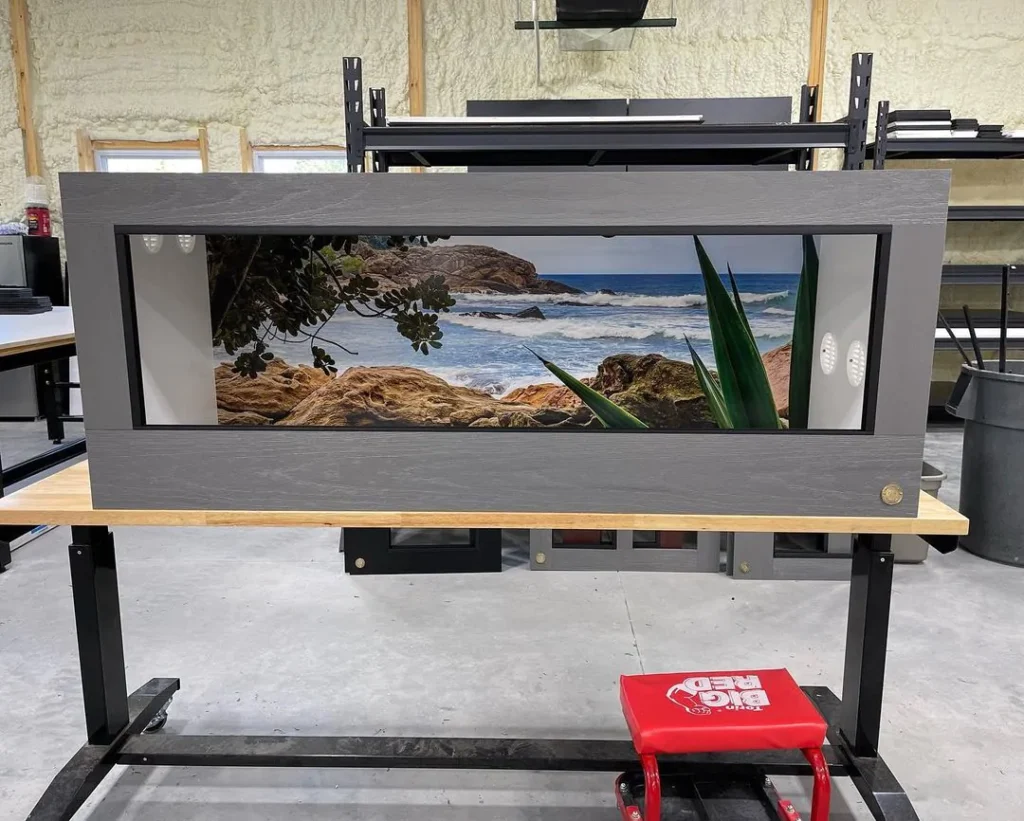
For a baby or juvenile, a 40-gallon glass breeder tank works fine. But for an adult bearded dragon habitat, invest in a 4’x2’x2′ PVC enclosure. The heat and humidity retention alone make it worth the cost. Companies like Kages, Animal Plastics, and Zen Habitats make excellent options.
Front-Opening vs. Top-Opening
Front-opening bearded dragon enclosures are vastly superior. When you reach in from above, your dragon perceives you as a predator (remember that third parietal eye on top of the head?). Front-opening minimizes stress for both of you.
Setting Up the Perfect Bearded Dragon Habitat
Now let’s get into the nitty-gritty of building your bearded dragon habitat from the ground up.
Substrate Options (H3)
Substrate is the flooring of your bearded dragon tank. This is one of the most debated topics in the hobby. Here’s my practical take after years of trial and error.
| Substrate | Best For | Pros | Cons |
|---|---|---|---|
| Paper towels | Babies, quarantine, sick dragons | Safe, cheap, easy to monitor feces | Not natural, no digging |
| Non-adhesive shelf liner | Any age | Easy to clean, safe, reusable | No digging opportunity |
| Ceramic or slate tile | Adults (best overall) | Retains heat, easy to clean, files nails naturally | Heavy, no digging, can be expensive |
| Reptile carpet | Juveniles | Reusable, safe | Harbors bacteria if not cleaned weekly, rough on bellies |
| Loose substrate (playsand + topsoil 50/50) | Healthy adults only | Natural, allows digging | Risk of impaction if husbandry is poor |
What I Use: For babies and juveniles, paper towels or shelf liner. For healthy adults with correct temperatures and hydration, a bioactive mix of organic topsoil and playsand (70/30) allows natural digging behavior.
Never Use: Calcium sand, walnut shell, cedar or pine shavings, cat litter, or gravel.
Hides and Enrichment (H3)
A bearded dragon environment without hiding spots is a stressful environment. Provide at least two hides:
-
Warm hide on the heated side
-
Cool hide on the unheated side
Enrichment additions:
-
Cork flats or half-logs for climbing under
-
Reptile caves or commercial hides (make sure they’re large enough for an adult)
-
Low branches or driftwood for climbing (nothing too high—falls can injure them)
-
A dig box (for adults on solid substrate) filled with a 50/50 sand/soil mix
Basking Areas (H3)
The basking spot is the heart of your bearded dragon habitat. This is where your dragon will spend most of its waking hours.
-
Surface material: Flat rock, slate tile, or a commercial basking platform. These materials retain heat and provide a solid, stable surface.
-
Placement: Directly under the basking bulb, 8-12 inches away (check your bulb’s recommendations).
-
Size: Large enough for your dragon’s entire body to fit comfortably.
Pro tip: Use an infrared temperature gun to measure the actual surface temperature of the basking spot, not just the ambient air temperature. Surface temps should be 100-110°F.
Lighting and UVB (H3)
This is the single most critical component of your bearded dragon habitat. I cannot emphasize this enough.
-
UVB type: Linear fluorescent T5 HO bulb (10-12% UVB). Brands: ReptiSun 10.0 or Arcadia 12% Desert.
-
Placement: Across the top of the tank, overlapping with the basking area. 10-12 inches from the basking surface.
-
Length: Should cover 1/2 to 2/3 of the bearded dragon tank length.
-
Schedule: 12-14 hours on, 10-12 hours off (use a timer).
-
Replacement: Every 6-12 months. UVB output degrades even if the bulb still lights.
Do NOT use coil or compact UVB bulbs. They produce inconsistent output and can cause eye damage.
Temperature Gradient (H3)
Your bearded dragon habitat needs a range of temperatures:
-
Basking surface: 100-110°F (38-43°C)
-
Warm side ambient: 88-95°F (31-35°C)
-
Cool side ambient: 75-85°F (24-29°C)
-
Nighttime: 65-75°F (18-24°C)
How to measure: Digital probe thermometers (one probe on the warm side, one on the cool side) plus an infrared temperature gun for the basking surface.
How to heat: A white incandescent basking bulb (not colored) on a dimming thermostat. For nighttime, use a ceramic heat emitter only if temperatures drop below 65°F. No light at night.
Creating the Ideal Temperature Humidity and Lighting Setup
Let’s turn those requirements into an actionable checklist for your bearded dragon environment.
Temperature Setup Checklist
-
Basking bulb installed in a ceramic socket dome fixture
-
Basking bulb connected to a dimming thermostat
-
Basking surface temperature verified with infrared gun (100-110°F)
-
Digital probe thermometer on warm side (88-95°F)
-
Digital probe thermometer on cool side (75-85°F)
-
Nighttime heat source (ceramic heat emitter) if room drops below 65°F
Lighting Setup Checklist
-
Linear T5 HO UVB bulb (10-12%) installed
-
UVB bulb length covers 1/2 to 2/3 of tank
-
UVB fixture positioned 10-12 inches above basking surface
-
No glass or plastic between UVB bulb and dragon
-
Timer set for 12-14 hours on / 10-12 hours off
-
Spare UVB bulb on hand for replacement
Humidity Setup Checklist
-
Digital hygrometer installed on cool side
-
Humidity readings consistently 30-40%
-
Water bowl on cool side (not under heat lamp)
-
For low humidity: add a larger water bowl or lightly mist
-
For high humidity: increase ventilation, use a smaller water bowl
Quick Reference Table
| Parameter | Ideal | Danger Zone |
|---|---|---|
| Basking surface | 100-110°F | Below 95°F or above 115°F |
| Warm side ambient | 88-95°F | Below 85°F |
| Cool side ambient | 75-85°F | Below 70°F |
| Nighttime | 65-75°F | Below 60°F |
| Humidity | 30-40% | Above 50% or below 20% |
| UVB | T5 linear 10-12% | Coil bulbs, expired bulbs |
Decorating Your Bearded Dragon Tank for Enrichment and Natural Behavior
A functional bearded dragon habitat is also an enriching one. Here’s how to create a bearded dragon environment that encourages natural behavior.
Climbing Structures
Bearded dragons are semi-arboreal, meaning they climb more than you might expect. In the wild, they perch on rocks, branches, and fence posts to bask and survey their territory.
Good climbing options:
-
Grapewood or driftwood branches (secure so they don’t roll)
-
Slate or flagstone stacks (create multiple levels)
-
Commercial reptile hammocks (surprisingly popular with dragons)
-
Cork bark rounds
Safety note: Nothing too high (over 6-8 inches). Falls from higher levels can cause injuries, especially in older dragons.
Digging Opportunities
Many bearded dragons love to dig. In the wild, they dig burrows to escape extreme heat and predators. In captivity, a digging area provides enrichment and encourages natural behavior.
For dragons on solid substrate (tile, paper towels): Add a dig box—a shallow plastic tub filled with a 50/50 mix of organic topsoil and playsand. Supervise first use to ensure no impaction issues.
For dragons on loose substrate: Your entire bearded dragon tank is already a digging area. Just make sure the substrate depth is at least 3-4 inches.
Visual Barriers
A bearded dragon environment with clear sight lines from one end to the other can cause stress. Your dragon never feels fully hidden.
Add visual breaks with:
-
Tall plants (real or artificial—real plants must be non-toxic)
-
Cork bark flats placed vertically
-
Rock formations
-
Multiple hides placed strategically
Plant Choices
Safe live plants for a bearded dragon habitat:
-
Haworthia (zebra cactus)
-
Echeveria (succulents)
-
Aloe vera (remove spines)
-
Spineless prickly pear cactus
Avoid: Any plant with spines, sticky sap, or known toxicity (dieffenbachia, philodendron, ivy).
Artificial plants are perfectly fine and much easier to maintain. Just ensure they have no small parts that could be swallowed.
Maintaining a Clean and Healthy Bearded Dragon Enclosure
A beautiful bearded dragon habitat is only as good as its cleanliness. Here’s my maintenance routine.
Daily Tasks (5 minutes)
-
Spot-clean feces and urates (the white part of the waste). Bearded dragon poop smells, and ammonia builds up quickly.
-
Remove uneaten insects. Crickets left overnight can bite your sleeping dragon.
-
Check and refill water bowl. Use fresh, dechlorinated water daily.
-
Quick visual check of temperature and humidity readings.
Weekly Tasks (15-20 minutes)
-
Deep-clean water bowl with soap and hot water (rinse thoroughly).
-
Wipe glass or PVC walls with reptile-safe cleaner (F10 or diluted vinegar and water).
-
Check for stuck shed on toes, tail tip, and nostrils.
-
Spot-clean substrate (for loose substrate, remove solid waste and replace that area).
-
Rotate or clean hides and decor if soiled.
Monthly Tasks (30-60 minutes)
-
Full substrate change for tile or paper towels. For loose substrate, spot-clean heavily and consider partial replacement.
-
Deep-clean the entire bearded dragon enclosure:
-
Remove dragon to a temporary safe container
-
Remove all decor and substrate
-
Clean all surfaces with reptile-safe disinfectant
-
Rinse thoroughly
-
Dry completely before replacing substrate and decor
-
-
Check UVB bulb (replace if over 6-12 months old).
-
Calibrate thermometers and hygrometers (or replace batteries).
Cleaning Supplies Checklist
-
Reptile-safe disinfectant (F10, Chlorhexidine, or diluted white vinegar)
-
Spray bottle
-
Paper towels or clean cloths
-
Separate scrub brush for enclosure (not used elsewhere)
-
Nitrile gloves
-
Bucket for soiled substrate
Common Bearded Dragon Habitat Mistakes and How to Avoid Them
After helping hundreds of owners troubleshoot their setups, I’ve seen the same mistakes again and again. Here’s what to watch for.
Mistake #1: Incorrect UVB Placement
The problem: Coil UVB bulbs, expired bulbs, or bulbs placed too far from the basking spot.
The fix: Use a linear T5 HO bulb, replace it every 6 months, and position it 10-12 inches from the basking surface with no glass or plastic in between.
Mistake #2: No Temperature Gradient
The problem: The whole tank is the same temperature, or the only heat source is a heat mat under the tank.
The fix: Create a hot side (basking spot 100-110°F, ambient 88-95°F) and a cool side (75-85°F) using an overhead basking bulb. Bearded dragons need to move between zones to regulate their body temperature.
Mistake #3: Dangerous Substrate
The problem: Calcium sand, walnut shell, or pure sand. These cause impaction when swallowed.
The fix: For babies and juveniles, use paper towels or shelf liner. For healthy adults with correct husbandry, tile or a bioactive soil/sand mix is safe.
Mistake #4: Bare Tank Syndrome
The problem: A completely open bearded dragon tank with one hide and nothing else. The dragon feels exposed and stressed.
The fix: Add multiple hides, climbing branches, fake plants, and visual barriers. Your dragon should be able to move from one end of the tank to the other without feeling fully visible.
Mistake #5: Wrong Humidity
The problem: Either too high (above 50%) causing respiratory issues, or too low (below 20%) causing dehydration and stuck sheds.
The fix: Monitor with a digital hygrometer. Adjust by changing water bowl size/location, adding or removing ventilation, or misting lightly.
Mistake #6: Enclosure Too Small
The problem: A 40-gallon tank for an adult bearded dragon (they need at least 75-120 gallons).
The fix: Upgrade to a 4’x2’x2′ PVC enclosure for adults. Your dragon needs room to exercise, thermoregulate, and explore.
Upgrading Your Bearded Dragon Habitat as Your Lizard Grows
Your bearded dragon habitat should evolve with your pet.
Baby Stage (0-6 months)
A baby bearded dragon environment needs to be smaller so they can find food easily. A 20-40 gallon tank works well. Use paper towels or shelf liner substrate. Keep the basking spot at 105-110°F. Provide small, low hides.
Juvenile Stage (6-12 months)
Your dragon is growing fast. Upgrade to a 40-gallon breeder minimum. Consider moving to tile or a bioactive mix if your dragon is healthy. Increase basking spot size. Add more climbing structures.
Adult Stage (12+ months)
Your adult needs a 4’x2’x2′ or larger bearded dragon enclosure. This is the time to invest in a quality PVC setup. Fine-tune your bearded dragon environment with a dig box, multiple basking levels, and plenty of enrichment.
Signs It’s Time to Upgrade
-
Your dragon can touch both sides of the tank at the same time
-
Glass surfing (pacing along the glass) despite correct temperatures
-
Difficulty finding a proper temperature gradient (warm side bleeds into cool side)
-
Your dragon seems lethargic or stressed despite proper care
Advanced Bearded Dragon Habitat Ideas for Serious Keepers
Once you’ve mastered the basics, consider these upgrades to your bearded dragon habitat.
Bioactive Setups
A bioactive bearded dragon environment uses live plants, clean-up crews (isopods and springtails), and a soil-based substrate to create a self-cleaning ecosystem.
Pros:
-
Minimal spot-cleaning (the clean-up crew eats waste)
-
Very natural and enriching
-
Live plants contribute to humidity stability
Cons:
-
Expensive and complex to set up
-
Requires careful plant selection and lighting adjustments
-
Not recommended for beginners
Custom Backgrounds
Add a carved foam or cork bark background to your bearded dragon enclosure. This provides climbing surfaces, visual interest, and additional insulation.
Automated Systems
-
Automatic timers for lights (essential, not optional)
-
Dimming thermostats for basking bulbs
-
Misting systems (for bioactive setups, though beardies need low humidity so use sparingly)
-
Camera monitors to observe behavior when you’re not home
Outdoor Enclosures
For keepers in warm climates (or warm seasons), a secure outdoor bearded dragon habitat provides natural sunlight and enrichment. Ensure:
-
Full shade available
-
Predator-proof (wire mesh with small openings)
-
Escape-proof (lockable doors)
-
Temperature monitored (move inside if too hot or cold)
FAQ Section
1. What size tank does an adult bearded dragon need?
Adult bearded dragons need a minimum of a 75-gallon tank (48″x18″x21″), but a 4’x2’x2′ (120-gallon equivalent) is strongly recommended for optimal health and well-being.
2. What is the best substrate for a bearded dragon habitat?
For babies and juveniles: paper towels or non-adhesive shelf liner. For healthy adults: ceramic tile or a bioactive soil/sand mix. Avoid calcium sand, walnut shell, and pure sand.
3. Do bearded dragons need UVB light?
Yes, absolutely. Without UVB, they develop metabolic bone disease (MBD). Use a linear T5 HO 10-12% UVB bulb, replaced every 6-12 months.
4. What temperature should a bearded dragon habitat be?
Basking surface: 100-110°F. Warm side ambient: 88-95°F. Cool side ambient: 75-85°F. Nighttime: 65-75°F.
5. How often should I clean my bearded dragon enclosure?
Daily spot-cleaning of feces and uneaten insects. Weekly deep-clean of water bowl and wipe-down of surfaces. Monthly full disassembly and deep-clean.
6. Can I use a glass tank for a bearded dragon?
Yes, glass tanks work for babies and juveniles. For adults, PVC enclosures are better because they retain heat and are lighter. Glass can work for adults but requires more effort to maintain temperatures.
7. What humidity level does a bearded dragon need?
30-40% humidity is ideal. Higher levels (above 50%) risk respiratory infections. Lower levels (below 20%) cause dehydration and stuck sheds.
8. Do bearded dragons need a water bowl?
Yes, provide a shallow water bowl (no deeper than the dragon’s knees) on the cool side. Change water daily. Some dragons also drink from misted leaves.
9. How many hides should a bearded dragon habitat have?
At least two: one on the warm side and one on the cool side. Additional hides and visual barriers are beneficial for reducing stress.
10. Can I put live plants in my bearded dragon tank?
Yes, safe options include haworthia, echeveria, aloe vera (spines removed), and spineless prickly pear. Ensure plants are pesticide-free and not toxic if ingested.
11. Why is my bearded dragon glass surfing?
Glass surfing (pacing along the glass) can indicate the enclosure is too small, temperatures are incorrect, or your dragon is stressed. Check husbandry first; if correct, consider a larger enclosure.
12. How often should I replace my UVB bulb?
Every 6-12 months, even if the bulb still lights. UVB output degrades over time, and an old bulb provides insufficient UVB even though it looks fine.
Conclusion
Building the perfect bearded dragon habitat isn’t about buying the most expensive equipment or following a single “right” way. It’s about understanding what your dragon needs—heat, light, space, security, enrichment—and providing those things consistently.
I’ve made almost every mistake on this list. I’ve used the wrong substrate. I’ve let UVB bulbs go too long. I’ve kept dragons in tanks that were too small. And every time I corrected those mistakes, my dragons rewarded me with brighter colors, better appetites, and more active, engaging behavior.
Your bearded dragon environment is the foundation of your pet’s health and happiness. Get it right, and you’ll have a thriving companion for 8 to 12 years. Get it wrong, and you’ll face a cascade of preventable health problems.
Start with the right bearded dragon enclosure size—4’x2’x2′ for an adult. Invest in a quality linear UVB light and a dimming thermostat. Choose safe substrate. Add hides, branches, and enrichment. Monitor your temperatures and humidity daily. Clean consistently. And when you see your dragon basking contentedly, tongue-flicking, colors bright and beautiful, you’ll know you’ve done it right.
Your next steps:
-
Download our free bearded dragon habitat setup checklist
-
Shop recommended UVB lights and thermostats
-
Join our bearded dragon care community for support
Your bearded dragon is counting on you to create a home where it can thrive. Take your time, do the research, and build something great. Happy keeping.