Banana Ball Python: Complete Care Guide, Morphs, and What to Know Before Buying in 2026
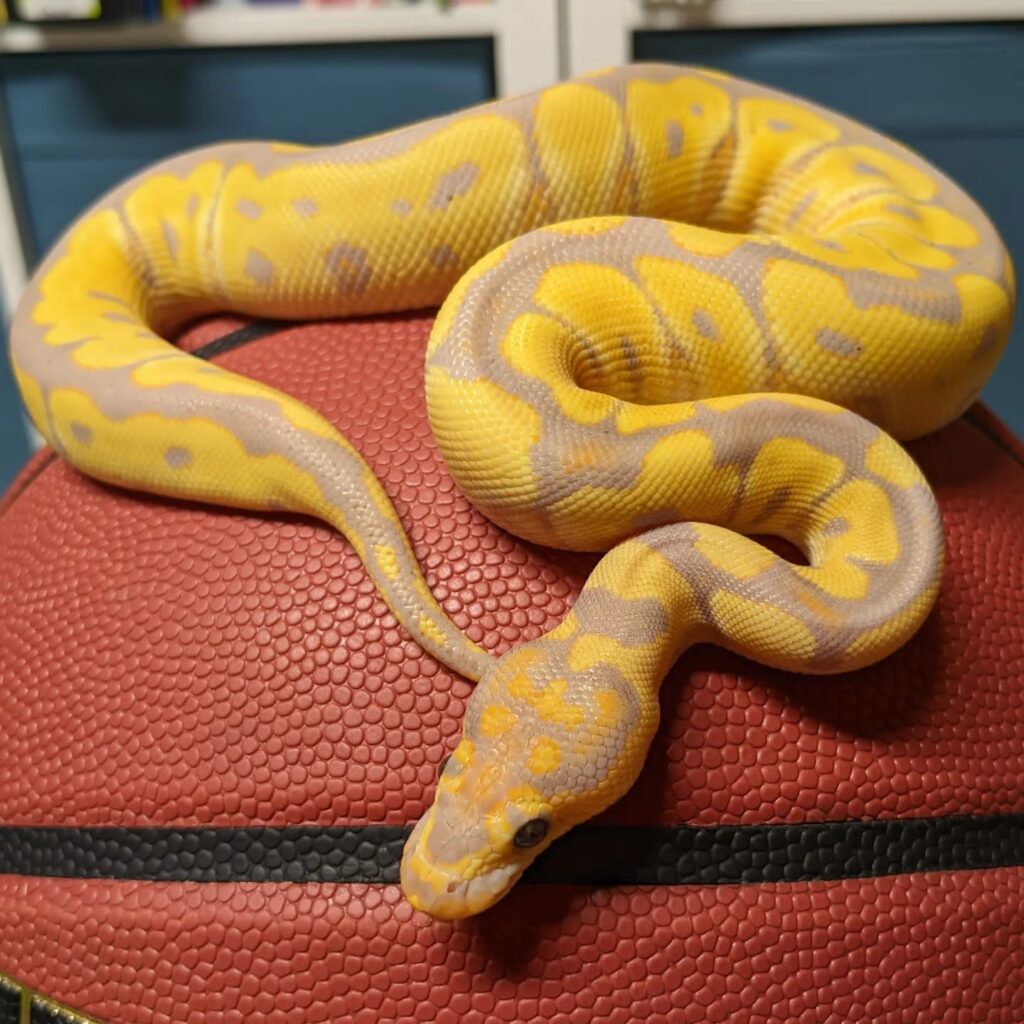
If you’ve recently stumbled upon the vibrant and captivating charm of the banana ball python, consider yourself in good company. This stunning snake has captured the hearts of both novice and experienced reptile enthusiasts alike. With its striking yellow and orange coloration interspersed with dark spots—reminiscent of a ripe banana with freckles—the banana ball python (Python regius) is not only visually appealing but also boasts a gentle temperament, making it an excellent choice for newcomers to the world of snake keeping.
As a long-time keeper of these enchanting reptiles, I remember the first time I laid eyes on a banana ball python. The way it glided through its enclosure, each movement graceful and deliberate, left me mesmerized. Over the years, I’ve watched this morph go from a rare, high-end treasure to one of the most accessible and beloved ball python morphs on the market. It’s this unique combination of beauty, personality, and relative ease of care that has propelled the banana ball python to become a true staple in herpetoculture.
In this guide, we’ll delve deeply into everything you need to know about caring for a banana ball python, from understanding its fascinating genetics to setting up a perfect habitat, feeding schedules, handling techniques, breeding basics, and health prevention. We’ll also take a detailed look at the spectacular albino ball python, which shares a fascinating connection in the world of reptile coloration. Whether you are considering adding one of these stunning snakes to your collection or are already a proud owner, this comprehensive resource—now expanded to over 2,000 words—is designed to equip you with the knowledge and confidence necessary to provide the best care for your banana ball python for years to come.
Why the Banana Ball Python is One of the Most Popular Morphs
The smooth, stunning aesthetics of the banana ball python aren’t the only reasons for its soaring popularity. This morph is celebrated for its friendly and manageable demeanor, making it a perfect choice for beginners and families alike. Many keepers report that banana ball pythons exhibit a curious nature and a generally docile temperament, which can lead to a rewarding experience whether you’re simply observing your snake or engaging in regular handling sessions.
Unlike some other reptiles that may become defensive or stressed with frequent interaction, banana ball pythons typically tolerate handling well. They rarely bite, preferring to ball up (hence the name “ball python”) when frightened. This defensive curling is both endearing and practical, allowing owners to build trust gradually.
Additionally, their unique coloration brings a delightful visual appeal to any reptile collection. The bright yellows with accents of orange and black or brown create a striking contrast, making banana ball pythons one of the most sought-after colors in the ball python market. Their allure is so strong that morph enthusiasts often find themselves exploring combinations, resulting in spectacular hybrids like the appealing banana clown ball python or pastel lesser blade clown ball python. Each new combination unlocks a different palette—from high-contrast golds to soft, muted butterscotch tones.
This popularity has also led to an increase in the availability of banana ball pythons for sale, allowing enthusiasts to easily find quality specimens from reputable breeders at increasingly reasonable prices. Whereas a banana morph might have cost 2,000+adecadeago,todayyoucanfindhealthyjuvenilesfor150–$400, depending on lineage and additional genes. For many, the banana ball python transcends mere pet ownership; it becomes a cherished member of the family—a living piece of art that grows and changes with each shed.
Banana Ball Python Genetics and How the Morph Works
Understanding the genetics behind banana ball pythons is essential for both care and breeding. The banana morph is the result of a codominant (or incompletely dominant) mutation that affects the pigment of the snake’s skin. This is a critical distinction: unlike recessive morphs that require two copies of the gene to express visually, a banana ball python only needs one copy of the banana gene to display the characteristic yellow and purple-spotted pattern. When bred to a normal ball python, approximately 50% of the offspring will be bananas.
However, it’s crucial to clarify an important nuance: in the ball python community, the terms “banana” and “coral glow” refer to allelic mutations—different lines of the same genetic trait. They are visually nearly identical and compatible with each other. Breeders often use the terms interchangeably, though “banana” is more common in the pet trade.
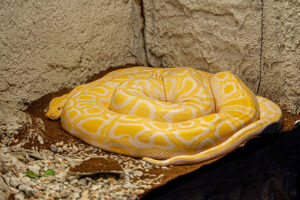
In contrast to the vibrant banana morph, the albino ball python is another popular morph that features a striking white and yellow hue, the result of a recessive mutation that eliminates melanin entirely. This creates the stunning cream-and-yellow coloration that has won over many reptile enthusiasts. When discussing these two morphs, it’s fascinating to note how their genetics interrelate. Breeders often experiment with crossing these morphs to produce even more unique combinations—such as the “banana albino” (sometimes called “banana candy” or “banana lavender albino” depending on the albino line)—revealing the depth of creativity and complexity in python breeding.
Sex-Linked Traits and the Banana Paradox
One of the most interesting aspects of banana ball python genetics is that the gene is sex-linked in some lines. Male banana ball pythons produce banana offspring at much higher rates than females. A male banana bred to a normal female will yield roughly 50% banana babies, while a female banana bred to a normal male produces significantly fewer—sometimes as low as 10-20%. This has led breeders to preferentially use male bananas in their projects, which in turn affects pricing and availability.
Genetic Health Considerations
Banana ball pythons are generally healthy, but some lines carry a quirk known as “banana spots” or “paradox spots”—dark freckles that can appear and multiply with age. These are cosmetic and harmless. More importantly, some banana combos have been associated with minor neurological quirks when combined with certain other genes (like the spider gene), so responsible breeders avoid high-risk pairings. Always ask your breeder about the genetic history of your snake.
It’s also worth mentioning that understanding these genetics can play a critical role in ensuring responsible breeding practices. As a future keeper or breeder, knowing the ancestry and genetic traits of your banana ball python can help you avoid health complications or unplanned pairings in breeding scenarios. A good breeder will provide you with the genetic lineage (e.g., “Banana 100% het for clown” or “Banana Pastel”).
Setting Up the Perfect Enclosure for Your Banana Ball Python
Creating a suitable environment for your banana ball python is fundamental to its health and happiness. Ball pythons are terrestrial but semi-arboreal as juveniles, so a mix of floor space and low climbing opportunities works best. Here’s what you’ll need to consider in detail:
Tank Size
The size of the enclosure should be appropriate for the age and size of your snake. For hatchlings up to 6 months, a 10-20 gallon tank is typically sufficient to help them feel secure. However, as your banana ball python grows—reaching 2–3 feet by 12–18 months—transitioning to a larger enclosure (40 gallons or more, ideally 36″x18″x18″ or a 4’x2’x2′ PVC enclosure for adults) will be necessary for their comfort and space to explore. Ball pythons are not highly active snakes, but they do need room to stretch, thermoregulate, and exhibit natural behaviors.
Pro tip: Avoid oversized enclosures for very young snakes. A hatchling in a 4-foot tank may become stressed and refuse food. You can always start small and upgrade, or use divider panels and plenty of hides to break up large spaces.
Substrate
Choosing the right substrate can greatly affect your snake’s well-being, humidity retention, and ease of cleaning. Aspen shavings, cypress mulch, coconut husk (coco coir), or paper towels are good choices.
-
Paper towels: Ideal for quarantine, juveniles, or sick snakes—easy to monitor feces and mites.
-
Aspen shavings: Affordable and good for burrowing, but does not hold humidity well.
-
Cypress mulch or coconut husk: Excellent for humidity retention (60%+), resists mold, and looks natural.
-
Avoid: Sandy materials (causes impaction), cedar or pine (toxic phenols), and reptile carpet (harbors bacteria).
Hides
Caves or hides are absolutely crucial for your banana ball python to feel secure. Ball pythons are cryptic animals that spend much of their time in burrows or termite mounds in the wild. Provide at least two identical or similar hides: one on the warm side of the tank and one on the cool side to allow your snake to regulate its body temperature without sacrificing security. Hides should be snug—the snake should touch the sides when curled up inside. Half-log hides are often too open; use dark, single-entrance caves or plastic hides with small openings.
Heating
Maintaining a proper temperature gradient is vital for your snake’s digestion, immunity, and activity. The warm side of the tank should be maintained at approximately 88–92°F, while the cool side can be around 75–80°F. Use a reliable heat mat or under-tank heater regulated by a thermostat (this is non-negotiable—unregulated heat mats can reach 120°F+ and cause severe burns). You may also use a ceramic heat emitter (CHE) or radiant heat panel (RHP) for ambient warmth, especially in glass tanks. Ensure that an appropriate temperature gauge (digital probe or infrared thermometer) is in place at both ends.
Humidity
Banana ball pythons thrive in a humidity range of 40–60% normally, with a boost to 60–70% during shed cycles. Use a digital hygrometer to monitor humidity levels, and mist the enclosure lightly as needed to maintain appropriate hydration levels. If humidity is too low, your snake may have stuck sheds or develop respiratory issues. If too high (over 80% consistently without ventilation), scale rot or respiratory infections can occur.
Lighting
Ball pythons do not require UVB lighting to survive, but low-level UVB (2–5%) has been shown to improve immune function, color expression, and natural behavior. Provide a simple 12-hour light/dark cycle using LED or fluorescent lighting on a timer. Avoid bright white lights at night; use a moonlight or ceramic heat emitter for nighttime observation.
Setting up the perfect enclosure for your banana ball python can set the stage for a long and healthy life. Learn proper banana ball python enclosure setup.
Temperature, Humidity, and Environmental Requirements: A Deeper Dive
Getting the environmental parameters exactly right is essential for your banana ball python’s long-term health and well-being. Let’s expand on each factor with actionable advice.
1. Thermal Gradient (Detailed)
As mentioned, provide a thermal gradient with a warm side (88–92°F) and a cooler side (75–80°F). The ambient (air) temperature in the middle should be around 82–84°F. Nighttime drops to 70–75°F are acceptable but not below 70°F. Use at least two digital thermometers with probes—one on the warm floor surface (where the heat mat is) and one on the cool floor surface. Never rely on stick-on analog gauges; they are notoriously inaccurate.
2. Humidity Management
Maintain humidity levels at 40–60% for optimal health. During shedding, increase to 60–70% by adding a humid hide (a plastic container with damp sphagnum moss) or misting the enclosure lightly each morning. If you live in a dry climate, consider a reptile fogger or larger water bowl placed on the warm side to increase evaporation. Conversely, in humid climates, increase ventilation by adding more screen top area or using a dehumidifier in the room.
3. Shedding Signs
When your banana ball python enters the “blue phase” (eyes appear cloudy, skin dull), do not handle the snake. Instead, boost humidity and ensure a rough surface like a branch or rock is available to help rub off old skin. A complete shed should come off in one piece, including eye caps and tail tip.
4. Seasonal Variations
In captivity, you can maintain consistent conditions year-round. However, some breeders use a slight seasonal cooling (dropping nighttime temps to 68–70°F for 6–8 weeks) to stimulate breeding behavior. For pet-only owners, consistency is safer.
Understanding your snake’s needs may seem overwhelming at first, but with a well-maintained environment and weekly checks of your gauges, you’ll set the foundation for a thriving pet that can live 20–30 years.
Feeding Your Banana Ball Python: Schedules, Prey Size, and Tips
Feeding your banana ball python may seem straightforward; nevertheless, there are vital factors to consider regarding their dietary habits, prey selection, and common refusals.
Feeding Schedules by Age
-
Hatchlings (0–6 months): Feed once every 5–7 days. Prey size: small fuzzy or hopper mouse.
-
Juveniles (6–18 months): Feed once every 7–10 days. Prey size: weaned mouse or small rat pup.
-
Adults (18+ months): Feed once every 10–14 days. Prey size: medium rat (or equivalent weight roughly 10–15% of the snake’s body weight).
-
Breeding females: May eat more frequently (every 7 days) during conditioning.
It’s essential to pay attention to your snake’s body condition. A healthy ball python should have a rounded, triangular cross-section (not flat like a pancake, but not so round that you can’t see the spine). If your snake appears too thin (spine visible, sunken eyes) or overweight (fat rolls, scales spreading), adjust the feeding frequency or prey size accordingly.
Prey Size Guideline
The size of the prey should be approximately the same thickness as the largest part of your snake’s body. A common rule: the prey should leave a small lump in the snake’s stomach after swallowing. Offer appropriately-sized mice, rats, or even quail chicks for variety. Most keepers switch from mice to rats as their snake grows because rats have a better calcium-to-phosphorus ratio and higher fat content for healthy weight.
Frozen/Thawed vs. Live
Always feed frozen-thawed prey rather than live. Live rodents can bite and seriously injure or kill a snake. To prepare: thaw a frozen rodent in the refrigerator overnight, then warm it to body temperature (95–100°F) using a bag in warm water or a hairdryer. Never microwave rodents (they can explode or cook unevenly).
Tips for Problem Feeders
-
If your banana ball python refuses food, check temperatures first. 90% of refusals are due to improper heat.
-
Try offering prey at a different time of day (evening is best, as ball pythons are crepuscular).
-
Scent the prey with used rodent bedding or chicken broth.
-
Some snakes prefer their prey dry vs. wet; experiment.
-
Do not handle the snake for 24 hours before or after feeding.
-
During winter, many ball pythons go off food for 1–4 months. This is normal if the snake is not losing significant weight.
What to Avoid
-
Never leave live prey unattended with your snake.
-
Do not feed prey that is too large (regurgitation risk).
-
Avoid handling for 48 hours after a meal to prevent regurgitation.
-
Do not feed if your snake is in deep shed (blue phase).
Handling, Temperament, and Enrichment Ideas
Banana ball pythons are known for their affectionate and gentle nature—although “affectionate” in a reptile is more about tolerance than bonding. Still, proper handling techniques can help strengthen the trust between you and your snake.
Handling Techniques
Whenever you handle your banana ball python, support its body completely with both hands. Never pick up a snake by its tail. Start by opening the enclosure and letting the snake become aware of your presence. Gently scoop from underneath at mid-body, lifting slowly. Allow it to explore across your hands and arms, supporting the front and rear thirds of its body. Keep handling sessions short at first (5–10 minutes), gradually extending to 15–20 minutes as your snake becomes more comfortable. Wash your hands before and after handling to remove prey or other scents.
Reading Body Language
-
Relaxed: Slow tongue-flicking, smooth movement, no hissing.
-
Stressed: Rapid jerky movements, heavy hissing, striking pose, or tight balling.
-
Hungry: Pacing at night, head following movements outside the enclosure.
Temperament
Many owners find that banana ball pythons are especially calm and curious. With consistent handling (2–3 times per week, except after feeding) and socialization, your snake should develop a strong tolerance for human interaction. However, respect that each snake has its own personality—some are bold, others shy.
Enrichment Ideas
To keep your snake engaged and active, consider adding climbing elements such as sturdy branches, PVC perches, or platform setups to its enclosure. Ball pythons will climb, especially at night. Regularly rearranging decor (every 1–2 months) can also keep your snake stimulated and encourage exploration. Other enrichment includes:
-
Offering different prey types occasionally (chicks, African soft-furs for picky eaters).
-
Providing a large water bowl for soaking.
-
Using a “snake-safe” scent trail (e.g., dragging a used rodent bedding bag across the substrate).
Common Health Issues and Preventative Care
Like any pet, banana ball pythons can face health challenges. Here are some of the most common issues and how to avoid them, with expanded guidance.
1. Respiratory Infections (RIs)
Symptoms: Wheezing, open-mouth breathing, mucus around nostrils or mouth, lethargy, holding head upright.
Causes: Prolonged low temperatures (below 75°F), high humidity with poor ventilation, or drafts.
Prevention: Maintain correct thermal gradient. Avoid damp, stagnant air. Ensure ventilation holes are not blocked.
Treatment: Vet-prescribed antibiotics. Raise temperature to 82–84°F consistently. Mild cases may resolve with improved husbandry.
2. Mites (Snake Mites, Ophionyssus natricis)
Symptoms: Tiny black or red dots moving on the snake, especially around eyes, heat pits, and under scales. Snake soaking excessively. Specks in water bowl.
Prevention: Quarantine new snakes for 90 days. Use paper towel substrate initially for easy inspection.
Treatment: Veterinary-recommended mite spray (e.g., Provent-a-Mite), thorough enclosure cleaning with diluted bleach or F10, and repeated treatments every 7–10 days to break the lifecycle. Remove all substrate and treat the enclosure itself.
3. Obesity
Symptoms: Round body shape without visible spine, fat rolls, difficulty moving, reduced activity.
Causes: Overfeeding (too large prey or too frequent meals) and lack of exercise.
Prevention: Follow feeding schedules strictly. Use a gram scale to track weight monthly. An adult ball python should not look like a sausage with a head.
Treatment: Extend intervals between feedings (e.g., from 10 days to 14 days). Provide larger enclosure with climbing opportunities.
4. Stuck Shed (Dysecdysis)
Symptoms: Patches of old skin remaining, especially on eyecaps or tail tip.
Causes: Low humidity, dehydration, lack of rough surfaces.
Prevention: Maintain humidity 60–70% during shed cycle. Provide a humid hide with damp sphagnum moss.
Treatment: Soak snake in shallow, lukewarm water (85°F) for 15–30 minutes, then gently roll off loose skin with a damp towel. Never pull dry skin.
5. Inclusion Body Disease (IBD)
Symptoms: Stargazing (twisted neck), regurgitation, tremors, inability to right itself.
Note: IBD is fatal and contagious to other boas and pythons. Always quarantine new snakes. There is no treatment. Prevention through buying from reputable sources is key.
Routine Preventative Care Checklist
-
Weekly: Visual health check, weight measurement, clean water bowl, spot-clean enclosure.
-
Monthly: Deep-clean substrate and decor, check thermometer/hygrometer accuracy.
-
Annually: Veterinary wellness exam with fecal float for parasites.
-
Quarantine: Any new snake for 90 days in a separate room.
Breeding Banana Ball Pythons
Breeding banana ball pythons can be a rewarding endeavor, provided you understand the basics, genetics, and responsibilities involved. It is not a get-rich-quick scheme—ethical breeding requires time, space, and financial investment.
Basics for Beginners
Select healthy breeding pairs based on genetics and temperaments. For banana morphs, pairing a male banana with a normal or another morph female yields the highest percentage of banana offspring due to the sex-linked nature of the gene. Both snakes should be at least 18 months old, ideally 2–3 years, and weigh a minimum of 1,200–1,500 grams for females (males can be slightly smaller). Proper husbandry must remain a top priority—ensure both snakes are well-nourished, parasite-free, and housed separately except for planned introductions.
The Breeding Process (Simplified)
-
Cooling (optional but common): Reduce nighttime temps to 68–70°F for 6–8 weeks starting in November/December.
-
Introduction: Place the male into the female’s enclosure for 3 days, then remove for 3 days. Repeat. Watch for copulation (locking).
-
Gravidity: After successful locking, the female will become gravid (pregnant). She will refuse food after 2–3 weeks. A “ovulation swell” (midbody bulge) is visible 2–4 weeks before egg-laying.
-
Egg Laying: Provide a lay box (plastic tub with damp vermiculite/perlite). Females lay 4–10 eggs, typically 30–45 days after ovulation.
-
Incubation: Remove eggs gently and place in an incubator at 88–90°F in a sealed container on damp vermiculite (1:1 ratio by weight with water). Incubation takes 55–65 days.
-
Hatching: Babies will pip (cut the egg) and emerge on their own. Do not help them unless they are in distress for over 24 hours.
Advanced Tips
-
Monitor breeding cycles and breeding readiness by observing behaviors: males will court with chin rubbing and tail quivers; females will show follicle development (visible via palpation or breeding loan ultrasound).
-
Explore genetic combinations responsibly to produce unique morphs, such as combining with the albino ball python for visually stunning “banana albino” offspring. Always research whether a particular combination has known health issues (e.g., “super” forms that may be lethal).
-
Keep detailed records: dates of pairings, locks, pre-lay sheds, egg weights, hatch dates.
Regardless of your breeding aspirations, remember the significance of ethical practices: have homes lined up for babies before breeding, do not inbreed excessively, and cull (humanely euthanize) only under veterinary advice.
Popular Morph Combinations and Related Options
Many enthusiasts who appreciate the beauty of the banana ball python often explore its variants and combinations. Here are a few popular morphs worth considering, with expanded descriptions:
1. Banana Clown Ball Python For Sale
The banana clown ball python combines both the appeal of the banana morph (yellow and purple-spotted) and the intriguing pattern reduction of the clown morph (disrupted, “laughing face” pattern), resulting in a visually stunning snake. This morph is celebrated for its unique patterning that blends seamlessly with the vivid coloration, making it a favorite among collectors. The clown gene is recessive, so producing a visual banana clown requires both parents to carry the gene—making them relatively rare and priced higher (500–1,500+ depending on quality).
2. Urban Camo Ball Python For Sale
The urban camo ball python showcases an entirely different aesthetic. This morph features earthy tones of gray, brown, olive, and black with pixelated or mottled patterning that mimics urban camouflage, proving popular among fans of more muted, naturalistic color schemes. Unlike the bright banana, the urban camo tends to have a more subtle beauty that appeals to keepers looking for a “stealth” look. It is typically produced by combining several recessive or codominant genes such as mahogany, asphalt, or GHI (Gotta Have It).
3. Pastel Lesser Blade Clown Ball Python For Sale
This complex morph combines the pastel (brightens colors, reduces dark pigment), lesser (lightens overall appearance, produces a cleaner white belly), blade (a pinstripe-like pattern with dorsal striping), and clown (pattern disruption) traits, resulting in a jaw-dropping appearance that appeals to serious collectors. The vibrant yellows, creamy whites, and intricate head patterns elevate this morph beyond traditional visuals. Because it involves 4 separate genes (some recessive, some codominant), producing a pastel lesser blade clown requires multiple breeding seasons and careful genetic tracking. Prices for high-quality examples can exceed $2,000.
4. Pastel Banana Ball Python
A simpler but still exceptional combination: adding pastel to banana intensifies the yellow and orange colors while reducing the dark spots. The result is a brighter, “glowing” appearance that is highly sought after for breeding projects.
5. Albino Banana Ball Python
Also called “banana candy” or “banana lavender albino” (depending on albino strain), this combination produces a snake with no melanin (thanks to albino) plus the banana pattern. The result is a snake with vivid yellow bands, white background, and pinkish eyes. Extremely rare and expensive ($1,000+).
While these morphs share virtually identical care requirements with the standard banana ball python (same temperature, humidity, feeding, and enclosure needs), their unique genetic makeup and visual traits make them stand out as intriguing options for any snake enthusiast looking to expand a collection.
Choosing a Healthy Banana Ball Python: Breeder Tips and Red Flags
Finding a healthy banana ball python is essential for successful ownership. Here are detailed tips to help you make an informed decision when choosing a breeder or seller.
What to Look For (Green Flags)
-
Reputable breeders with positive reviews on morph-specific forums (e.g., Sublime Reptiles).
-
Breeders who can provide hatch date, feeding records (e.g., “eating f/t rat pups weekly”), and genetic lineage (e.g., “Banana 100% het clown”).
-
Willingness to share photos or video of the actual snake (not stock images).
-
Clean facilities: No strong odors, no dead prey left in enclosures, no visible mites.
-
Health guarantee: At least 48–72 hours for a vet check, often longer (e.g., 7–14 days).
Red Flags to Avoid
-
Breeders who dismiss questions or provide vague answers about animal care, genetics, or feeding.
-
Poor living conditions: overcrowded racks, dirty water bowls, snakes kept on soiled newspaper, visible mites or regurgitated prey.
-
Signs of illness in the snake: lethargy, weight loss (spine visible), stuck shed, wheezing, mouth rot (cheesy buildup), or abnormal posture.
-
“Too good to be true” pricing: A banana ball python advertised for $50 may be sick, wild-caught, or a scam.
-
No photos or videos of the actual snake available.
-
Pressure to buy immediately (“only one left” without proof).
What to Ask the Breeder
-
“What is the snake’s hatch date and current weight?”
-
“What does it eat, and how often?”
-
“Has it ever refused food?”
-
“Has it been treated for parasites or mites?”
-
“Can I see the parents?”
-
“What is your health guarantee and return policy?”
Ensuring the health and welfare of your new pet starts long before bringing it home. If possible, see the snake in person before purchasing, or use a payment platform that offers buyer protection.
FAQ Section (Expanded)
How big does a banana ball python get?
A fully grown banana ball python typically reaches between 3 to 5 feet in length, with females generally larger than males. Well-cared-for individuals sometimes exceed this range, with rare specimens reaching 5.5–6 feet. Weight ranges from 1,200–2,000 grams for males and 1,500–3,000+ grams for females.
What’s the difference between a banana ball python and an albino ball python?
The primary difference lies in coloration and underlying genetics. Banana ball pythons are characterized by their yellow and orange patterns with purple/brown spots, caused by a codominant mutation affecting xanthophores (yellow pigment cells). Albino ball pythons exhibit a creamy white and bright yellow appearance with no dark spots due to a recessive mutation that eliminates melanin (black/brown pigment) entirely. A banana albino combination produces a snake without melanin but retaining the banana pattern.
How much does a Banana Clown Ball Python For Sale cost?
Prices can vary significantly based on genetics, pattern quality, and whether the snake is male or female. A banana clown ball python (visual for both genes) can range from 500 to over 1,500, depending on its lineage, additional genes, and visual appeal. Banana het clown (carrying the clown gene but not showing it) may cost $200–400.
Can I keep a banana ball python with other snakes?
While keeping multiple snakes in one enclosure is tempting, it is generally not advisable. Ball pythons are solitary in the wild. Cohabitation can lead to competition for heat and hides, stress, cannibalism (rare but reported), and rapid spread of mites or infectious diseases. Always house ball pythons separately.
What’s the best substrate for a banana ball python?
Aspen shavings (low humidity, good for burrowing), cypress mulch (excellent humidity retention), coconut husk (ideal balance), and paper towels (best for quarantine) are all excellent choices. Avoid cedar, pine, sand, and reptile carpet. Each provides comfort and absorbency, crucial for ideal living conditions.
How often should I feed my banana ball python?
Hatchlings should be fed every 5 to 7 days, juveniles every 7 to 10 days, and adult snakes can typically be fed every 10 to 14 days. Adjust based on body condition.
What should I do if my banana ball python isn’t eating?
First, verify enclosure temperatures (warm side 88–92°F). Then try offering prey at a different temperature (warmer, 100–105°F), size (smaller than usual), or type (mouse vs. rat). Leave the prey overnight. If refusal persists for more than 4–6 weeks and weight loss exceeds 10%, consult a reptile veterinarian to rule out underlying health issues.
Are banana ball pythons good for beginners?
Yes, absolutely. Their gentle nature, manageable size (3–5 feet), relatively simple husbandry requirements, and wide availability make them a popular choice for first-time snake owners. However, beginners must commit to learning proper heating, humidity, and feeding protocols.
How long do banana ball pythons live?
With excellent care, banana ball pythons commonly live 20–30 years in captivity. The oldest recorded ball python lived over 40 years.
Do banana ball pythons need UVB lighting?
No, they can survive and thrive without UVB if given appropriate dietary vitamin D3 via their prey (rodents have D3 in their livers). However, low-level UVB (2–5%) has been shown to improve appetite, color, and activity and is increasingly recommended by herpetologists.
Conclusion
The banana ball python, with its stunning golden coloration, friendly demeanor, and fascinating genetics, is an exceptional addition to any reptile collection. Through understanding its specific care requirements—from temperature gradients and humidity control to proper feeding schedules and enrichment—combined with an appreciation for its genetic heritage, you can enjoy a fulfilling relationship with this beautiful snake for 20 to 30 years.
As you embark on your journey of snake ownership, always prioritize animal welfare and ethical practices. Research breeders thoroughly, quarantine new arrivals, and never impulse-buy a morph without understanding its needs. Explore the world beyond the standard banana—morph combinations like the banana clown ball python or pastel lesser blade clown ball python offer endless fascination. And consider welcoming an albino ball python into your life as a companion or future breeding project.
If you’re ready to find your perfect banana ball python, seek reputable sources committed to ethical breeding practices—breeders who prioritize health over profit and transparency over hype. Nothing beats the quiet joy of watching a healthy, well-cared-for snake explore its enclosure, shed in one perfect piece, and thrive under your care.
Happy herping—and may your banana ball python bring you as much wonder and companionship as mine has brought me.
View our available Banana Clown Ball Python For Sale and explore the beauty of these incredible reptiles today!