Why Is My Bearded Dragon’s Beard Black? A Breeder’s Guide to Stress, Temperature & Health
By the Sublime Reptiles Team
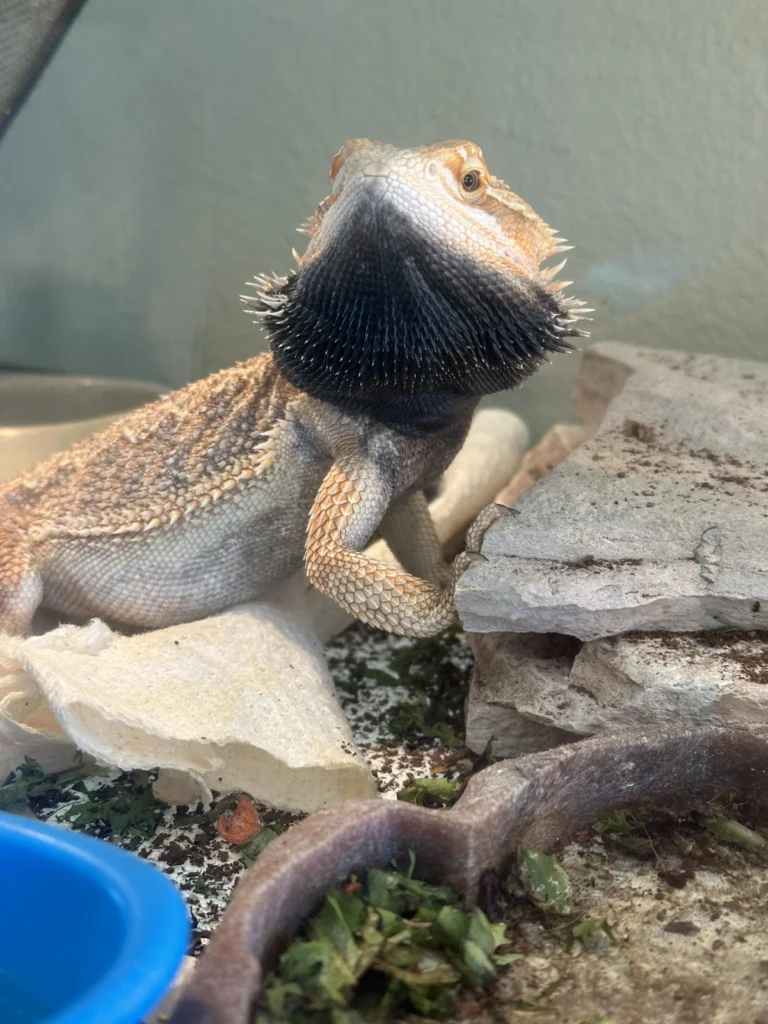
You walk over to your dragon’s enclosure and stop. The cheerful little lizard that normally basks with a creamy white belly and a bright orange beard now looks like it swallowed a piece of charcoal. The beard—the whole throat, really—is pitch black. Your brain jumps to the worst: Is he sick? Is he dying?
Take a breath. A black beard is one of the most common, and most misunderstood, behaviours in bearded dragons. I’ve raised hundreds of these guys over the years, and I still remember the first time I saw it. I panicked, called a breeder friend, and he said, “Is he near a window?” Yep. A robin had landed on the sill, and my little guy was telling it exactly what he thought.
Here’s the truth: a black beard is a form of communication. It can mean stress, temperature regulation, dominance, or even illness—but most of the time, it’s a harmless and temporary signal. In this guide, I’ll break down every reason your dragon’s beard might turn dark, how to tell the difference, and when you actually need to worry. I’ll also share how we keep our own beardies at Sublime Reptiles calm, healthy, and colourful.
Quick Answer: Why Is My Bearded Dragon’s Beard Black?
A black beard is usually a sign that your bearded dragon is cold, stressed, frightened, or feeling territorial. It can also be a normal part of thermoregulation—dark colours absorb more heat. In rare cases, a persistent black beard with other symptoms can indicate illness. Most of the time, once the cause is removed, the black beard fades within minutes to hours.
The 5 Most Common Reasons for a Black Beard
1. They’re Cold and Trying to Warm Up
This is the one most new owners miss. Bearded dragons are ectothermic—they rely on external heat sources to regulate their body temperature. Dark colours absorb heat more efficiently than light colours, so when your dragon needs to warm up quickly, it may darken its beard and even its whole body. You’ll often see this first thing in the morning when the lights come on, or if the basking spot isn’t warm enough.
What to check: The basking surface temperature should be 100–110°F (38–43°C) for juveniles, and 95–105°F (35–40°C) for adults, measured with a digital probe or infrared temp gun. The cool side should be around 80–85°F. If your temps are too low, your dragon will struggle to digest food and may turn dark and lethargic. We use a high‑quality digital thermostat and a halogen floodlight for basking at Sublime Reptiles. It makes all the difference.
2. Stress or Fear
A black beard is the bearded dragon’s version of a nervous stomach. New environments, loud noises, unfamiliar people, other pets, or even a change in enclosure décor can trigger it. I once had a male that turned black every time I wore a red shirt. No idea why. I switched to a blue one, and he was fine. They’re sensitive little creatures.
Common stress triggers include:
- Recent rehoming or a new enclosure (give them a week or two to adjust)
- Excessive handling (keep sessions short and gentle, especially at first)
- Co‑habitation (bearded dragons are solitary and should never be housed together—it’s a constant source of stress)
- Seeing their reflection (glass surfing and black beard go hand in hand)
- Loud music, barking dogs, or small children poking at the glass
If the beard goes back to normal once the stressor is removed, you’ve found the culprit. Give your dragon a quiet, secure hiding spot and let them decompress.
3. Mating Behaviour and Dominance
If you have a male bearded dragon, a black beard is his way of saying, “Look at me—I’m the boss.” During breeding season (typically spring and early summer), males will blacken their beards, bob their heads vigorously, and sometimes stomp their front feet. It’s a display of dominance aimed at other males or even at you. Females can also darken their beards, especially if they’re gravid (carrying eggs) and feeling territorial.
This behaviour is completely normal. In fact, a male that never shows his black beard during breeding season might be sick or stressed. I’ve had males that would blacken up every morning during spring, head‑bobbing at their own reflection, then calm down by noon. As long as he’s eating and active, you can chalk it up to hormones.
4. Shedding Discomfort
Right before a shed, some dragons turn a bit grumpy. The skin around the beard might look dull or grey, and they may darken the area as the old skin loosens. This is temporary and should resolve once the shed is complete. A warm soak and a rough surface to rub against will help.
5. Illness or Pain
Now for the serious one. A black beard that doesn’t go away, especially when combined with other symptoms like lethargy, loss of appetite, sunken eyes, or diarrhoea, can signal illness. Possible causes include:
- Impaction (from loose substrate or large prey)
- Respiratory infection (wheezing, mucus, open‑mouth breathing)
- Parasites (weight loss, runny stool)
- Metabolic bone disease (tremors, soft jaw)
- Egg binding in females
If your dragon has had a black beard for more than 24 hours and you’ve ruled out temperature, stress, and shedding, it’s time to see a reptile veterinarian. Trust your instincts—you know your animal better than anyone.
What to Do When Your Dragon’s Beard Turns Black
- Check the temperatures. Basking spot, cool side, and nighttime lows. Fix any issues immediately.
- Remove obvious stressors. Cover the sides of the glass if reflection is an issue. Move other pets out of the room. Reduce handling for a few days.
- Offer a hide. A simple, dark cave on the warm side works wonders.
- Observe behaviour. Is he eating? Pooping normally? Active? If yes, it’s likely temporary.
- Give it time. A black beard from stress or temperature often fades within an hour. If it persists, consider a vet visit.
How a Proper Setup Prevents Black Beard Stress
At Sublime Reptiles, we believe that a well‑designed enclosure prevents most black beard episodes before they start. Here’s the quick checklist we give to every new dragon owner:
- Enclosure size: Minimum 4x2x2 feet for an adult. Glass or PVC with front‑opening doors.
- Lighting: A high‑quality UVB tube (10.0 or 12%) that covers at least half the enclosure, plus a bright basking lamp. Replace UVB bulbs every 6–12 months.
- Temperature gradient: 100–110°F basking spot, 80–85°F cool side, night drop no lower than 65°F.
- Substrate: Solid, non‑particulate substrate like reptile carpet, tile, or paper towels for juveniles; a safe loose mix like organic topsoil/play sand for adults who are healthy.
- Diet: 80% fresh greens, 20% live insects for adults (more insects for growing juveniles). Dust with calcium and multivitamins.
- Hydration: Fresh water daily, regular warm soaks, and misting greens.
We stock everything you need to build this setup—from enclosures and lighting to supplements and live insects—at sublimereptilesforsale.com. And of course, every dragon we sell comes with our live arrival guarantee and full husbandry support. If you ever see a black beard that worries you, just reach out. We’ve seen it all.
Frequently Asked Questions
Q: Do female bearded dragons get black beards?
A: Yes, though it’s less common. Females may blacken their beards when stressed, gravid, or feeling territorial, especially during breeding season.
Q: Is a black beard a sign of aggression?
A: It can be. A black beard, combined with hissing and an open mouth, means “back off.” Respect that signal and give your dragon space.
Q: How long does a black beard last?
A: It depends on the cause. Temperature‑related black beards fade within minutes of adequate heat. Stress‑related ones may last a few hours. If it persists beyond 24 hours, investigate further.
Q: Can handling cause a black beard?
A: Yes, especially if your dragon is new, not yet socialised, or if you’re handling too long or too roughly. Keep sessions brief and gentle, and build trust over time.
Q: Should I take my dragon to the vet for a black beard?
A: Not unless it’s accompanied by other symptoms (lethargy, appetite loss, weight loss, abnormal stool) or has lasted more than a day with no clear cause.
Q: Can a black beard be reversed?
A: Yes. Once you correct the underlying cause—warmth, reduced stress, completed shed—the beard will lighten back to its normal colour.
Final Thoughts from Sublime Reptiles
A black beard is your bearded dragon’s way of talking to you. Most of the time, the message is simple: “I’m cold,” or “I’m scared,” or “Look how tough I am.” Listen to it, check your husbandry, and give your little dinosaur what it needs. In almost every case, it’s a fixable, normal part of beardie life.
If you’re looking for a healthy, well‑started bearded dragon—or the perfect enclosure and supplies to keep yours stress‑free—we’d love to help. Browse our collection at sublimereptilesforsale.com or drop us a message. Your dragon deserves the best, and we’re here to make that happen.