Albino Hognose Snake: The Complete Care Guide & Why They Make Great Pets
By the Sublime Reptiles Team
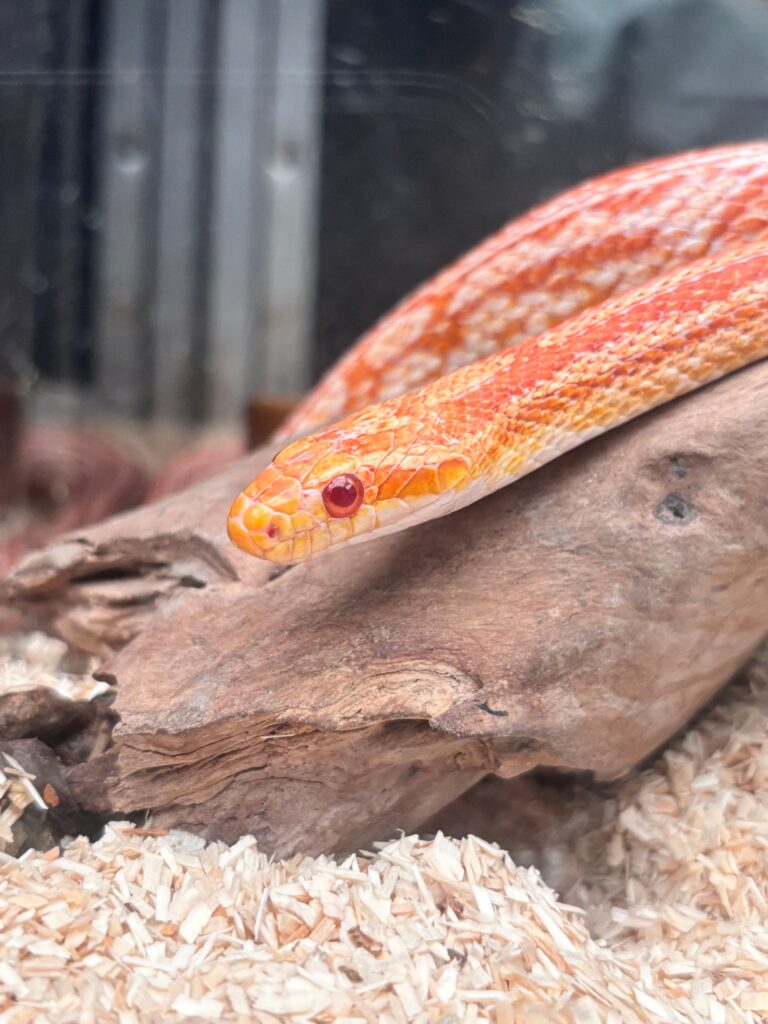
There’s a snake that doesn’t take itself too seriously. It plays dead, hisses with its mouth closed, and has the most adorable upturned snout you’ve ever seen. That snake is the Western Hognose, and the albino hognose snake is the crown jewel of the morphs. With its bright white, yellow, and orange bands and those ruby‑red eyes, it looks like a tiny, living candy cane—but one that loves to burrow and bluff‑strike more than bite.
At Sublime Reptiles, we’ve worked with hognose snakes for years. They’re one of our favourite species to recommend to anyone who wants a manageable, fascinating, and downright hilarious reptile. In this guide, I’ll share everything we know about keeping an albino hognose snake happy, healthy, and full of personality. You’ll learn about their unique behaviour, what makes a hognose snake pet so special, and we’ll even touch on the stunning lavender hognose snake morph that’s gaining popularity. If you’re already thinking “albino hognose snake for sale,” you’ll know exactly what to expect before you bring one home.
What Makes the Albino Hognose Snake So Special?
The Western Hognose (Heterodon nasicus) is native to the grasslands of North America, from Canada to Mexico. Wild‑type hognoses are brown, tan, and olive—excellent camouflage for a life spent digging for toads. The albino hognose snake morph removes all the dark pigment, leaving behind a canvas of brilliant yellow, white, and orange with pink eyes. It’s a recessive trait, meaning both parents must carry the gene to produce albino offspring. That makes them pricier than normals, but the look is unforgettable.
I still remember the first time I unboxed an albino hognose at our facility. She was barely eight inches long, coiled in a tiny ball, and gave me the most dramatic closed‑mouth hiss I’d ever heard. That tiny little snake puffed up her neck like a cobra, hissed like a pressure cooker, and then—when that didn’t scare me—flipped over and played dead. I was sold. That’s the hognose personality in a nutshell.
Is an Albino Hognose Snake a Good Pet?
Absolutely—for the right keeper. A hognose snake pet is a great choice for anyone who wants a small, manageable snake with huge personality. They stay small (males 14‑20 inches, females 20‑30 inches), don’t require a massive enclosure, and are generally mild‑mannered once they settle in. Their diet is simple (frozen‑thawed rodents), and they are active during the day, which makes them more visible than many nocturnal snakes.
However, hognoses do have quirks. They can be picky eaters, especially as hatchlings. They have a mildly venomous saliva (like a bee sting to humans) and, while they rarely bite defensively, their bluffing behaviour can be off‑putting if you’re not expecting it. If you’re okay with a snake that has more personality than a ball python and less bite risk than a cornsnake, an albino hognose might be your perfect match.
Western Hognose Snake Care: The Essentials
Good western hognose snake care isn’t complicated, but you have to understand their desert‑grassland roots. Here’s exactly how we set them up at Sublime Reptiles.
Enclosure Size
- Hatchling: 5‑10 gallon tank or a simple 6‑quart tub with a secure lid. Hatchlings can be nervous in oversized spaces.
- Juvenile/Adult male: 10‑20 gallon long tank. Males stay small, so a 20‑gallon long is usually enough for life.
- Adult female: 20‑40 gallon long tank. Females are chunkier and appreciate extra floor space.
Hognoses are terrestrial and love to burrow, so floor space matters more than height. A front‑opening glass or PVC enclosure works beautifully. Always use a tight‑fitting lid—hognoses are surprisingly strong escape artists for their size.
Substrate
We use a mixture of 70% organic topsoil and 30% play sand for adults, which gives them a naturalistic substrate they can burrow into. For hatchlings and quarantine, paper towels or aspen shavings work fine. Avoid cedar, pine, or pure sand (impaction risk). The burrowing behaviour is essential for a hognose’s mental health—if they can’t burrow, they’ll stress.
Temperature & Heating
- Basking spot: 90‑92°F (32‑33°C), measured with a digital probe or infrared temp gun.
- Warm side ambient: 85‑88°F (29‑31°C)
- Cool side ambient: 75‑78°F (24‑26°C)
- Nighttime: No lower than 70°F (21°C). A small heat mat or ceramic heat emitter on a thermostat can maintain this.
We use overhead heating (halogen bulb or ceramic heat emitter) during the day and a small under‑tank heat mat at night, all regulated by a quality thermostat. Hognoses love to bask, so providing a warm surface is key.
Humidity
Hognoses are from semi‑arid regions. Keep humidity between 30% and 50% with a spike to 60% during shedding. Too high humidity causes respiratory infections and scale rot. A digital hygrometer on the cool side will keep you on track. A humid hide with damp sphagnum moss solves shedding problems without raising the whole enclosure’s humidity.
Lighting
While UVB is not strictly necessary for hognoses (they get vitamin D3 from their whole‑prey diet), we’ve noticed that our snakes are more active and have better colour when we provide low‑level UVB (2% T5 tube) on a 12‑hour cycle. It’s optional but beneficial.
Feeding an Albino Hognose
Hognoses eat primarily rodents in captivity, though wild ones love amphibians and lizards. We feed all our hognoses frozen‑thawed mice, as live prey can injure them.
- Hatchlings: 1‑day‑old pinky mice every 5 days. Be prepared to scent the pinky with toad scent or even tuna juice if they refuse at first.
- Juveniles: Pinkies or fuzzies every 5‑7 days, size appropriate (about 10‑15% of body weight).
- Adults: Hopper or small adult mice every 7‑10 days. Females may need slightly larger prey.
One of our albino females once decided she wasn’t eating anything unless I dipped the pinky in tuna juice for three months. Then one day she struck it dry. Hognoses can be fussy, but they rarely starve themselves to death. If a healthy adult refuses food for a few weeks, check your temperatures and husbandry—often they’re just being difficult.
Handling, Temperament, and That Famous Bluff
Hognoses are all bark and very little bite. They’ve evolved an elaborate bluffing routine: they flatten their neck (like a tiny cobra), hiss loudly, and even strike with their mouth closed. If that doesn’t work, they may roll over and play dead, mouth agape and tongue lolling. It’s comical and a little sad—but it’s pure theatre. In reality, they rarely bite defensively. Their venom is delivered through rear fangs and works on amphibians; on humans, it’s comparable to a mild bee sting, typically causing only minor swelling if you let them chew on you (don’t do that).
Our handling tips:
- Pick them up gently from underneath, supporting the body. Avoid grabbing from above—that triggers the bluff response.
- Handle for 10‑15 minutes a few times a week. Over‑handling can stress them.
- If they flatten their neck or hiss, don’t react. They calm down once they realize you’re not a predator.
- Never handle for 48 hours after feeding to prevent regurgitation.
The Beautiful Lavender Hognose Morph
While we’re on the subject of morphs, you’ve probably seen photos of the lavender hognose snake. It’s a stunning combination of reduced pattern and a soft, pastel‑purple hue that looks almost unreal. Lavender is a recessive trait, similar to albino, and when combined with albino (producing a “lavender albino”), the result is a snake with pale orange‑pink tones and lavender undertones. These are still rare and command a higher price, but they’ve become one of the most sought‑after morphs in the hognose world. At Sublime Reptiles, we occasionally have lavenders available—they’re worth the wait.
Where to Find an Albino Hognose Snake for Sale
If you’re ready to add an albino hognose snake for sale to your collection, your best bet is a reputable breeder. Chain pet stores rarely carry healthy, captive‑bred morphs. Look for breeders who can provide exact hatch dates, feeding records, and health guarantees. Prices typically range from $200 to $500 for a well‑started albino hatchling, with exceptional colour or pattern driving it higher.
At Sublime Reptiles, we breed albino hognoses each year and back every animal with a live arrival guarantee and ongoing support. We’re always happy to talk hognoses, so reach out if you have questions—before or after purchase.
Common Health Issues & Preventative Care
- Respiratory Infections: Bubbles from nose, wheezing. Usually caused by low temperatures or high humidity. Fix the environment first, see a vet if it persists.
- Stuck Shed: Retained eye caps or tail tip. Humidity boost and a humid hide usually solve it. Never pull off stuck shed.
- Mouth Rot (Stomatitis): Cheesy substance in mouth. Often from a dirty enclosure or an injury. Vet visit required.
- Obesity: Hognoses have a naturally stocky build, but you should see a defined neck and no fat rolls. Feed appropriately and monitor body condition.
We check all our snakes weekly—eyes, mouth, vent, and body condition—and weigh monthly. Prevention is always easier than treatment.
Frequently Asked Questions
Q: Do albino hognose snakes bite?
A: They can, but they rarely do. Their defensive display is mostly bluff. If they bite and hold on (rare), gently run water over their snout to get them to release.
Q: How long do albino hognose snakes live?
A: With proper care, 10‑15 years, sometimes longer.
Q: Can I keep two hognoses together?
A: Not recommended. Hognoses are solitary and can become stressed or even cannibalistic if housed together.
Q: What does a lavender hognose snake look like?
A: Lavender hognoses have a soft, pastel‑purple tone with reduced pattern. They’re a rare, recessive morph that’s highly desired by collectors.
Q: Are hognose snakes venomous?
A: They have a mild venom delivered through rear fangs, but it’s not medically significant to humans. Allergies are rare but possible.
Q: Why won’t my hognose eat?
A: Hognoses can be fussy. Check your temperatures, try scenting the prey with tuna or frog juice, and be patient. Hatchlings may need a few attempts.
Final Thoughts from Sublime Reptiles
The albino hognose snake is one of the most entertaining, beautiful, and manageable pet snakes out there. They’re small, they’re hardy, and they never fail to make you smile—even when they’re pretending to be a ferocious cobra. If you’re looking for a snake with real personality and an unforgettable look, an albino hognose belongs on your shortlist.
We’ve got albino and lavender hognose babies hatching throughout the year. If you’re interested in adding one to your collection or just want to ask questions about their care, reach out to Sublime Reptiles. We love sharing our passion for these little actors.
Browse our available albino hognose snakes at sublimereptilesforsale.com or contact us for personalised advice.
Quick Reference Care Sheet
| Parameter | Ideal Range |
|---|---|
| Adult Size | Males 14‑20″, Females 20‑30″ |
| Lifespan | 10‑15 years |
| Enclosure (Adult) | 20‑40 gallon long, secure lid |
| Basking Temperature | 90‑92°F |
| Ambient Temperature | 75‑88°F gradient |
| Humidity | 30‑50% (60% during shed) |
| Diet | Frozen‑thawed mice, appropriately sized |
| Feeding Frequency | Every 5‑10 days depending on age |
| Handling | Docile, but can be hissy/bluff; gentle handling recommended |
| Venom | Mild, rear‑fanged, not dangerous to humans |